

Surpanakha: Her Story in the Ramayana
Ramakrishnan S · 5 November 2026 · 15 min read
Updated: 5 November 2026
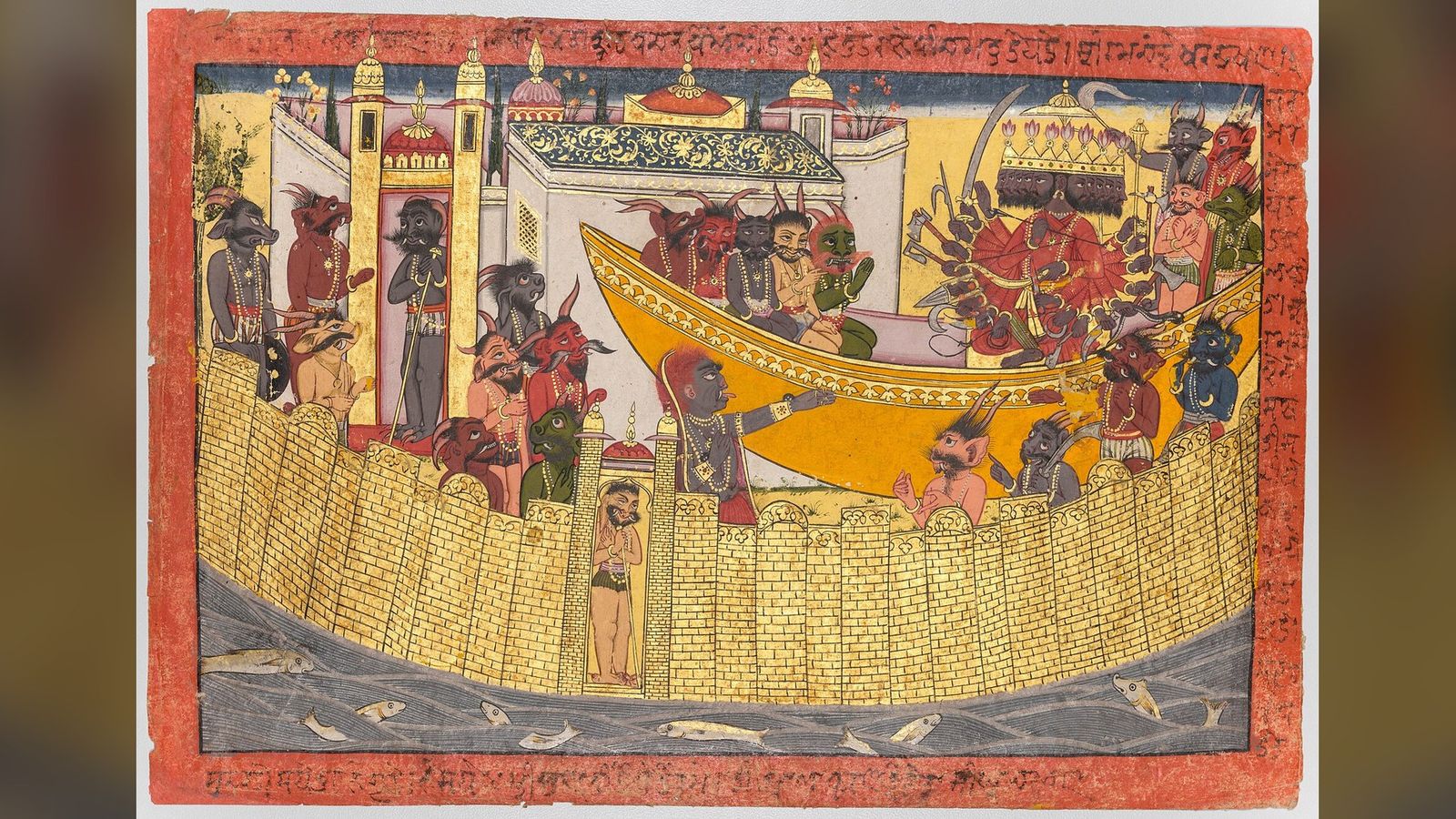
Quick answer: Surpanakha is the sister of Ravana in the Ramayana. After she asks Rama to marry her and dashes at his wife Sita, Lakshmana cuts off her ears and nose. She sets her brother Khara against Rama and urges Ravana to take Sita, but in Valmiki the decision to abduct her is Ravana's own.
Contents
Key facts
| Fact | Detail | Source |
|---|---|---|
| Who is Surpanakha? | The sister of Ravana, king of Lanka, in the Ramayana | Valmiki Ramayana, Aranya Kanda 17, verse 6 |
| What does her name mean? | Literally, "she whose fingernails are like winnowing fans" | Wikipedia: Shurpanakha |
| How is she described? | In Valmiki as ugly; she also says she can change her form. In Kamban's Tamil Ramayana she is lovelorn and beautiful | Valmiki Ramayana, Aranya Kanda 17, verses 9-12 and 20; Wikipedia: Shurpanakha |
| Who was her husband? | Vidyujjihva, whom Ravana gave her to in marriage and later pierced with his sword in battle | Valmiki Ramayana, Uttara Kanda, chapters 12, 23 and 24 (Hari Prasad Shastri translation) |
| What did she ask of Rama? | To take her as his wife, saying Sita was unworthy and she herself the one worthy | Valmiki Ramayana, Aranya Kanda 17, verses 24-26 |
| Who cut off her ears and nose? | Lakshmana, after Rama told him to "deface" her | Valmiki Ramayana, Aranya Kanda 18, verses 20-21 |
| Where did she go next? | To her brother Khara, who sent fourteen rakshasas against Rama, Lakshmana and Sita | Valmiki Ramayana, Aranya Kanda 18, verse 25 and 19, verses 21-26 |
| Is Khara her brother? | She calls him her brother in the Aranya Kanda; in the Uttara Kanda Ravana calls him her cousin | Valmiki Ramayana, Aranya Kanda 17, verse 23; Uttara Kanda, chapter 24 (Hari Prasad Shastri translation) |
| What did she tell Ravana? | That Rama had killed Khara's army, and that Sita should be his wife (the translation reads "be abducted"; the gloss notes a reading meaning "be made") | Valmiki Ramayana, Aranya Kanda 34, verses 9 and 25 |
| Who decided to abduct Sita? | Ravana: after hearing her, "he decided that" his task "is to be done in this method only", and he then went to Maareecha for help in the abduction | Valmiki Ramayana, Aranya Kanda 35, verses 1-3 and the chapter introduction |
| Is she in the Kadarpaalam comic? | The series page does not mention her | sivacomics.com series page, read 19 Oct 2026 |
Who is Surpanakha in the Ramayana?
Surpanakha is the sister of Ravana, the king of Lanka, in the Ramayana. She is a rakshasi, a female rakshasa. Rakshasas are the demons of the epic. Her name is also spelled Shurpanakha, and the translation we read spells it Shuurpanakha.
Her own story is told in two places. Her meeting with Rama, the loss of her nose and her visit to Ravana are in the Aranya Kanda, the third book of Valmiki's Ramayana, while Rama is living in the forest with his wife Sita and his brother Lakshmana. Her birth and marriage are in the Uttara Kanda, the last book, which many scholars consider a later addition to the epic.
The Uttara Kanda (chapter 9 in Hari Prasad Shastri's translation) says she was born after Kumbhakarna and before Vibhishana, and calls her "a daughter of hideous aspect". In the same chapter her mother Kaikasi goes to the sage Vishravas, and their children include Ravana, Kumbhakarna, Surpanakha and Vibhishana.
What does the name Surpanakha mean?
Surpanakha is a Sanskrit name that means "she whose fingernails are like winnowing fans", according to Wikipedia.
A winnowing fan is a flat basket used to separate husk from grain.
Read free: Kadarpaalam. Rama's vanaras build the bridge to Lanka, and the envy of one hard-working vanara halts the work. Read Episode 1 free →
Was Surpanakha beautiful or ugly?
In Valmiki's text Surpanakha is described as ugly; Wikipedia's page on her says Kamban's Tamil Ramayana describes her as lovelorn and beautiful.
In Aranya Kanda chapter 17, verses 9 to 12, the translation sets her features against Rama's one by one, calling her "ugly featured one" and "abominable one". She says herself that she is a "guise-changing demoness" (verse 20), so she can change her form. When Rama first speaks to her he says she has "a most enthralling personality" (verse 18).
Kamban retold the Ramayana in Tamil in the 12th century. Wikipedia's page on Surpanakha, citing Paula Richman (1991), says the Kamba Ramayanam "describes her as a lovelorn and beautiful woman", and links her behaviour to loneliness. One blog retelling of Kamban says she changes her own form into a beautiful young woman to approach Rama, and calls herself Kamavalli; we found that name only in that blog.
Who was Surpanakha's husband?
In Valmiki's Uttara Kanda, Surpanakha's husband is Vidyujjihva, and he dies in a fight with her own brother Ravana.
The marriage: in chapter 12 of the Uttara Kanda (chapter numbers are from Hari Prasad Shastri's translation) Ravana, after being anointed king, gives his sister to Vidyujjihva. The translation says he gave the rakshasi to "the King of the Kalakas".
His death: in chapter 23 Ravana pierces "his powerful brother-in-law, Vidyujjihva, the consort of Shurpanakha" with his sword.
Her complaint: in chapter 24 Surpanakha tells Ravana "I have been widowed through your ruthless conduct". He answers that in the heat of battle he "did not recognize my brother-in-law", and sends her to live near Khara in the Dandaka forest.
Wikipedia's page on Surpanakha tells it differently: she marries Vidyutjihva in secret, and Ravana, enraged, decides to kill them both and kills him in battle. The Uttara Kanda chapters we read say Ravana gave her to him and, by Ravana's own account, killed him without recognising him.
The translator's introduction to Aranya Kanda chapter 17 recalls that Ravana killed her husband, but none of the Aranya Kanda verses we read mentions him.
What happened when Surpanakha met Rama and Lakshmana?
Surpanakha meets Rama in the forest in Aranya Kanda chapter 17, falls in love with him at first sight, and asks him to take her as his wife. She arrives "fortuitously" while Rama is sitting with Sita and Lakshmana (verse 5).
She is struck: "the demoness has seen such a Rama and became lovesick" (verses 7 to 9).
She names her family: her brothers are Ravana, Kumbhakarna, Vibhishana, Khara and Dushana (verses 21 to 23).
She asks for him: "you alone are my husband" (verse 24). She says "I am the lone one worthy to be your wife" (verse 26).
She threatens Sita: she asks "Shall I eat up this disfigured, dishonest, diabolical human female" along with Rama's brother (verse 27).
In chapter 18 Rama, smiling, answers "I am married and this is my dear wife" (verse 2) and sends her to his brother Lakshmana instead (verses 3 to 5). She turns to Lakshmana (verse 6). Lakshmana says "I am just a vassal of my adorable brother" (verse 9) and sends her back to Rama (verses 10 to 12). She takes his words as true (verse 13), goes back to Rama (verse 14), then dashes at Sita (verse 17). Rama stops her and tells Lakshmana, "Punning in any way with the base and brutish is inapposite" (verse 19).
Who cut off Surpanakha's nose?
In Valmiki, Lakshmana cuts off Surpanakha's ears and nose, after Rama tells him to "deface" her. It is in Aranya Kanda chapter 18, verses 20 and 21.
Rama's words to Lakshmana are "it will be apt of you to deface this paunchy demoness" (verse 20). Then Lakshmana, infuriated, draws his sword and "chopped off her ears and nose" in front of Rama (verse 21). She flees into the forest (verse 22).
What did Surpanakha do after her nose was cut off?
After her ears and nose are cut off, Surpanakha runs to her brother Khara, who sends fourteen rakshasas to kill Rama, Lakshmana and Sita. The scene is in Aranya Kanda chapters 18 and 19.
Khara lives in Janasthaana, as the translation spells it. She falls before him "like a thunderbolt from the sky" (chapter 18, verse 25) and tells him about Rama, Sita and Lakshmana (verse 26). In chapter 19 she tells him "Owing to that woman I am led into this sort of situation" (verse 18) and says she wishes "to drink the frothy blood of that guileful Seetha" (verse 19). Khara "vengefully summoned fourteen great mighty demons" (verse 21) and they go to a place named Panchavati "along with Shuurpanakha" (verse 26).
In chapter 17 she calls Khara and Dushana her brothers (verse 23). In the Uttara Kanda, chapter 24, Ravana calls Khara "that son of the sister of your mother, your cousin Khara". The two books name the relation differently.
The fourteen fail against Rama (chapter 19, verse 27); the translator's note says this verse is missing from some printed editions and that the fight itself happens in the next episode. In chapter 32 Surpanakha sees the fourteen thousand demons, Trishira, Duushana and Khara "all exterminated by lone Rama" (verses 1 and 2), and hurries to Lanka (verse 3).
Why did Surpanakha go to Ravana?
Surpanakha goes to Ravana in Aranya Kanda chapters 32 to 34 to tell him what happened to her and to Khara, and she urges him to take Sita. She finds him on his throne, "surrounded by his ministers" (chapter 32, verse 23). The poet describes her as "disfigured by the high souled Lakshmana" as she speaks to him (verse 25).
In chapter 33 she tells Ravana that he is "Highly infatuated with lustful gratifications" and is "unobservant of a calamitous jeopardy" (verse 2). Ravana listens and "contemplated over a time" (verse 24).
In chapter 34 he asks "Who is Rama? How brave he is?" (verse 2). In chapter 31, which the translator marks as "removed from the critical edition", Ravana has already heard of Rama from his spy Akampana (verse 10). She describes Rama and says one man "has exterminated fourteen thousand demons" (verse 9). She describes Sita: "So far I have not seen any goddess with such a comeliness" (verse 18). Then she tells him "let that immaculately limbed Seetha be abducted to become your wife" (verse 25). The word-gloss on that page gives the reading kriyataam, "may be made", with hriyataam, "be abducted", in brackets, so in one reading she asks that Sita be made his wife.
Her own account of the nose differs from chapter 18. There she dashes at Sita. To Ravana she says Lakshmana disfigured her "when I ventured to bring her as your wife" (chapter 34, verses 21 to 22). Both are in the text; the second is her own account.
Did Surpanakha start the war?
In Valmiki, Surpanakha sets off the fight with Khara when she tells her brother what was done to her, and she urges Ravana to take Sita, but the decision to abduct Sita is Ravana's own, so blaming Surpanakha alone for the war leaves out his choice.
She sets off the fight with Khara: after Lakshmana cuts her, she asks Khara for the blood of Sita, Rama and Lakshmana, and he sends rakshasas (chapter 19, verses 19 to 26).
She puts the idea to Ravana: "let that immaculately limbed Seetha be abducted to become your wife" (chapter 34, verse 25).
He decides: after hearing her he goes to his own chambers, thinks over his "further task", and "he decided that" it "is to be done in this method only" (chapter 35, verses 1 to 3).
The translator's introduction to chapter 35 says that Ravana then goes to Maareecha, "seeking his help in the abduction of Seetha". Chapter 31, which the translator's page says is "removed from the critical edition" and retained by traditional versions, has Akampana suggest the abduction first. In that chapter Ravana goes to Maareecha, is talked out of it, and returns to Lanka (verse 50). So in versions that keep chapter 31, Surpanakha revives a plan Ravana had already tried and dropped.
Our reading of the chain is that Surpanakha sets it moving, and Ravana chooses to do the deed.
Is Surpanakha in the Kadarpaalam comic?
The Kadarpaalam series page does not mention Surpanakha. Its synopsis begins: "Having learned that Sita was held in Lanka, Rama planned his march and, with the vanara army's help, ordered a bridge built across the sea."
Kadarpaalam (கடற்பாலம்) is a series on Siva Comics, created by B. Sivakumar. The vanaras are the monkey people of Rama's army. The synopsis goes on to say that Rama marveled at a little squirrel toiling on the bridge and stroked its back, and that the envy this stirred in one hard-laboring vanara brought the work to a halt. Read Episode 1 of Kadarpaalam free.
Common questions
What does the name Surpanakha mean?
The name Surpanakha means "she whose fingernails are like winnowing fans", according to Wikipedia. A winnowing fan is a flat basket used to separate husk from grain.
Who cut off Surpanakha's nose?
In Valmiki's Ramayana, Lakshmana cut off Surpanakha's ears and nose, after Rama told him to "deface" her (Aranya Kanda 18, verses 20 and 21).
Why was Surpanakha's nose cut off?
In Valmiki, Rama said he was married and sent Surpanakha to Lakshmana, who sent her back to Rama. She then dashed at Sita. Rama stopped her and told Lakshmana to deface her, and Lakshmana cut off her ears and nose (Aranya Kanda 18, verses 2 to 21).
Was Surpanakha beautiful?
In Valmiki's text Surpanakha is described as ugly, though she says she can change her form. In Kamban's Tamil Ramayana she is a lovelorn and beautiful woman, according to Wikipedia's page on her.
Who was Surpanakha's husband?
In Valmiki's Uttara Kanda, Surpanakha's husband is Vidyujjihva, to whom her brother Ravana gave her in marriage. Ravana later pierced him with his sword in battle, and Surpanakha told Ravana that he had widowed her. Wikipedia's page gives a different account, in which she marries him in secret.
Is Khara the brother of Surpanakha?
In the Aranya Kanda, Surpanakha calls Khara and Dushana her brothers. In the Uttara Kanda, Ravana calls Khara her cousin, the son of their mother's sister, so the two books name the relation differently.
Why did Surpanakha go to Ravana?
Surpanakha went to Ravana to tell him that Rama had killed Khara's army and that Lakshmana had disfigured her, and to urge him to take Sita (Aranya Kanda 32 to 34).
Did Surpanakha start the Ramayana war?
In Valmiki, Surpanakha sets off the fight with Khara when she tells him what was done to her, and she urges Ravana to take Sita, but Ravana makes the decision himself (Aranya Kanda 35, verses 1 to 3). In versions that keep chapter 31, his spy Akampana suggested the abduction before her. Our reading is that she sets the chain moving and Ravana chooses the deed.
How does Kamban describe Surpanakha?
Wikipedia's page on Surpanakha, citing Paula Richman (1991), says Kamban's Tamil Ramayana describes her as lovelorn and beautiful. One blog retelling of Kamban says she changes her own form into a beautiful young woman to approach Rama, and calls herself Kamavalli.
Is Surpanakha in the Kadarpaalam comic?
The Kadarpaalam series page on Siva Comics does not mention Surpanakha. Its synopsis begins: "Having learned that Sita was held in Lanka, Rama planned his march and, with the vanara army's help, ordered a bridge built across the sea."
In the comic
The Kadarpaalam series page does not mention Surpanakha; its synopsis is about a bridge "built across the sea" to Lanka. Read Kadarpaalam, Episode 1 →
Sources
Valmiki Ramayana, Aranya Kanda, Sarga 17, valmikiramayan.net (Sanskrit text with English translation): her arrival, how she is described, her proposal to Rama and her threat to Sita
Valmiki Ramayana, Aranya Kanda, Sarga 18, valmikiramayan.net (Sanskrit text with English translation): Rama and Lakshmana turning her down, her rush at Sita, and Lakshmana cutting off her ears and nose
Valmiki Ramayana, Aranya Kanda, Sarga 19, valmikiramayan.net (Sanskrit text with English translation): her words to Khara and the fourteen rakshasas he sends
Valmiki Ramayana, Aranya Kanda, Sarga 31, valmikiramayan.net (Sanskrit text with English translation): the introduction naming Akampana and noting the chapter is removed from the critical edition
Valmiki Ramayana, Aranya Kanda, Sarga 32, valmikiramayan.net (Sanskrit text with English translation): her coming before Ravana
Valmiki Ramayana, Aranya Kanda, Sarga 33, valmikiramayan.net (Sanskrit text with English translation): her scornful words to Ravana
Valmiki Ramayana, Aranya Kanda, Sarga 34, valmikiramayan.net (Sanskrit text with English translation): Ravana's questions, her account of Rama, Lakshmana and Sita, and her advice about Sita
Valmiki Ramayana, Aranya Kanda, Sarga 35, valmikiramayan.net (Sanskrit text with English translation): Ravana's decision after hearing her, and his journey to Maareecha
Ramayana of Valmiki, Uttara Kanda, chapter 9: The Birth of Dashagriva and his Brothers, Translated by Hari Prasad Shastri (1952), on wisdomlib.org: her parents, and her birth after Kumbhakarna and before Vibhishana
Ramayana of Valmiki, Uttara Kanda, chapter 12: The Marriages of the Rakshasas, Translated by Hari Prasad Shastri (1952), on wisdomlib.org: Ravana giving her to Vidyujjihva
Ramayana of Valmiki, Uttara Kanda, chapter 23: Ravana's Struggle with the Sons of Varuna, Translated by Hari Prasad Shastri (1952), on wisdomlib.org: Ravana piercing Vidyujjihva
Ramayana of Valmiki, Uttara Kanda, chapter 24: Ravana carries off a number of Women and is cursed by them, Translated by Hari Prasad Shastri (1952), on wisdomlib.org: her complaint to Ravana, his answer, and Khara as her cousin
Shurpanakha, Wikipedia: the meaning of the name, a different account of her marriage, and how the Kamba Ramayanam describes her
Ramayana, Wikipedia: the Uttara Kanda as a later addition in the view of many scholars
Ramavataram, Wikipedia: Kamban's Tamil Ramayana, written in the 12th century
32. Kamban's Surpanakha, Ramayanam (blog), 26 October 2013: the change of form and the name Kamavalli in a retelling of Kamban's version; a blog, not a scholarly source
Kadarpaalam, sivacomics.com: the comic's story and creator, read 19 October 2026
Cite this page: Ramakrishnan S. "Surpanakha: Her Story in the Ramayana." Siva Comics, 5 November 2026. https://www.sivacomics.com/insider/surpanakha
You just read the story. Now read the comics. Episode 1 of every series is free. A free account unlocks the rest and keeps your place. Start reading free → · Browse all series
Read the comics
Kadarpaalam
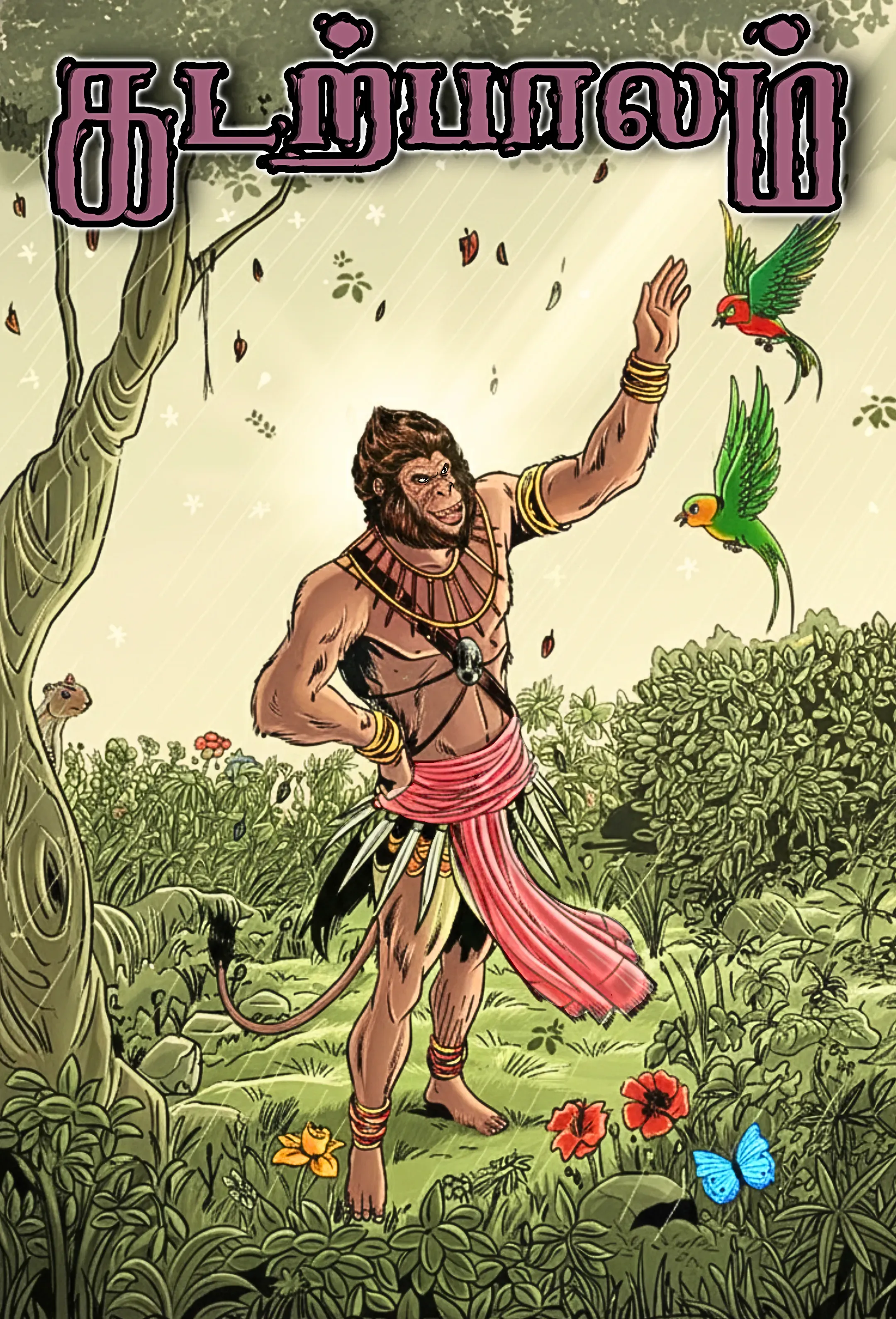
Having learned that Sita was held in Lanka, Rama planned his march and, with the vanara army's help, ordered a bridge built across the sea. He marveled at a little squirrel toiling on the bridge and stroked its back in acknowledgement — and the envy this stirred in one hard-laboring vanara brought the work to a halt. That untold episode is Kadarpaalam.
Kabadapuram
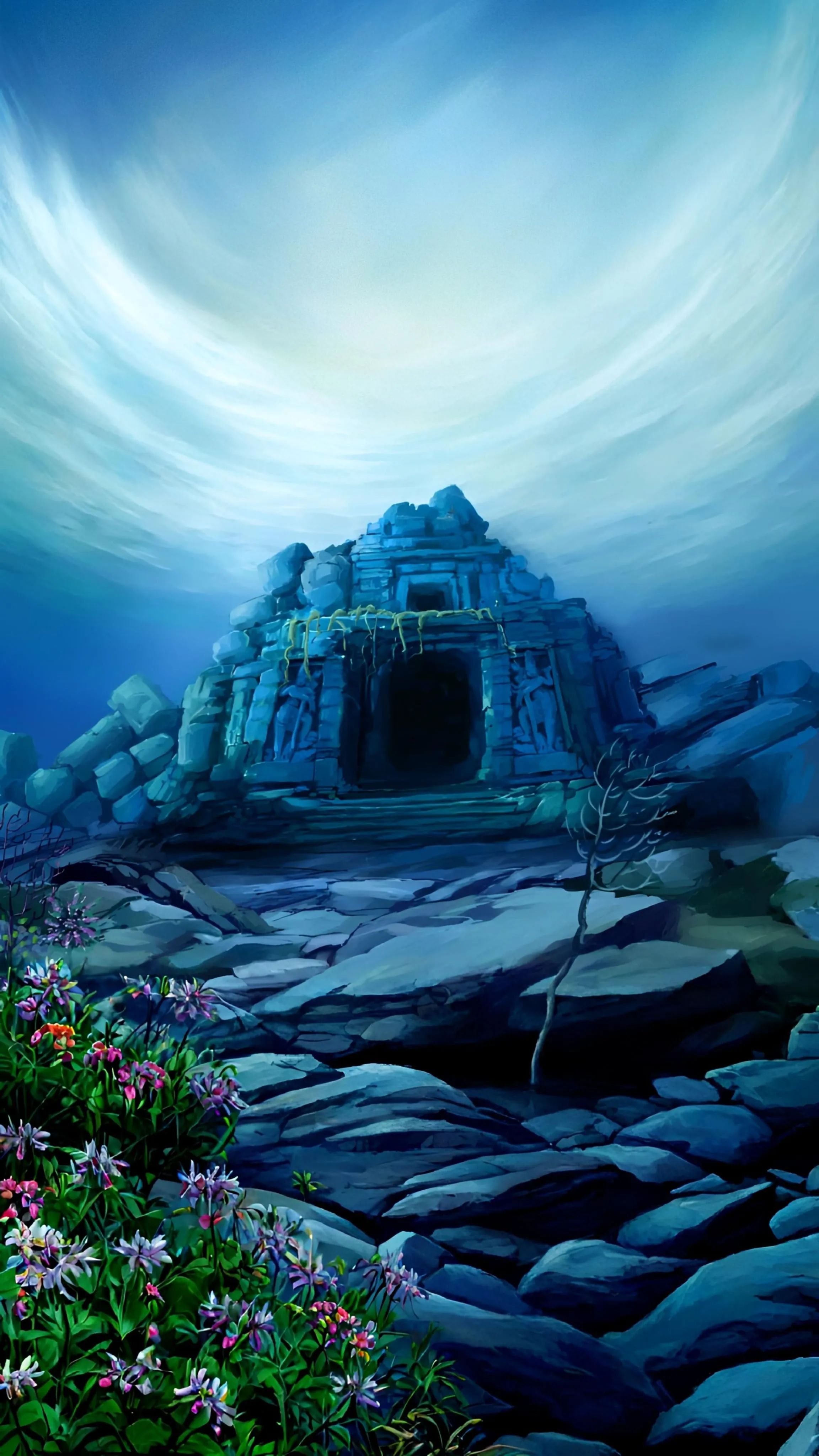
When the doors of the Kumari Amman temple are sealed shut, a man trapped inside escapes with the help of a talking severed head. Crossing the dried-up sea, he is stunned by unbelievable wonders and reaches Kabadapuram — the city the ocean once swallowed. There he witnesses the strange feats of a siddha and sees a man who looks just like himself. On the shore of Kabadapuram, crumbling under tidal waves and volcanic eruptions, that double flees with the woman he loves. Did those who escaped survive — or were they caught in the deluge?