

Who Wrote the Ramayana? Valmiki and Others
Ramakrishnan S · 5 November 2026 · 16 min read
Updated: 5 November 2026
Quick answer: The Ramayana is traditionally credited to the sage Valmiki, whom Wikipedia says is revered as the adi kavi (the first poet). Wikipedia reports scholarly estimates for the text from the 8th to the 4th century BCE, and one passage calls the first and last books later additions. Kamban wrote a Tamil Ramayana and Tulsidas the Ramcharitmanas.
Contents
When was the Ramayana written, and did Valmiki write all of it?
Which Siva Comics series is about Rama's bridge across the sea?
Key facts
| Fact | Detail | Source |
|---|---|---|
| Who is the Ramayana credited to? | The sage Valmiki, "as traditionally attributed" per Wikipedia; the Bala Kanda says he composed it, but Wikipedia says that book is itself considered a later addition | Wikipedia: Ramayana; Valmiki Ramayana, Bala Kanda 4, verse 1 |
| Why is Valmiki called the adi kavi? | Wikipedia's Valmiki article says he is revered as the adi kavi, "the first poet", and that his couplet "is considered the first shloka in Sanskrit literature"; these sentences have no citation on that page, so they are tradition | Wikipedia: Valmiki |
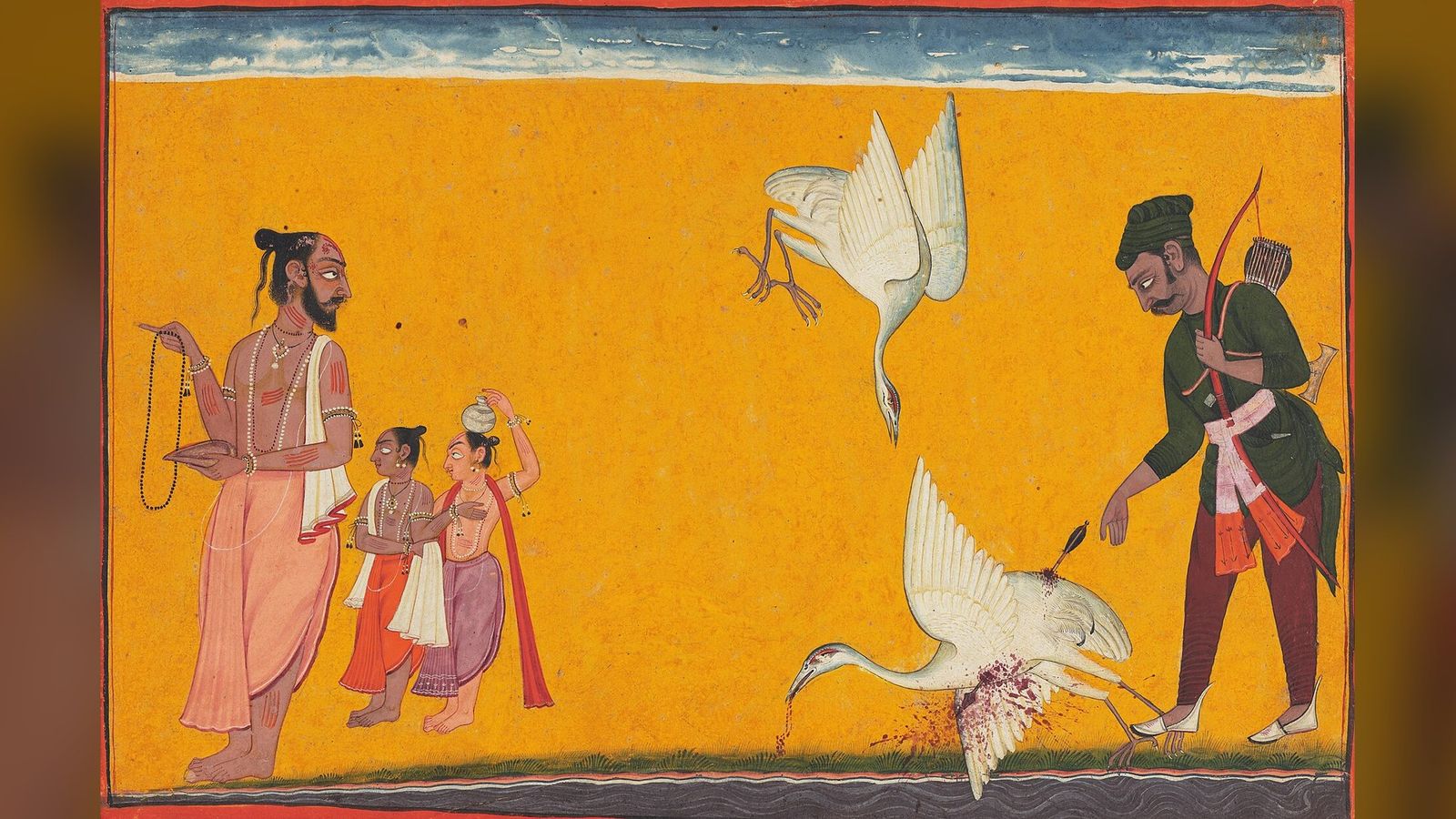
| What led to Valmiki's verse? | In the Bala Kanda a hunter kills one of a pair of krauncha birds (curlews in the translation) while Valmiki watches, and Valmiki speaks a verse in grief | Valmiki Ramayana, Bala Kanda 2, verses 9 to 18 |
| Who set Valmiki to write the epic? | Narada gives him a gist of the story and, in the Bala Kanda's own account, Brahma tells him to put the legend of Rama into verse | Valmiki Ramayana, Bala Kanda 1, verse 100; Valmiki Ramayana, Bala Kanda 2, verses 31 to 35 |
| How long does the Bala Kanda say it is? | 24,000 verses, 500 chapters, six books and an end-piece; the translator notes a controversy about the count and whether the Bala Kanda is Valmiki's | Valmiki Ramayana, Bala Kanda 4, verse 2 and note |
| Who learned it from Valmiki? | Kusha and Lava, called princes in the translation and "the sons of Rama and Seetha" in the translator's introduction | Valmiki Ramayana, Bala Kanda 4, verses 5 to 6 and introduction |
| When was it composed? | Wikipedia lists estimates from the 8th to 5th and 5th to 4th centuries BCE for the text, with later stages to the 3rd century CE; no single date is given | Wikipedia: Ramayana (Dating) |
| Is all of it Valmiki's? | Wikipedia says the first and last books are considered later additions; elsewhere it says the Bala Kanda is sometimes counted in the main epic | Wikipedia: Ramayana |
| Who wrote the Tamil Ramayana? | Kambar (Kamban), the Ramavataram; the 12th century per both the Ramavataram and Kambar pages (the Ramavataram sentence is uncited; the Kambar page also gives 1180–1250) | Wikipedia: Ramavataram; Wikipedia: Kambar (poet) |
| Who wrote the Ramcharitmanas? | Tulsidas, a 16th-century poet; begun in 1574 CE; finished in 1577 CE per the Tulsidas article's account, which elsewhere gives 1574 to 1576; the Ramayana article gives 1576 | Wikipedia: Ramcharitmanas; Wikipedia: Tulsidas; Wikipedia: Ramayana |
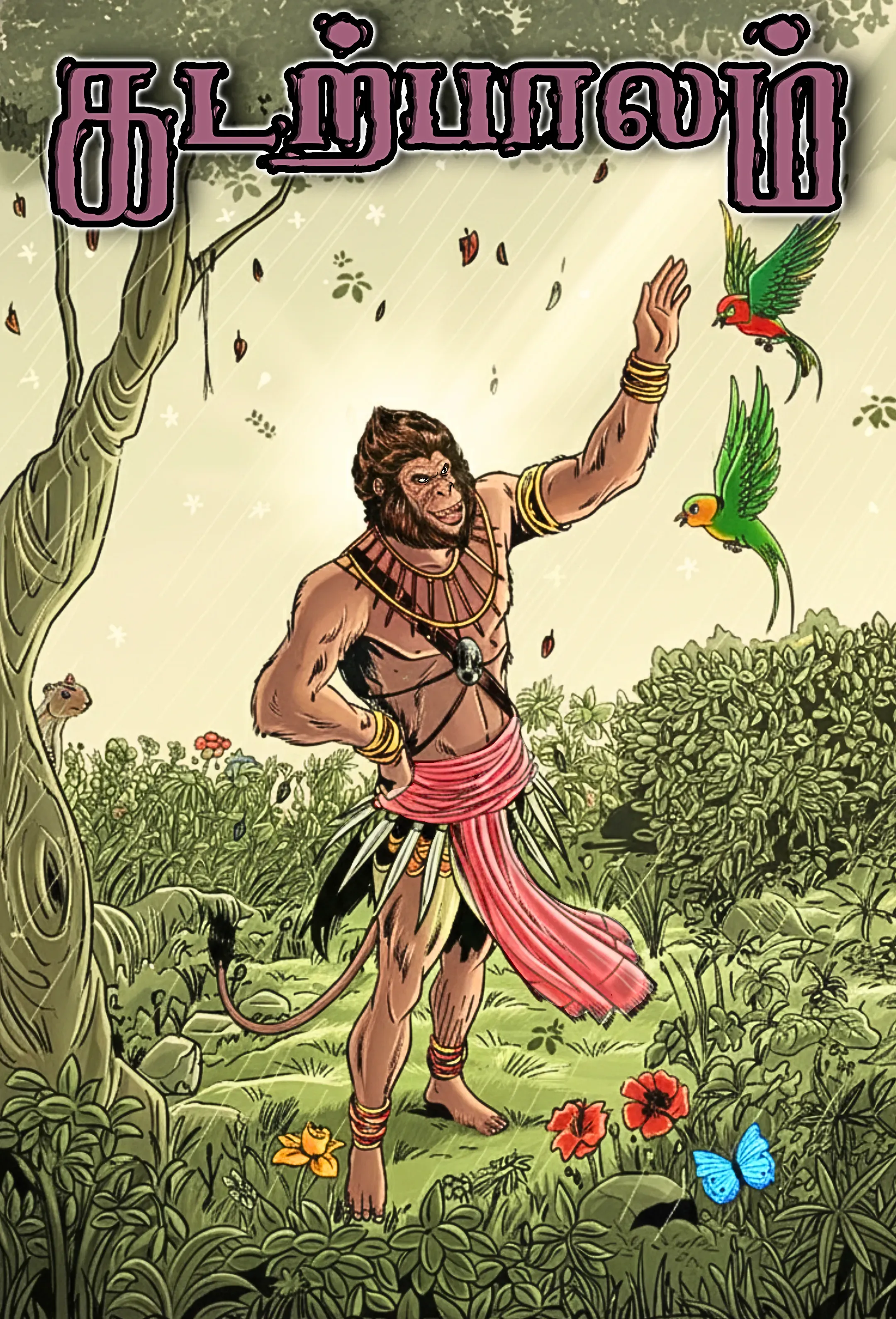
| Which Siva Comics series is about Rama's bridge across the sea? | Kadarpaalam, created by B. Sivakumar; its series page does not mention Valmiki, Kamban or Tulsidas, and the link is ours | sivacomics.com: Kadarpaalam series page |
Who wrote the Ramayana?
The Ramayana is traditionally credited to the sage Valmiki. Wikipedia's article on the epic calls it a Hindu epic poem "as traditionally attributed to Valmiki", and says it narrates the life and journey of Rama.
The text says the same of itself. In the Bala Kanda, which the translation labels Book I of the epic, the translation reads: "The godly saint Valmiki composed Ramayana on Rama's retrieving kingdom, wording admirably and meaningfully" (Bala Kanda 4.1). One caution: the same Wikipedia article calls the first and last books later additions in one passage (see the dating section below), so this is a book speaking about its own author, not outside proof.
Why is Valmiki called the adi kavi?
Wikipedia's Valmiki article puts three things side by side: his couplet on the birds "is considered the first shloka in Sanskrit literature", he "later composed the entire Ramayana in the same meter", and he is revered as the adi kavi, "the first poet". The same passage says "the Ramayana is revered as the first kavya (poem)".
None of these sentences carries a citation on that Wikipedia page, so we give them as what tradition holds, not as a checked fact.
Read free: Kadarpaalam. Rama's vanaras build the bridge to Lanka, and the envy of one hard-working vanara halts the work. Read Episode 1 free →
What is the story of the krauncha birds and the shloka?
In the Bala Kanda, Valmiki speaks a verse in grief after a hunter kills one of a pair of krauncha birds near the river Tamasa (Bala Kanda 2.3 to 2.18). The translation mostly spells the bird's name krouncha (krounchi for the female) and renders it "curlews".
Valmiki "saw a couple of curlews" near the river (verse 9). "A tribal hunter with evil intent, and a receptacle of enimity, killed the male one among the couple of birds, while Valmiki was looking on" (verse 10). The female bird made "piteous utterances" (verses 11 and 12). Valmiki, seeing the killing as unjust (verse 14), spoke, and the translation gives his words as "you will never get a state of rest for everlasting years to come" (verse 15).
He asks himself "What is this utterance by me in grief and anguish for this bird?" (verse 16). He tells his disciple that what arose while he was tormented by grief "will be called Shloka, not otherwise" (verse 18). The translator's note on verse 18 says the verse has four quarters, "each quarter with equally posited eight syllables".
Why did Valmiki write the Ramayana?
In the Bala Kanda, the sage Narada gives Valmiki a gist of Rama's story, and Brahma tells Valmiki to put it into verse (sargas 1 and 2; a sarga is a chapter, which the translation labels "Chapter [Sarga]").
In sarga 1 Valmiki asks Narada who in the world is virtuous and vigorous (verses 1 to 5). Narada says he will speak of "such a man with all these merits" (verse 7; the translator's comment says Brahma "already imparted the same to him"), and goes on to say "One emerged from Ikshvaku dynasty, known to people as Rama by name" (verse 8). The sarga ends: "Thus Sage Narada gave a gist of Ramayana to Sage-poet Valmiki" (verse 100). The translator's chapter introduction adds that Narada came "to enlighten him and keep him informed of his duty to author the epic poem Ramayana"; that is the translator's summary, not a verse.
In sarga 2 Brahma, the "Four-faced creator of fourteen worlds", "arrived there on his own" (verse 23). He tells Valmiki: "that speech of yours sprang forth at my wish alone" (verse 31), and "You shall versify the heart pleasing and merit-yielding legend of Rama" (verse 35). He adds that "so long the legend of Ramayana will flourish in this world" as mountains and rivers last on earth (verse 36).
How did Valmiki learn the whole story, and how long is it?
After hearing Narada, Valmiki searches out the whole story by yogic insight, and the text gives the length of the Ramayana as 24,000 verses (Bala Kanda 3.1 to 3.6 and 4.2). The translator notes that the count is disputed.
Valmiki sits on "a sacred grass mat", touches water and, by "yogic insight", starts to search "comprehensively, for the narrative course of Ramayana" (3.2). The translation says he saw all that had happened "as though it is a citric fruit in his own palm" (3.6). Sarga 4, verse 2, has "Sage Valmiki said Ramayana in twenty four thousand verses, in five hundred chapters, in six books, likewise an end-piece too".
The translator's note on that verse says: "There is a controversy about the number of verses and cantos". If the Uttara Ramayana is ascribed to Valmiki, the note says "the cantos are seven". The note adds that some say "even this canto, Bala kaanda is not authored by Valmiki", and "It is not clear as of now when the pundits can decide as to which is standard and which is not".
Who learned the Ramayana from Valmiki?
Valmiki teaches the Ramayana to Kusha and Lava, who live in his hermitage (Bala Kanda 4.4 to 4.7). The translation calls them "the virtue knowing princes" and says they are "endowed with melodious voice" (verse 5).
Valmiki "made those two to memorize the epic" (verse 6). The translator's chapter introduction calls them "the sons of Rama and Seetha" and says they sing the ballad among sages and "win laurels".
When was the Ramayana written, and did Valmiki write all of it?
According to Wikipedia's Ramayana article, scholarly estimates for the composition of the text fall between the 8th and 4th centuries BCE, and one passage calls the first and last books later additions. The article lists two ranges, 8th to 5th and 5th to 4th centuries BCE, so no single date should be taken as fact.
The article says Robert P. Goldman gives 750 BCE to 500 BCE as the probable date of the oral composition. It adds that the legends behind the text "go back farther in time", and that "later stages extend to the 3rd century CE".
On authorship, the article says books two to six are "the oldest portion of the epic" while the first and last books, the Bala Kanda and Uttara Kanda, "are considered to be later additions". It says style differences and narrative contradictions led scholars including Hermann Jacobi toward this consensus. Elsewhere it says the Bala Kanda "is sometimes considered in the main epic", while "according to many Uttara Kanda is certainly a later interpolation, not attributable to Valmiki". The article also reports M. R. Parameswaran's view that the way women and Shudras are shown marks the Uttara Kanda as "a later insertion". So the page itself gives two slightly different pictures of the Bala Kanda, the book that tells the story of Valmiki and the birds.
Who wrote the Kamba Ramayanam, the Tamil Ramayana?
The Tamil Ramayana, the Ramavataram or Kamba Ramayanam, was written by the Tamil poet Kambar, who is also called Kamban. Wikipedia's Ramavataram page says he wrote it "during the 12th century".
Wikipedia's Kambar article agrees on the century: "His life time is dated to the 12th century CE", the philosopher Ramanuja coming before him, "as the poet refers to the latter in his work". It says he grew up "during the reign of Kulothunga Chola III", but its opening line gives his years as "(1180–1250)", which runs past the 12th century. The Ramavataram page carries a notice that "This article needs more citations", and its date sentence has no citation.
That page says the Ramavataram is based on Valmiki's Ramayana but "is different from the Sanskrit version in many aspects". It says the Tamil work has six chapters, each called a kandam, that Valmiki's Sanskrit Ramayana "has seven chapters", and that the poet Ottakoothar wrote the Uttara Kandam, "the seventh (last chapter) kandam of the Tamil epic Ramayanam". It says Kambar wrote "with the patronage of Thiruvennai Nallur Sadayappa Vallal".
Who wrote the Ramcharitmanas?
The Ramcharitmanas was composed by the 16th-century poet Tulsidas, according to Wikipedia. The page says it is an epic poem in Awadhi, and that Tulsidas chose the vernacular, "making his work more accessible to the general public".
The page says the poem has many inspirations, "the primary being the Ramayana of Valmiki", but that it "is by no means a replica of the Valmiki Ramayana nor an abridged re-telling of it". So it is Tulsidas's own telling, not a copy.
The Ramcharitmanas page says Tulsidas began writing it in Ayodhya in Vikram Samvat 1631 (1574 CE), and that "The exact date is stated within the poem". The Tulsidas article says he finished it in Vikram 1634 (1577 CE), after "two years, seven months and twenty-six days", though its own list of works dates the poem 1574 to 1576. Wikipedia's Ramayana article gives a single year, "by Tulsidas in 1576", with no citation on that page.
Are there other Ramayanas by other authors?
Wikipedia's Ramayana article says there are "diverse regional versions of the Ramayana written by various authors in India", and that "Some of them differ significantly from each other".
Besides Kamban in Tamil and Tulsidas in Awadhi, the article names the Telugu Ranganatha Ramayanam, which "was written by Gona Budda Reddy in the 13th century", and the Molla Ramayanam, "written by Atukuri Molla in the 15th century". These sentences carry no citation on that Wikipedia page.
Which Siva Comics series is about Rama's bridge across the sea?
The Siva Comics series Kadarpaalam, created by B. Sivakumar, tells of the bridge Rama ordered built across the sea; its series page says he did so after he learned that Sita was held in Lanka. Kadarpaalam (கடற்பாலம்) has the vanara army helping; Wikipedia's Ramayana article explains Vanaras as "Vana-nara", "Forest dwelling humans".
The series page says Rama "marveled at a little squirrel toiling on the bridge and stroked its back in acknowledgement", and that "the envy this stirred in one hard-laboring vanara brought the work to a halt". It ends: "That untold episode is Kadarpaalam". The page does not mention Valmiki, Kamban or Tulsidas, so the link between this article and the comic is ours. Read Episode 1 of Kadarpaalam free.
Common questions
Who wrote the Ramayana?
The Ramayana is traditionally credited to the sage Valmiki; Wikipedia calls it an epic poem "as traditionally attributed to Valmiki". Wikipedia's Ramayana article says its first and last books are considered later additions, a view it calls a scholarly consensus, and it also says the first book is sometimes counted in the main epic. So the epic as we have it may not all be his work.
Who is called the adi kavi?
Valmiki is revered as the adi kavi, which Wikipedia's Valmiki article glosses as "the first poet". That sentence has no citation on the page, so it is tradition, not a checked fact.
Did Valmiki write the whole Ramayana?
Whether Valmiki wrote the whole Ramayana is not settled. Wikipedia's Ramayana article says the first and last books are considered later additions, a consensus it credits to scholars including Hermann Jacobi, and elsewhere says the Bala Kanda is sometimes counted in the main epic. The translator of the Bala Kanda on valmikiramayan.net says it is not clear which parts are standard.
When was the Ramayana written?
Wikipedia's Ramayana article gives scholarly estimates for the composition of the text between the 8th and 4th centuries BCE, with later stages extending to the 3rd century CE. It lists more than one range, so no single date is certain.
Why did Valmiki write the Ramayana?
In the Bala Kanda as translated on valmikiramayan.net, Brahma tells Valmiki to put the legend of Rama into verse, as Valmiki had heard it from Narada. This is the epic's own account, and Wikipedia says the Bala Kanda is considered a later addition.
Who learned the Ramayana from Valmiki?
According to the Bala Kanda on valmikiramayan.net, Kusha and Lava learned the epic from Valmiki by memorising it. The translation calls them princes, and the translator's chapter introduction calls them the sons of Rama and Seetha.
Who wrote the Ramayana in Tamil?
The Tamil Ramayana, the Ramavataram or Kamba Ramayanam, was written by the poet Kambar (Kamban). Wikipedia's Ramavataram page and its Kambar page both place him in the 12th century, though the Kambar page's opening line gives 1180–1250.
Who wrote the Ramcharitmanas?
Tulsidas, a 16th-century poet, composed the Ramcharitmanas in Awadhi, according to Wikipedia. Wikipedia says he began it in 1574 CE and finished it in 1577 CE; the Ramayana article gives the single year 1576.
Is the Ramcharitmanas a copy of Valmiki's Ramayana?
The Ramcharitmanas by Tulsidas has Valmiki's Ramayana as its primary inspiration, but Wikipedia's page says it "is by no means a replica of the Valmiki Ramayana nor an abridged re-telling of it".
Which Siva Comics series is about Rama's bridge across the sea?
Kadarpaalam. Its series page says Rama marveled at a little squirrel toiling on the bridge and stroked its back, and the envy this stirred in one hard-laboring vanara brought the work to a halt. The page does not name Valmiki, Kamban or Tulsidas. Episode 1 is free to read.
In the comic
Kadarpaalam tells an untold episode: Rama marveled at a little squirrel toiling on the bridge and stroked its back, and the envy this stirred in one hard-laboring vanara brought the work to a halt. Read Kadarpaalam, Episode 1 →
Sources
Valmiki Ramayana, Bala Kanda, Sarga 1, valmikiramayan.net (Sanskrit text with English translation): Valmiki asks Narada; Narada's outline of Rama's story; the translator's chapter introduction
Valmiki Ramayana, Bala Kanda, Sarga 2, valmikiramayan.net (Sanskrit text with English translation): the krauncha birds, the shloka, and Brahma's words to Valmiki; the translator's notes
Valmiki Ramayana, Bala Kanda, Sarga 3, valmikiramayan.net (Sanskrit text with English translation): Valmiki's yogic insight into the story
Valmiki Ramayana, Bala Kanda, Sarga 4, valmikiramayan.net (Sanskrit text with English translation): the 24,000 verses, Kusha and Lava, and the translator's note on the controversy about the count
Ramayana, Wikipedia: attribution to Valmiki, the scholarly dating ranges, the later-addition view, regional versions (the regional-versions sentences carry no citation, and that section has a citation-needed tag), the Vana-nara gloss and the uncited 1576 date
Valmiki, Wikipedia: adi kavi and the first shloka (these sentences carry no citation on the page)
Ramavataram, Wikipedia: the Tamil Ramayana by Kambar (the page carries a needs-more-citations notice)
Kambar (poet), Wikipedia: Kambar's period, his patron and the title Kavi Chakravarty (the opening line gives 1180–1250)
Ramcharitmanas, Wikipedia: Tulsidas, the Awadhi poem, its relation to Valmiki's Ramayana, and the year he began it
Tulsidas, Wikipedia: the dates 1574 to 1576 and the completion date of the Ramcharitmanas
Kadarpaalam, sivacomics.com: the comic's story and creator, read 31 October 2026
Cite this page: Ramakrishnan S. "Who Wrote the Ramayana? Valmiki and Others." Siva Comics, 5 November 2026. https://www.sivacomics.com/insider/who-wrote-the-ramayana
You just read the story. Now read the comics. Episode 1 of every series is free. A free account unlocks the rest and keeps your place. Start reading free → · Browse all series
Read the comics
Kadarpaalam
Having learned that Sita was held in Lanka, Rama planned his march and, with the vanara army's help, ordered a bridge built across the sea. He marveled at a little squirrel toiling on the bridge and stroked its back in acknowledgement — and the envy this stirred in one hard-laboring vanara brought the work to a halt. That untold episode is Kadarpaalam.
Kabadapuram
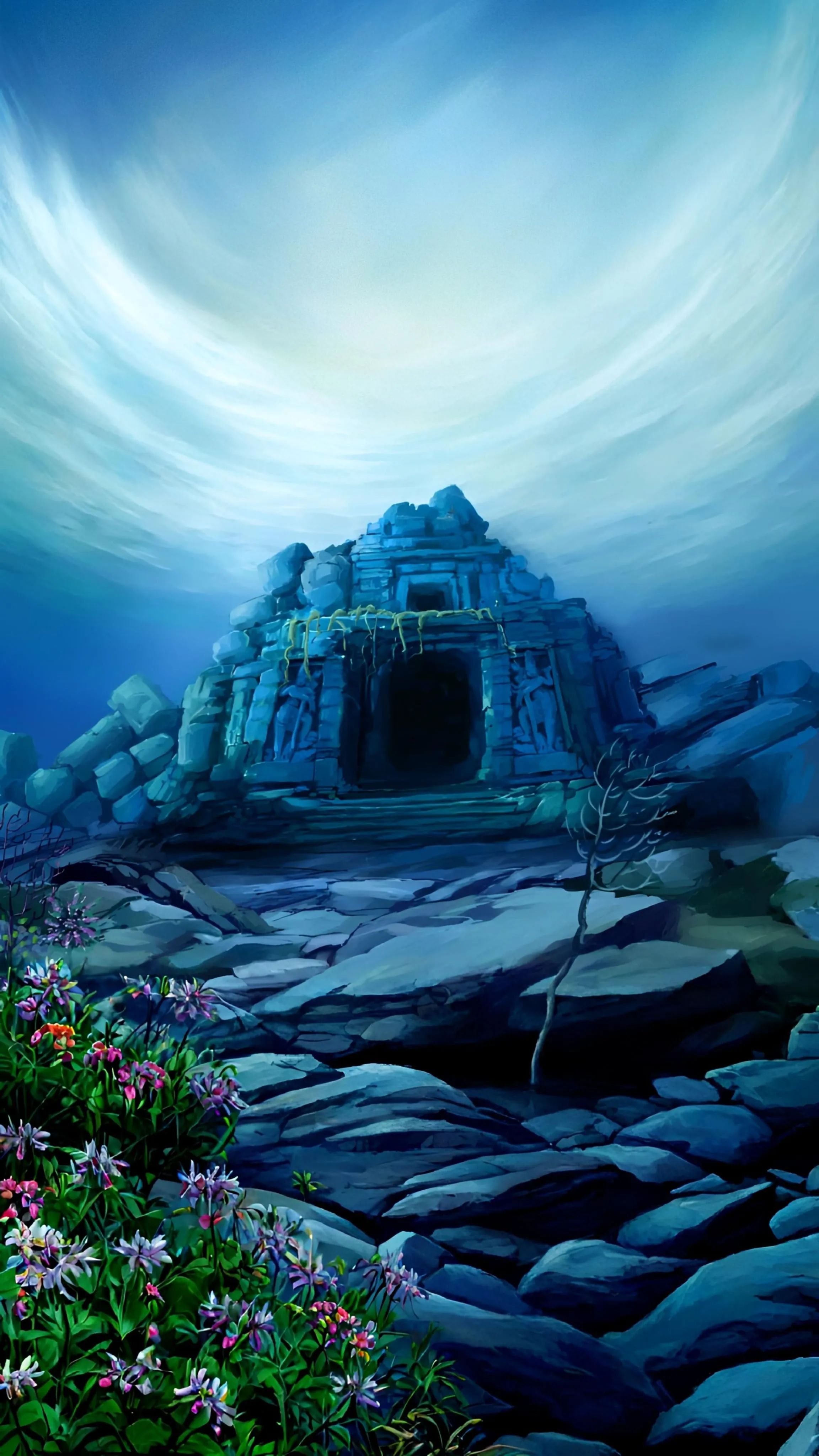
When the doors of the Kumari Amman temple are sealed shut, a man trapped inside escapes with the help of a talking severed head. Crossing the dried-up sea, he is stunned by unbelievable wonders and reaches Kabadapuram — the city the ocean once swallowed. There he witnesses the strange feats of a siddha and sees a man who looks just like himself. On the shore of Kabadapuram, crumbling under tidal waves and volcanic eruptions, that double flees with the woman he loves. Did those who escaped survive — or were they caught in the deluge?