

Karthigai Deepam Story: The Column of Fire
Ramakrishnan S · 5 November 2026 · 17 min read
Updated: 5 November 2026
Quick answer: In the Shiva Purana, Brahma and Vishnu quarrel over who is lord, and Shiva appears between them as a huge column of fire. Vishnu cannot find its root, and Brahma claims to have seen its top. The Tiruvannamalai district website tells a version of this as the Karthigai Deepam legend. Karthigai Deepam 2026: 24 November (Drik Panchang, Polimer News).
Contents
How did Brahma and Vishnu search for the ends of the column?
When is Karthigai Deepam in 2026, and what is lit at Tiruvannamalai?
Key facts
| Fact | Detail | Source |
|---|---|---|
| What is the story? | Brahma and Vishnu quarrel over who is lord; Shiva appears as a huge column of fire between them and they set out to find its top and root | Shiva Purana, Vidyeshvara Samhita 6 to 7 |
| Who searches where? | Vishnu as a boar for the root, Brahma as a swan for the top | Shiva Purana, Vidyeshvara Samhita 7.16 to 18 |
| Who finds an end? | In this chapter, Vishnu does not find the root; Brahma claims to have seen the top, and the text calls this a falsehood | Shiva Purana, Vidyeshvara Samhita 7.16 to 28 |
| What is the ketaki flower's part? | In this chapter, a falling ketaki flower repeats Brahma's claim as his witness | Shiva Purana, Vidyeshvara Samhita 7.19 to 28 |
| What happens to Brahma? | Shiva says he shall not be honoured or have his own temple or festival, but names him presiding deity of sacrifices | Shiva Purana, Vidyeshvara Samhita 8.10 to 14 |
| What happens to Vishnu? | Shiva grants him a footing equal to his own, with separate temple, idols, festivals and worship | Shiva Purana, Vidyeshvara Samhita 7.31 to 32 |
| Do other tellings have the lie? | Not the two we read: in the Linga Purana and the Rudra Samhita, Brahma comes back without seeing the end of the column | Linga Purana 17.45; Shiva Purana, Rudra Samhita 7.62 |
| Which hill does the Purana name? | Shiva says that since his emblem "rose high resembling a mountain of fire", this "shall be famous as Ruddy (Aruṇa) mountain"; a translator's footnote headed Aruṇācala places the Aruṇa mountain west of Kailasa; neither names Tiruvannamalai | Shiva Purana, Vidyeshvara Samhita 9.21 and the chapter's footnote "Aruṇācala" |
| Which day does the Purana give? | The Ardra star in Margashirsha as the day he appeared as the column (the translator adds November-December); the same chapter says the day of Brahma and Vishnu's worship will be famous as Shivaratri; it does not mention Karthigai Deepam | Shiva Purana, Vidyeshvara Samhita 9.10 and 9.15 |
| When is Karthigai Deepam in 2026? | Tuesday, 24 November 2026; Drik Panchang (New Delhi) and a Polimer News report of 17 September 2026 agree | Drik Panchang; Polimer News |
| Is it in a Siva Comics series? | No series page we read mentions it; the link is ours | sivacomics.com/genre/mythology |
What is the Karthigai Deepam story?
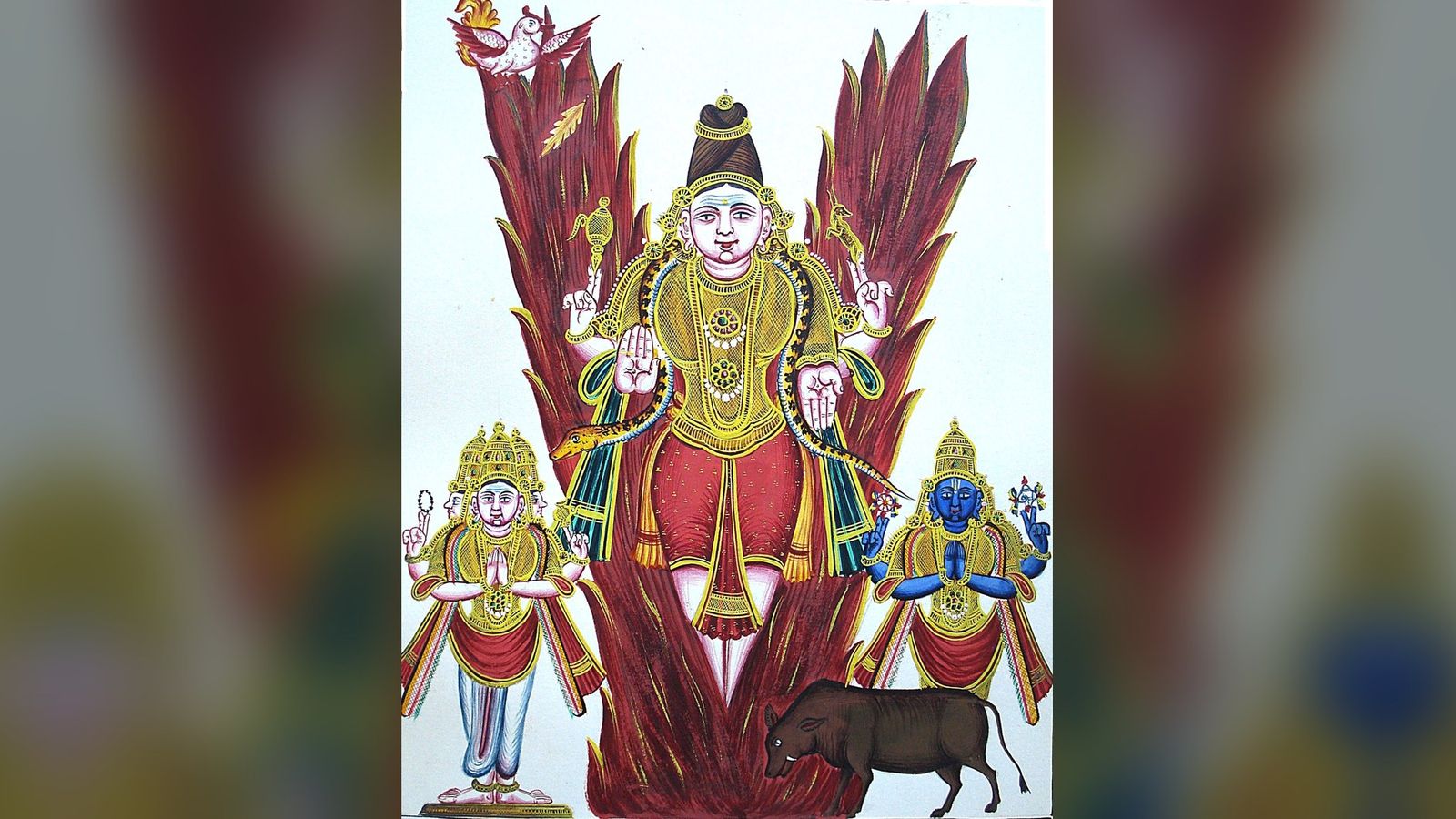
In the Shiva Purana, Brahma and Vishnu quarrel over which of them is the lord, Shiva appears between them as a huge column of fire, and the two set out to find its top and its root. The Shiva Purana is a Sanskrit text that wisdomlib lists among the eighteen Mahapuranas. We read it in wisdomlib's English translation by J. L. Shastri, Vidyeshvara Samhita, chapters 6 to 9. Wikipedia describes Brahma as the god of creation and Vishnu as the god of preservation.
Vishnu cannot find the root and says so. Brahma claims to have seen the top, and the text calls his claim "the falsehood" (7.28). The Tiruvannamalai district website tells a version of this story as the legend of Karthigai Deepam, the festival of lamps in Tamil Nadu, but the Purana chapters we read never use the word Karthigai.
Why did Brahma and Vishnu quarrel?
Brahma and Vishnu quarrel because each claims to be the lord (Vidyeshvara Samhita 6.1 to 9). Vishnu is resting on his serpent couch when Brahma arrives and tells him to get up and "see me who am your lord" (6.2 to 3).
The two argue, "claiming to be the lord", and get ready to fight (6.8 to 9). The gods, frightened, go to Shiva's home on Kailasa, thinking that Shiva is "the cause of creation, maintenance, annihilation, concealment and blessing" (6.19 to 22).
Read free: Kabadapuram. A man sealed inside a temple escapes with the help of a talking severed head and crosses the dried-up sea. Read Episode 1 free →
How did Shiva appear as a column of fire?
Shiva appears as a huge column of fire between Brahma and Vishnu while the flames from their two weapons are burning the three worlds (Vidyeshvara Samhita 7.10 to 12). Shiva tells the gods the fight is "already known to me" (7.2). Verse 8 says "the lord vanished in the firmament".
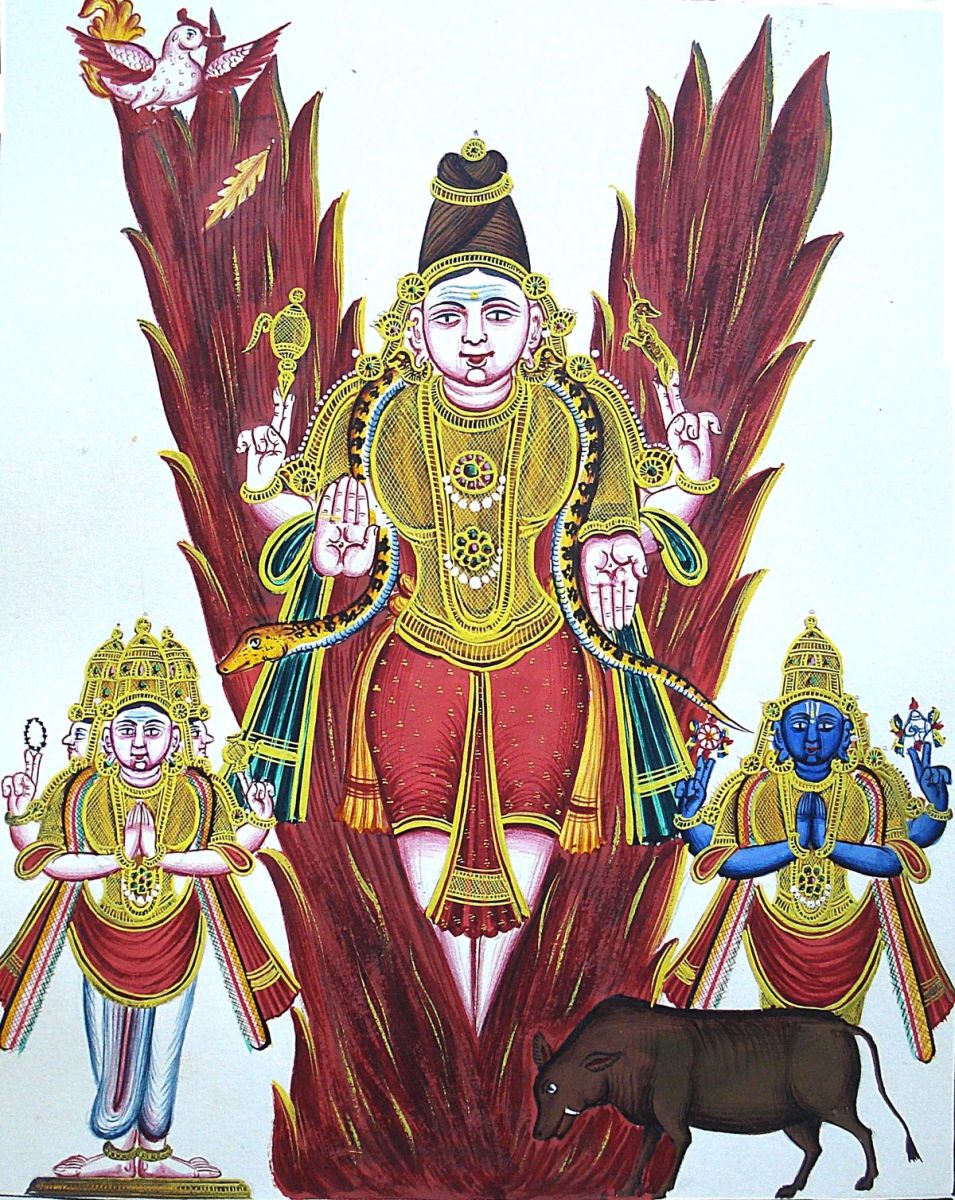
On seeing the "imminent untimely dissolution", the text says, the "bodiless form" of Shiva took "a huge column of fire" in their midst, and the two weapons fell into it (7.10 to 12). They decide "We have to find out its top and bottom" (7.13 to 15).
How did Brahma and Vishnu search for the ends of the column?
Vishnu took the form of a boar to look for the root of the column, and Brahma took the form of a swan to look for its top (Vidyeshvara Samhita 7.16 to 18). Going "very far below" through the netherworlds, Vishnu "could not see the root of the fiery column" and came back exhausted (7.16 to 18).
Brahma, who had gone high into the sky, "saw a certain bunch of Ketakī flower of mysterious nature falling from above" (7.19). The flower tells him it is "falling down from the middle of this primordial column" and that "Hence I do not see how you can see the top" (7.22 to 23).
What did Brahma and the ketaki flower say?
Brahma asked the ketaki flower to say, in Vishnu's presence, that Brahma had seen the top of the column, and the flower repeated this claim (Vidyeshvara Samhita 7.24 to 28).
Returning to the original place, Brahma finds Vishnu "utterly exhausted" and "danced with joy" (7.26). Vishnu admits that he could not see the bottom. Brahma says, "the top of this column has been seen by me. This Ketakī flower is my witness", and the flower "repeated the falsehood" (7.27 to 28). Vishnu, "taking it to be true", worships Brahma (7.28).
What did Shiva do about Brahma's lie?
Shiva comes out of the column to chastise Brahma, grants Vishnu a footing equal to his own, and denies Brahma a temple and festival of his own (Vidyeshvara Samhita 7.29 to 8.21). The text says Shiva took a visible form "in order to chastise Brahmā who practised trickery" (7.29). He tells Vishnu he is pleased because Vishnu "strictly adhered to truth", and that Vishnu will have "a footing equal to mine", with "separate temple, installation of idols, festivals and worship" (7.31 to 32).
In chapter 8, Shiva creates a being called Bhairava "to quell the pride of Brahmā" (8.1). Bhairava seizes the tuft of Brahma's fifth head, which was "guilty of haughtily uttering a falsehood", and shakes his sword to cut it off (8.4). At Vishnu's plea (8.6 to 7), Shiva asks Bhairava to desist (8.8). Shiva tells Brahma that "you shall not be honoured, nor shall you have your own temple or festival" (8.10 to 11), but names him the "presiding deity" of sacrifices (8.13 to 14).
A footnote in the translation, quoting V. S. Agrawal, calls the idea that Rudra clipped Brahma's head a later one, "contradicted by Śiva-purāṇa I. 8.8". A footnote to the Linga Purana translation (chapter 17) says that "originally he had five heads but one was cut off by Śiva for telling a lie", and adds that another version has the head burnt off.
Do other tellings say Brahma lied?
Of the three tellings we read, only the Shiva Purana's Vidyeshvara Samhita has the ketaki flower and Brahma's lie. In the Linga Purana (chapter 17) and in the Shiva Purana's Rudra Samhita (chapter 7), Brahma comes back without seeing the end of the column. The sources we opened do not say which telling is older.
In the Linga Purana, Brahma narrates. While he and Vishnu fight in the "ocean of dissolution" (17.18 to 32), a "brilliant Liṅga" appears "in order to suppress our dispute" (17.33). Vishnu says "Let us test this fiery Being" (17.36), and the two go as boar and swan (17.37 to 38). Brahma says, "I was tired. Arrogant that I was I could not see the end and returned to the place of my start" (17.45). In the Rudra Samhita, Brahma says, "Unable to see the top I came down after some time" (7.62). Neither passage mentions a flower.
How does the column of fire connect to Arunachala hill?
In the Shiva Purana, Shiva says "this shall be famous as Ruddy (Aruṇa) mountain" (Vidyeshvara Samhita 9.21), but the chapter does not name Tiruvannamalai; the link to the hill at Tiruvannamalai is Tamil tradition, as the district website tells it. The reason Shiva gives is that the emblem "rose high resembling a mountain of fire" (Vidyeshvara Samhita 9.21). A footnote to the chapter, headed "Aruṇācala", says "The Aruṇa mountain lies to the west of Kailāsa and is the abode of Śiva", and does not mention Tiruvannamalai.
The Purana also gives a different day: Shiva says the day he manifested as a column of fire is "the Ārdrā star in the month of Mārgaśīrṣa", and the translator adds "(November-December)" (9.15). Our sources do not say how this joins the Karthigai Deepam tradition. The Tiruvannamalai district website says Shiva "then appeared like hill shape on Thiruvannamalai region" and that the names Tiruvannamalai and Arunachala denote "holy fire hill". That page was last updated on 7 July 2018 and names no Purana. In its telling Brahma and Vishnu both fail, and there is no flower or lie.
Wikipedia's temple article says the temple is celebrated in the Tamil devotional works Tevaram (7th century CE) and Tiruvempavai by Manikkavacakar (9th century CE), and that Sekkilhar, the author of the Periya Puranam, wrote that Appar and Sambandar worshipped Annamalaiyar there. We did not open those hymns. Wikipedia's two articles name the flower differently, thalampu in the temple article and ketaki in the Karthika Deepam article, but both link the name to the same Wikipedia page, Pandanus odorifer.
When is Karthigai Deepam in 2026, and what is lit at Tiruvannamalai?
Karthigai Deepam 2026 falls on Tuesday, 24 November, according to Drik Panchang and Polimer News. Drik Panchang's page, set to New Delhi, lists "Karthigai Deepam on Tuesday, November 24, 2026". Polimer News, in a report dated 17 September 2026 about a ceremony at the Annamalaiyar temple marking the start of preparations, says the festival begins with flag-hoisting on 15 November and that the Thirukarthigai Deepa festival is on 24 November (நவம்பர் 24ஆம் தேதி திருக்கார்த்திகை தீபத் திருவிழா).
We did not find the festival date on the home page of the temple's own website, run by the Tamil Nadu government's HR&CE department (annamalaiyar.hrce.tn.gov.in), when we read it on 31 October 2026, so we cannot cite the temple itself. Wikipedia's temple article says "A lamp is lit in a huge cauldron" at the top of the hill. The hour differs between sources: the district website says "lit during 5 pm", while Drik Panchang says Karthigai Deepam "is lit after sunset at 6 p.m.", as does Wikipedia's Arunachala article, which needs more citations.
Why is Karthigai Deepam celebrated?
The Tiruvannamalai district website gives two legends for Karthigai Deepam: Shiva appearing as fire and then in hill shape at Tiruvannamalai, and Parvati uniting Murugan's six forms, raised by the six Krittika stars, on this day. Wikipedia adds that the festival is mentioned in Sangam literature. Sangam literature is Tamil poetry of the Sangam period (200 BCE to 300 CE, per Wikipedia).
The district website says "Another legend links karthigai Deepam to Lord Muruga": Lord Murugan took the form of six babies in a lake and was looked after by "six krittika stars", and, on this day, the goddess Parvati united the six forms. For Sangam literature, Wikipedia names the Tamil anthology Akanaṉūṟu and songs of the poet Avvaiyar, and gives a 2001 article in The Hindu as a reference. The district website also names "Ahananuru" and says that Avvaiyar "mentions about karthigai Deepam in her poems". Neither page gives a poem number, so we could not check the lines and leave this unverified.
Does a Siva Comics series tell the Karthigai Deepam story?
None of the Siva Comics series pages we read mentions the Karthigai Deepam story, so the link is ours: the Deepam is lit on a temple hill in Tamil Nadu, and Kabadapuram is a Tamil story that begins at a temple. The Kabadapuram series page begins its synopsis: "When the doors of the Kumari Amman temple are sealed shut, a man trapped inside escapes with the help of a talking severed head."
Browse the Mythology comics or Read Episode 1 of Kabadapuram free.
Common questions
When is Karthigai Deepam in 2026?
Karthigai Deepam 2026 falls on Tuesday, 24 November. Drik Panchang (for New Delhi) lists that date, and a Polimer News report of 17 September 2026 gives 24 November for the Thirukarthigai Deepa festival at the Tiruvannamalai temple. We did not find the date on the home page of the temple's own website when we read it on 31 October 2026.
Why did Brahma and Vishnu fight in the Shiva Purana?
In the Shiva Purana's Vidyeshvara Samhita (chapter 6), Brahma and Vishnu fight because each claims to be the lord. Brahma tells the resting Vishnu to get up and see him as his lord, and the quarrel turns into a fight (6.1 to 18).
Who found the end of Shiva's column of fire?
In the Shiva Purana's Vidyeshvara Samhita, nobody does. Vishnu, as a boar, could not see the root of the column. Brahma, as a swan, only claimed to have seen the top, and the text calls his claim a falsehood. In the Linga Purana and the Rudra Samhita, Brahma also comes back without seeing the end of the column.
What did the ketaki flower do in the Karthigai Deepam story?
In the Shiva Purana's Vidyeshvara Samhita, a ketaki flower falls from above while Brahma is searching for the top, and Brahma asks it to say that he saw the top. It repeats this to Vishnu. Shiva says he has no desire to include it in his worship (8.15) but, when the flower pleads, allows his attendants to wear it (8.19 to 21).
Do all Puranas say Brahma lied?
Not all Puranas say Brahma lied. Of the three tellings we read, only the Shiva Purana's Vidyeshvara Samhita has Brahma's lie and the ketaki flower. In the Linga Purana (17.45) and the Shiva Purana's Rudra Samhita (7.62), Brahma comes back without seeing the end of the column. The sources we opened do not say which telling is older.
Does the Shiva Purana say the column of fire is Arunachala in Tiruvannamalai?
The Shiva Purana chapters we read do not name Tiruvannamalai. In Vidyeshvara Samhita 9.21, Shiva says that since his emblem "rose high resembling a mountain of fire", this "shall be famous as Ruddy (Aruṇa) mountain". A translator's footnote headed "Aruṇācala" says the Aruṇa mountain lies to the west of Kailasa, and does not mention Tiruvannamalai. The link to the hill at Tiruvannamalai is Tamil tradition, as the Tiruvannamalai district website tells it.
What is lit at Tiruvannamalai on Karthigai Deepam?
According to Wikipedia's article on the temple, a lamp is lit in a huge cauldron at the top of the Annamalai hill. The sources differ on the hour: the district website says 5 pm; Drik Panchang and Wikipedia's Arunachala article say 6 pm.
Why is Karthigai Deepam celebrated?
The Tiruvannamalai district website gives two legends: Shiva appeared as a huge fire that Brahma and Vishnu could not measure and then in hill shape at Tiruvannamalai, and Parvati united Murugan's six forms on this day. The Shiva Purana chapters we read tell the fire story but do not mention Karthigai.
Is the Karthigai Deepam festival mentioned in Sangam literature?
Wikipedia and the Tiruvannamalai district website both say so, and both name the Tamil anthology Akananuru and the poet Avvaiyar. Neither gives a poem number, so we could not check the lines and the claim is unverified here.
Is there a Siva Comics series about Karthigai Deepam?
No Siva Comics series page we read mentions the Karthigai Deepam story, so the link between this article and the comics is ours. The Mythology page lists Kabadapuram and Paanjajanyam, and Episode 1 of Kabadapuram is free to read.
In the comic
No Siva Comics series page we read mentions the Karthigai Deepam story, so the link is ours: the Deepam is lit on a temple hill in Tamil Nadu, and Kabadapuram is a Tamil story that begins at a temple. Its series page begins its synopsis: "When the doors of the Kumari Amman temple are sealed shut, a man trapped inside escapes with the help of a talking severed head." Read Kabadapuram, Episode 1 →
Sources
Shiva Purana, Vidyeshvara Samhita, Chapter 6: Battle between Brahma and Vishnu, wisdomlib.org, Shiva Purana translated by J. L. Shastri (1950): why Brahma and Vishnu quarrel and fight, and why the gods go to Kailasa
Shiva Purana, Vidyeshvara Samhita, Chapter 7: Shiva manifests himself as a column of fire, wisdomlib.org, Shiva Purana translated by J. L. Shastri (1950): the column of fire, the search by boar and swan, the ketaki flower and Brahma's lie
Shiva Purana, Vidyeshvara Samhita, Chapter 8: Shiva's forgiveness of Brahma, wisdomlib.org, Shiva Purana translated by J. L. Shastri (1950): Bhairava and Brahma's fifth head, Brahma's boon and loss, and the flower; the footnote on the later version of the head
Shiva Purana, Vidyeshvara Samhita, Chapter 9: The Proclamation of Shiva as Maheshvara, wisdomlib.org, Shiva Purana translated by J. L. Shastri (1950): the Aruna mountain, the Ardra star in Margashirsha, and the translator's footnote on Arunachala
Shiva Purana, Rudra Samhita, Srishti-khanda, Chapter 7: The dispute between Brahma and Vishnu, wisdomlib.org, Shiva Purana translated by J. L. Shastri (1950): a second telling in which Brahma returns unable to see the top
Linga Purana, Chapter 17: Origin of the Linga (lingodbhava), wisdomlib.org, Linga Purana translated by J. L. Shastri (1951): a third telling in which Brahma returns unable to see the end; the translator's footnote on Brahma's fifth head
Karthigai Deepam 2026 date and time for New Delhi, Drik Panchang: the 2026 date, 24 November, for New Delhi
Tiruvannamalai Annamalaiyar temple Karthigai Deepam preparations ceremony report, 17 September 2026, Polimer News (in Tamil): flag-hoisting on 15 November and the festival on 24 November
Karthigai Festival, Tiruvannamalai District Administration (tiruvannamalai.nic.in), last updated 7 July 2018: the Tamil tradition linking the story to Tiruvannamalai, the Murugan legend and the Sangam mention; this is tradition, not the Purana
Arulmigu Arunachaleswarar Temple, Tiruvannamalai, HR&CE Department, Government of Tamil Nadu: read 31 October 2026: the page did not list the 2026 festival date
Arunachalesvara Temple, Wikipedia: the names Annamalai and Arunachala, the Tamil devotional works, the ten-day festival and the lamp at the top of the hill
Karthika Deepam, Wikipedia: the Krittika legend, the Sangam mention (Akananuru, Avvaiyar) and the ketaki flower
Arunachala, Wikipedia (carries a "needs more citations" notice): the hour of the lighting on the hill
Mythology, sivacomics.com: the genre page, read 31 October 2026
Kabadapuram, sivacomics.com: the series page synopsis, read 31 October 2026
Cite this page: Ramakrishnan S. "Karthigai Deepam Story: The Column of Fire." Siva Comics, 5 November 2026. https://www.sivacomics.com/insider/karthigai-deepam-story
You just read the story. Now read the comics. Episode 1 of every series is free. A free account unlocks the rest and keeps your place. Start reading free → · Browse all series
Read the comics
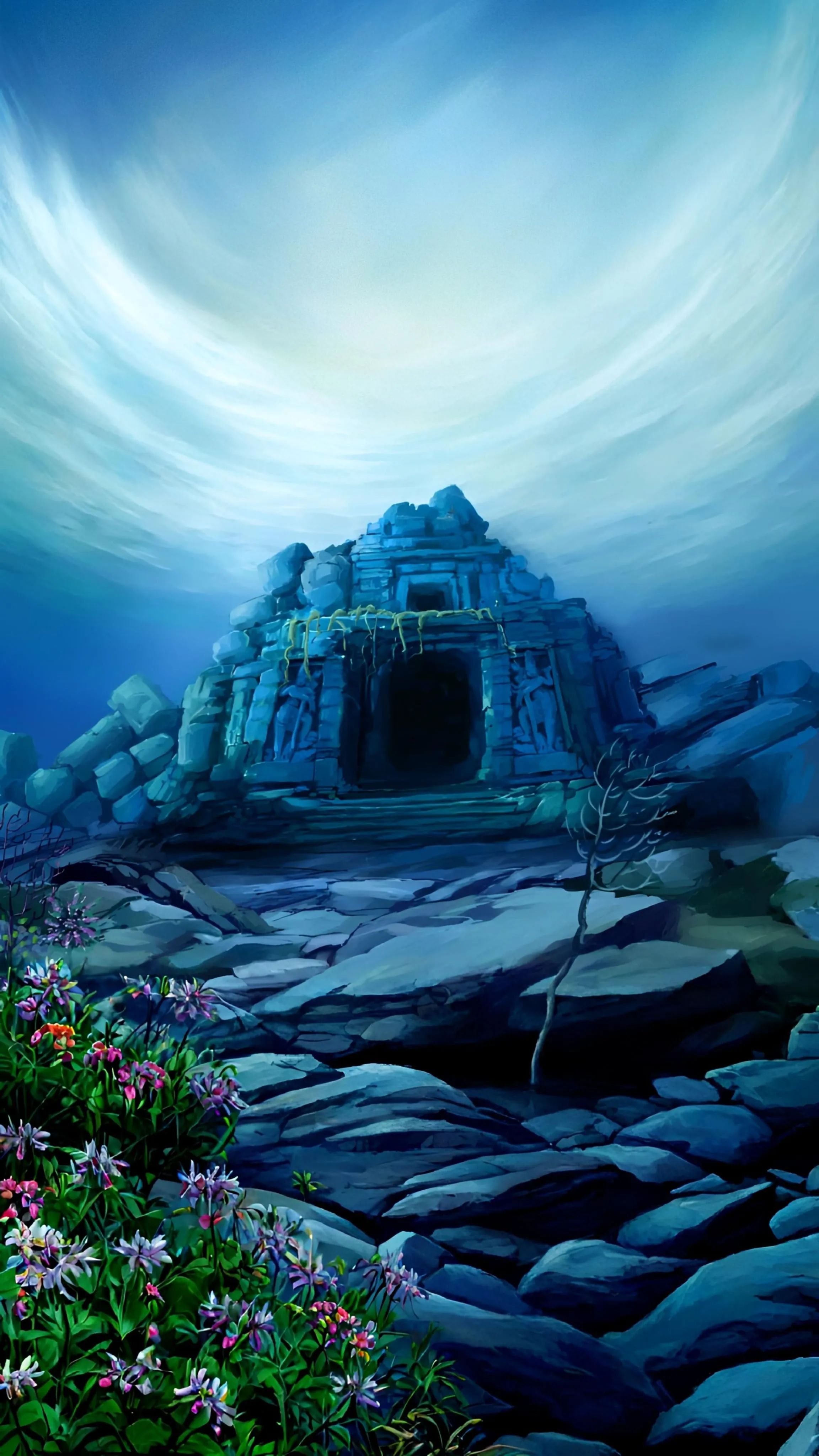
Kabadapuram
When the doors of the Kumari Amman temple are sealed shut, a man trapped inside escapes with the help of a talking severed head. Crossing the dried-up sea, he is stunned by unbelievable wonders and reaches Kabadapuram — the city the ocean once swallowed. There he witnesses the strange feats of a siddha and sees a man who looks just like himself. On the shore of Kabadapuram, crumbling under tidal waves and volcanic eruptions, that double flees with the woman he loves. Did those who escaped survive — or were they caught in the deluge?
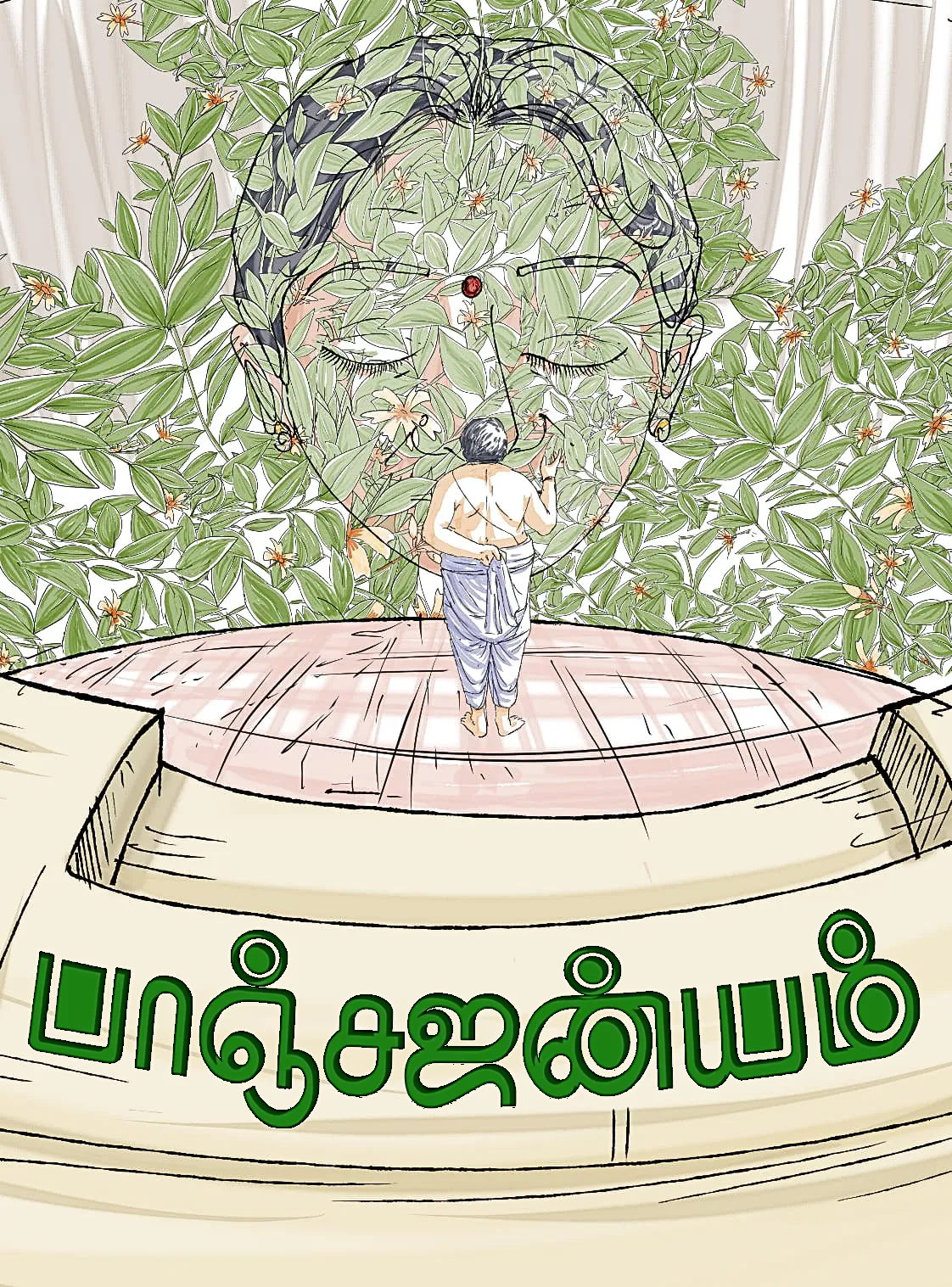
Paanjajanyam
After a spell of rain, snails appear from nowhere and multiply. For his deaf father — who insists their sound is the longing voice of his late wife — a son who studied acoustics sets out to find the cause. How Vaishnava hymns, Jagadish Chandra Bose, plants and snails are all bound together in the form of sound — that is Paanjajanyam.