

Yakshi: Tree Spirit in Art, Ghost in Folklore
Ramakrishnan S · 9 November 2026 · 16 min read
Updated: 9 November 2026
Quick answer: A yakshi (or yakshini) is a female nature spirit in Hindu, Buddhist and Jain mythology; her male counterpart is the yaksha. Museums hold early Indian sculptures of yakshis, and Kerala folk tales tell of vengeful yakshis such as Kalliyankattu Neeli. None of the four Siva Comics series pages mentions a yakshi.
Contents
Key facts
| Fact | Detail | Source |
|---|---|---|
| What is a yakshi? | A female nature spirit in Hindu, Buddhist and Jain mythology; the male counterpart is the yaksha | Wikipedia, Yakshini (More citations needed notice) |
| Is a yakshi good or evil? | Both: Coomaraswamy (1928) says they were worshipped "in part as beneficent, in part as malevolent beings" | Coomaraswamy, Yaksas, Part I (1928) |
| How old is the Didarganj Yakshi? | Accounts differ: once dated to the 3rd century BCE for its Mauryan polish; Wikipedia also gives about the 2nd or the 1st century CE | Wikipedia, Didarganj Yakshi |
| Where is the Didarganj Yakshi? | In the Bihar Museum, Patna; excavated 18 October 1917; 5 ft 2 in tall; the left hand is broken | Wikipedia, Didarganj Yakshi |
| Is there a yakshi at the Met? | A red sandstone bracket titled "Tree Spirit Deity (Yakshi)", from the Mathura region, dated 1st to 2nd century | Metropolitan Museum of Art, object 27.186 |
| What is in the Natyashastra? | Brahma assigned the yakshinis to the rooms to guard the playhouse (Natyashastra 1.82-88) | wisdomlib, Yakshini (Natyashastra glossary) |
| What is a yakshi in Jainism? | A female attendant of the Tirthankaras, per a book on Jain iconography quoted by wisdomlib | wisdomlib, Yakshini (Jainism glossary) |
| What is a yakshi in Kerala folktales? | Generally not considered benevolent; many stories feature murdered women reborn as vengeful yakshis | Wikipedia, Yakshini (More citations needed notice) |
| Who is Kalliyankattu Neeli? | A yakshi of Kerala folk songs and tales; Wikipedia says she is also worshipped as a mother goddess | Wikipedia, Kalliyankattu Neeli |
| Did Kadamattathu Kathanar exist? | Wikipedia says there is currently no certain proof that he really existed | Wikipedia, Kadamattathu Kathanar |
| Is there a yakshi legend in Tamil Nadu? | Wikipedia retells one: two sisters, Chempakavally and Neelapilla, at Thekkalai near Nagercoil | Wikipedia, Yakshini (More citations needed notice) |
| Is it in a Siva Comics series? | No series page we read mentions a yakshi; the link is ours | sivacomics.com series and genre pages |
What is a yakshi?
A yakshi (also called a yakshini) is a female nature spirit in Hindu, Buddhist and Jain mythology, and the female counterpart of the male yaksha. Wikipedia's Yakshini page says yakshinis are "a class of female nature spirits in Hindu, Buddhist, and Jain religious mythologies", and that they are different from devas, asuras, gandharvas and apsaras. Wikipedia's Yaksha page describes the yakshas as "nature spirits in Hindu mythology which are associated with water, trees, forests, wilderness, treasure, and fertility", and says Kubera, the god of wealth and prosperity, is considered the king of the yakshas.
The art historian Ananda Coomaraswamy, in his study Yaksas (Smithsonian Institution, 8 May 1928), gives the Sanskrit forms yaksa, yaksi and yaksini and wrote in a footnote that "The word is perhaps of indigenous non-Aryan origin". Wikipedia's Yakshini page carries a "More citations needed" notice dated June 2017.
Is a yakshi good or evil?
A yakshi can be either, according to the sources we read: Coomaraswamy wrote in 1928 that yakshinis were extensively worshipped "in part as beneficent, in part as malevolent beings".
Wikipedia's Yaksha page says the male yakshas are "usually considered benevolent, and sometimes mischievous or capricious", and Coomaraswamy, citing Hopkins's Epic Mythology, calls them "sometimes sylvan deities, usually but not always gentle". Wikipedia's Yakshini page says well-behaved and benign yakshinis are worshipped as tutelaries, while mischievous ones "can haunt and curse humans, according to Indian folklore". Wikipedia's Yaksha page adds that a darker version of the yaksha is "a kind of Bhoota (ghost) that haunts the wilderness". Coomaraswamy, by contrast, cites a Mahabharata passage (6, 41, 4) that ranks yakshas "below the Devas, but above the goblins and ghosts", though he also notes that yakshas are often called Bhutas. For Kerala, the Yakshini page says yakshis "are generally not considered benevolent". The emphasis differs by region and by source; that reading is ours.
Read free: Kabadapuram. A man sealed inside a temple escapes with the help of a talking severed head and crosses the dried-up sea. Read Episode 1 free →
Where do yakshis appear in ancient Indian art?
In ancient Indian art, yakshis appear as stone figures at the Buddhist sites of Bharhut and Sanchi and as the Didarganj Yakshi in Patna, according to Wikipedia's article on that statue. The article says Sanchi and Bharhut "both have many", those at Bharhut carrying inscriptions with their names. It words this carefully: they are yakshis, or at least figures that modern art historians identify as yakshis.
The Didarganj Yakshi is, in Wikipedia's words, "one of the finest examples of very early Indian stone statues". It was excavated on 18 October 1917, stands 5 ft 2 in tall, and is now in the Bihar Museum in Patna. Its date is not settled: it used to be dated to the 3rd century BCE because of its fine "Mauryan polish", and the article also gives about the 2nd century CE and the 1st century CE. That article's own sentence on the dating is muddled, because it brings in a second yakshi without polish.
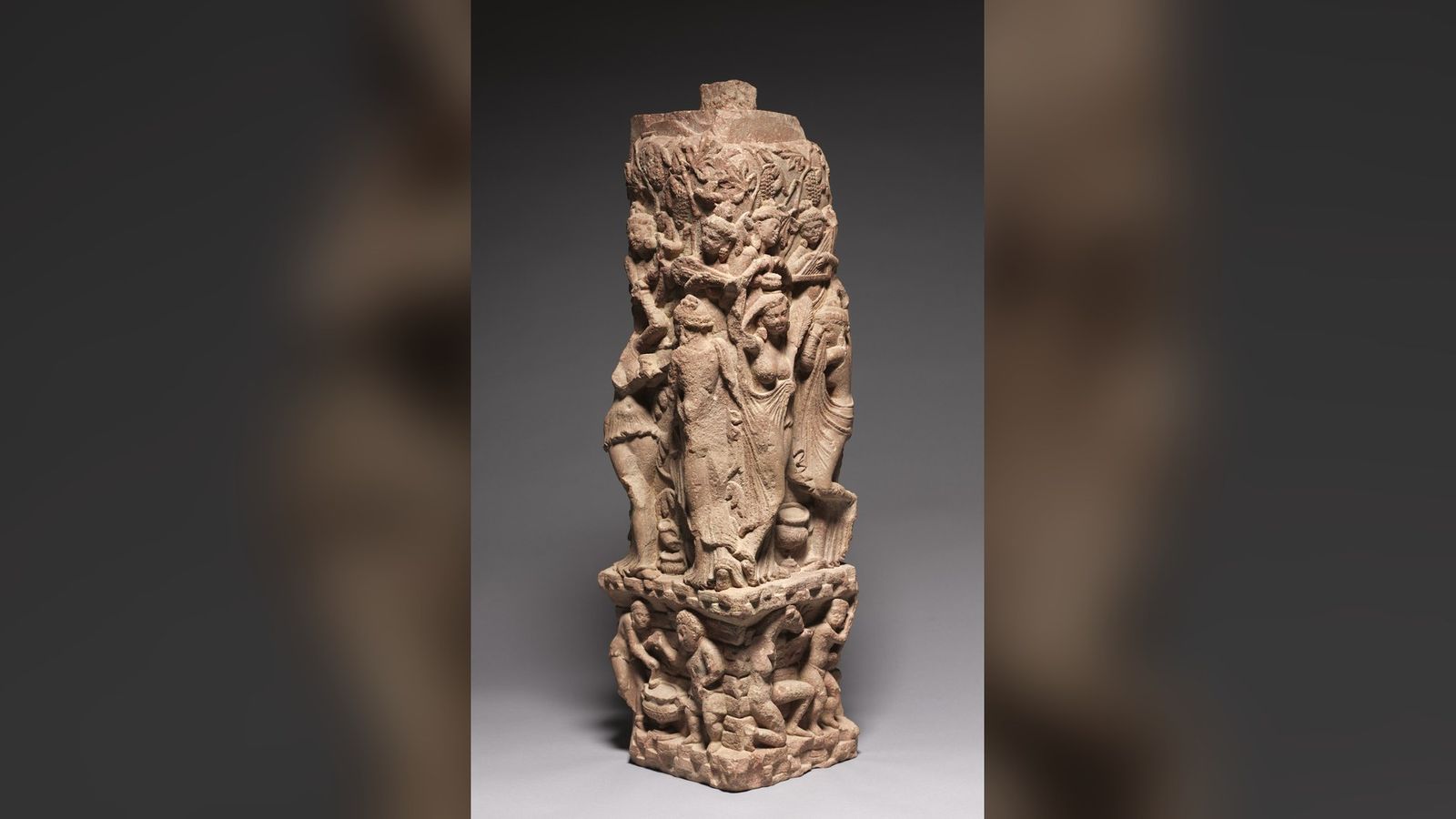
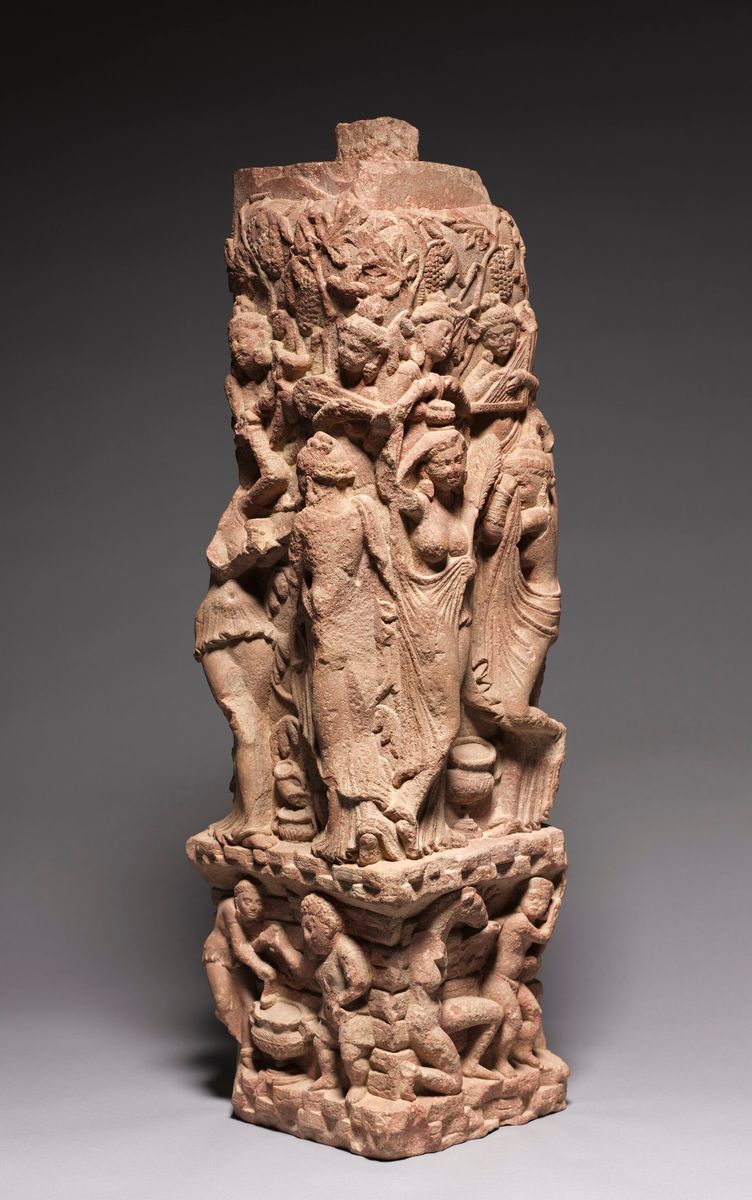
The Metropolitan Museum of Art in New York lists a red sandstone bracket from the Mathura region of Uttar Pradesh, dated to the 1st to 2nd century, under the title "Tree Spirit Deity (Yakshi)". Coomaraswamy wrote that in early reliefs at Bharhut, Bodhgaya, Sanchi and Mathura "the female figures associated with trees are voluptuous beauties".
What do old texts say about yakshis?
Coomaraswamy wrote in 1928 that comparatively few individual yakshinis are mentioned by name, and that the Mahabharata (3, 83, 23) speaks of a Yakshini shrine at Rajagrha as "world-renowned". Wikipedia says the Mahabharata recounts "the dynastic struggle for the throne of Hastinapura".
The Natyashastra is, in wisdomlib's words, "the name of a Sanskrit work dealing with" theatrics, drama, dance and music. According to wisdomlib's summary of Natyashastra 1.82-88, Brahma assigned deities to protect the playhouse because of the jealous Vighnas ("malevolent spirits"), and assigned the yakshinis to the rooms.
Two Tantra texts describe the yakshini in ritual. Wikipedia says the Uddamareshvara Tantra describes thirty-six yakshinis with their mantras and ritual prescriptions; the same section carries a "Citation needed" tag from April 2017 on another sentence. A paper on the Kakshaputa Tantra, quoted by wisdomlib, says that in its ritual the yakshini is "the guardian spirit who provides worldly benefits to the practitioner".
Is the yakshi Hindu, Buddhist or Jain?
The yakshi belongs to all three traditions: Wikipedia calls yakshinis nature spirits "in Hindu, Buddhist, and Jain religious mythologies". Its Didarganj Yakshi article adds that yakshis are figures from Indian folk religion who were accepted into the pantheons of Buddhism, Hinduism and Jainism.
In Buddhism, Wikipedia says yakshis were important as a decorative element in early Buddhist monuments. Wisdomlib adds that yakshinis are a group of deities mentioned as attending the teachings in the 6th century Manjushrimulakalpa, a text it lists under Tibetan Buddhism.
In Jainism, wisdomlib quotes a book on Jain iconography (The Jaina Iconography, via archive.org) saying yakshinis "were female attendants" of the Tirthankaras. Wikipedia describes a tirthankara as "a saviour and supreme preacher of the dharma (righteous path)". The Met holds a copper-alloy figure from Karnataka, dated to the 9th to 10th century, titled "Enthroned Jina Attended by a Yaksha, a Yakshi, and Chauri-Bearers".
What is the yakshi of Kerala folklore?
In regional belief, Wikipedia says, yakshis in the literature and folktales of Kerala "are generally not considered benevolent", and many folk stories feature murdered women reborn as vengeful yakshis. Its Kalliyankattu Neeli article describes Neeli as a "Yakshi (Ghost)". We found no folklore collection we could open to check these points; they rest on Wikipedia's Yakshini page, which carries a "More citations needed" notice, and on its Neeli article.
The same page lists Malayatoor Ramakrishnan's 1967 novel Yakshi, which it says describes the yakshis' world as having "a blue sun, carpets of crimson grass, streams of molten silver". That is a modern novel, so we treat it as popular culture, not folklore.
Who is Kalliyankattu Neeli?
Kalliyankattu Neeli is a yakshi who appears in Kerala folk songs, Villadichan songs and folk tales of Travancore; Wikipedia calls her a "malevolent spirit" and also says she is worshipped as a mother goddess in a temple in Panchavankaadu. The Neeli article places her forest region "near the southern border".
One widely told narrative strand, in Wikipedia's words, begins with a woman named Alli, who is killed for her jewellery. Alli and her brother Ambi are reborn as the children of a Chola king, Neelan and Neeli, and the king abandons them in a forest region often identified with Panchavankadu/Kalliyankadu. In some tellings Neeli stops roaming and stays in one place, gradually understood as a motherly guardian figure. In C. V. Raman Pillai's 1891 novel Marthandavarma, Neeli is killed at Panchavankadu and resurrects as a yakshi for supernatural vengeance.
Wikipedia's Yakshini page says she "was said to be a Yakshi with divine beauty", but cites that to a book from the publisher Notion Press, and the Neeli article itself says nothing about beauty. The Neeli article has no quality notices, and we have kept its hedges, such as "often identified" and "in some tellings". Wikipedia cites all three narrative paragraphs to a single 2025 News18 Malayalam report.
What is the Kadamattathu Kathanar story?
In legend, Kadamattathu Kathanar is a priest (a kathanar) with magical powers, but Wikipedia says "Currently there is no certain proof that he really existed".
Wikipedia places him as an ordained deacon of Kadamattom Church, near Kolenchery in Ernakulam district, Kerala, in the 4th century, and says the church's history "is undocumented, surviving solely through local legends". The same article also says the fact "that a real priest lived in that area in the ninth century cannot be denied", without saying how the two dates fit. Its Legends section carries a "More citations needed" notice dated September 2023, and it says some of his stories are in the legend collection Aithihyamala.
Wikipedia's Neeli article says some narrative clusters connect Neeli to the Kathanar. In those versions she is "ritually subdued by binding her to a stone", and it adds that these versions "have been amplified through modern popular culture and screen retellings". The amplification is modern popular culture; Wikipedia does not say how old the Kathanar-and-Neeli link itself is.
Is there a yakshi legend from Tamil Nadu?
A legend from Thekkalai, next to Nagercoil in Tamil Nadu, tells of two sisters, Chempakavally and Neelapilla, who turned into vengeful yakshis, according to Wikipedia's Yakshini page. This is regional belief; it sits on the page with the "More citations needed" notice, and we did not open its source.
In that retelling their father killed them to keep them from "the lustful raja of the region". They haunted the place where they were killed until they were placated somewhat by poojas, rituals and a temple built on the site. The older sister, Chempakavally, eventually became a benevolent deity and went to Mount Kailash to worship Shiva, while the younger sister, Neelapilla, remained ferocious.
Where do yakshis appear in films and books today?
In popular culture, yakshis appear in modern Malayalam books and films: Wikipedia lists Malayatoor Ramakrishnan's 1967 novel Yakshi and a Malayalam horror film, Kalliyankattu Neeli (1979), that portrays Neeli as the main character.
Wikipedia also lists Neeli in the 1984 Malayalam horror film Kadamattathachan, and its Kadamattathu Kathanar article mentions films of 1966 and 1984 and television series about him.
Is there a yakshi in a Siva Comics series?
None of the four Siva Comics series pages (Kabadapuram, Paanjajanyam, Kadarpaalam and ISAI) mentions a yakshi, and neither do the Supernatural and Mythology genre pages, so the link is ours.
The Supernatural genre page lists three series and the Mythology genre page lists two. The Kabadapuram page says "a man trapped inside escapes with the help of a talking severed head" and reaches "the city the ocean once swallowed". The Paanjajanyam page says "snails appear from nowhere and multiply". Yakshi stories are supernatural folklore, so these are the shelves to browse next; that reading is ours, and none of these pages says a series is about a yakshi.
Series pages: Kabadapuram, Paanjajanyam, Kadarpaalam and ISAI. Read Episode 1 of Kabadapuram free.
Common questions
What is a yakshi?
A yakshi, also called a yakshini, is a female nature spirit in Hindu, Buddhist and Jain mythology, according to Wikipedia. Her male counterpart is the yaksha. The sources we read describe yakshis as helpful in some traditions and dangerous in others; Wikipedia's Yakshini page carries a "More citations needed" notice.
Is a yakshi a ghost?
In some tellings. Wikipedia's Kalliyankattu Neeli article calls her a "Yakshi (Ghost)", and its Yakshini page says many Kerala folk stories feature murdered women reborn as vengeful yakshis. Wikipedia's Yaksha page also says a darker yaksha is "a kind of Bhoota (ghost)". Coomaraswamy (1928), by contrast, cites a Mahabharata passage (6, 41, 4) that ranks yakshas "above the goblins and ghosts". The answer depends on the tradition.
What is the difference between a yaksha and a yakshi?
A yaksha is the male nature spirit and a yakshi (or yakshini) is the female one, according to Wikipedia. Wikipedia says yakshas are usually considered benevolent and sometimes mischievous or capricious, and that Kubera, the god of wealth, is considered their king.
Who is Kalliyankattu Neeli?
Kalliyankattu Neeli is a yakshi of Kerala folk songs and folk tales, which Wikipedia calls a "malevolent spirit" and which it says is also worshipped as a mother goddess in a temple in Panchavankaadu. Her story has several tellings, and the details we give rest on Wikipedia's Neeli article.
Where can I see a yakshi sculpture?
Wikipedia says the Didarganj Yakshi is in the Bihar Museum in Patna. The Metropolitan Museum of Art in New York lists several works titled Yakshi, including a red sandstone bracket from the Mathura region titled "Tree Spirit Deity (Yakshi)". We did not check which of these are on display today.
Are there yakshis in Jainism and Buddhism?
The sources we read place them in both. Wisdomlib quotes a book on Jain iconography saying yakshinis were female attendants of the Tirthankaras. Wikipedia says yakshis were important as a decorative element in early Buddhist monuments. Wikipedia describes them as accepted into Buddhism, Hinduism and Jainism.
Is there a yakshi legend from Tamil Nadu?
Wikipedia retells a legend from Thekkalai, next to Nagercoil in Tamil Nadu, about two sisters, Chempakavally and Neelapilla, who turned into vengeful yakshis. It sits on a page with a "More citations needed" notice, and we did not open the source Wikipedia cites for it.
Who is Kadamattathu Kathanar?
In legend, Kadamattathu Kathanar is a priest with magical powers. Wikipedia says there is currently no certain proof that he really existed, and that the history of his church survives solely through local legends. Some stories of Neeli are linked to him.
Is a yakshi the same as an apsara?
Wikipedia's Yakshini page says yakshinis are different from devas, asuras, gandharvas and apsaras. That page carries a "More citations needed" notice, and we did not find a second source on this point.
Is there a Siva Comics series about a yakshi?
No Siva Comics series page we read mentions a yakshi, so the link between this article and the comics is ours. The Supernatural genre page lists three series, the Mythology genre page lists two, and Episode 1 of Kabadapuram is free to read.
In the comic
No Siva Comics series page we read mentions a yakshi, so the link is ours. The Kabadapuram page says "a man trapped inside escapes with the help of a talking severed head". Read Kabadapuram, Episode 1 →
Sources
Yaksas, Part I (Smithsonian Miscellaneous Collections, vol. 80, no. 6), Ananda K. Coomaraswamy, Smithsonian Institution, 8 May 1928 (read on archive.org): old scholarship on yakshas and yakshinis: both beneficent and malevolent, the Yakshini shrine in the Mahabharata, and the woman-and-tree figures in early reliefs
Yakshini, Yakṣiṇī, Yakṣinī: 20 definitions, wisdomlib.org: Natyashastra 1.82-88, the Jain passage from The Jaina Iconography, a Kakshaputa Tantra passage and the Manjushrimulakalpa mention
Yakshini, Wikipedia (carries a "More citations needed" notice from June 2017): the definition, the Kerala folklore, the Thekkalai sisters and the Uddamareshvara Tantra
Yaksha, Wikipedia: yakshas as nature spirits, usually benevolent, with Kubera as king
Didarganj Yakshi, Wikipedia: the statue, its disputed date, and Sanchi and Bharhut yakshis
Kalliyankattu Neeli, Wikipedia: the folklore narratives, worship, the Kathanar link and the films
Kadamattathu Kathanar, Wikipedia (the Legends section carries a "More citations needed" notice from September 2023): who the Kathanar was in legend, the doubt over his existence and the films
Tirthankara, Wikipedia (the page has other "Citation needed" tags): the plain meaning of tirthankara
Mahabharata, Wikipedia (the page has another "Citation needed" tag): what the Mahabharata recounts
Tree Spirit Deity (Yakshi), object 27.186, The Metropolitan Museum of Art (read through the museum's open-access record): title, place, material and date of the bracket
Enthroned Jina Attended by a Yaksha, a Yakshi, and Chauri-Bearers, object 1987.142.335, The Metropolitan Museum of Art (read through the museum's open-access record): title, place, material and date of the Jain figure
Supernatural, sivacomics.com: the genre page, read 5 November 2026
Mythology, sivacomics.com: the genre page, read 5 November 2026
Kabadapuram, sivacomics.com: the series page synopsis, read 5 November 2026
Paanjajanyam, sivacomics.com: the series page synopsis, read 5 November 2026
Kadarpaalam, sivacomics.com: the series page, read 5 November 2026
ISAI, sivacomics.com: the series page, read 5 November 2026
Cite this page: Ramakrishnan S. "Yakshi: Tree Spirit in Art, Ghost in Folklore." Siva Comics, 9 November 2026. https://www.sivacomics.com/insider/yakshi
You just read the story. Now read the comics. Episode 1 of every series is free. A free account unlocks the rest and keeps your place. Start reading free → · Browse all series
Read the comics
Kabadapuram
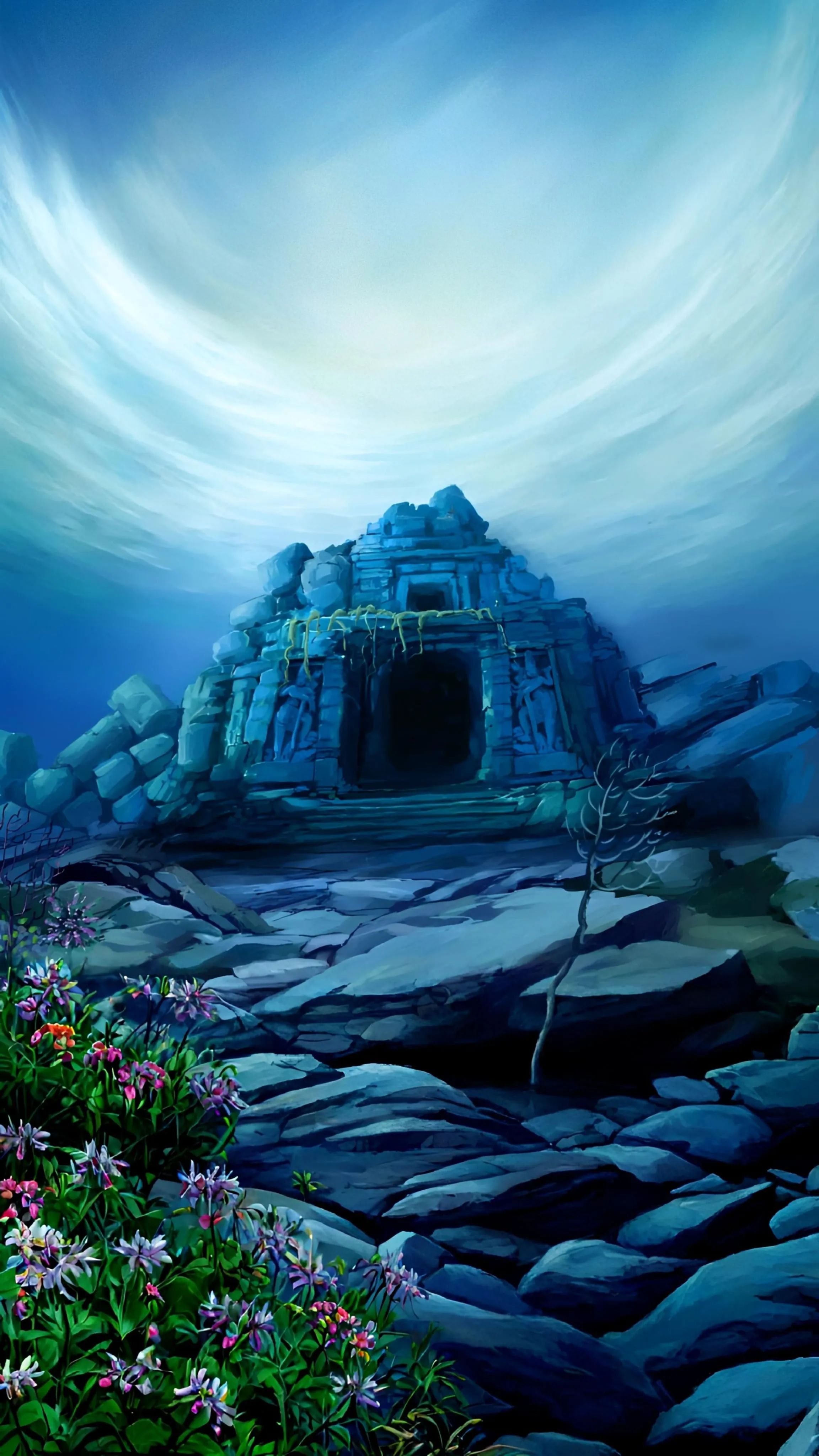
When the doors of the Kumari Amman temple are sealed shut, a man trapped inside escapes with the help of a talking severed head. Crossing the dried-up sea, he is stunned by unbelievable wonders and reaches Kabadapuram — the city the ocean once swallowed. There he witnesses the strange feats of a siddha and sees a man who looks just like himself. On the shore of Kabadapuram, crumbling under tidal waves and volcanic eruptions, that double flees with the woman he loves. Did those who escaped survive — or were they caught in the deluge?
Paanjajanyam
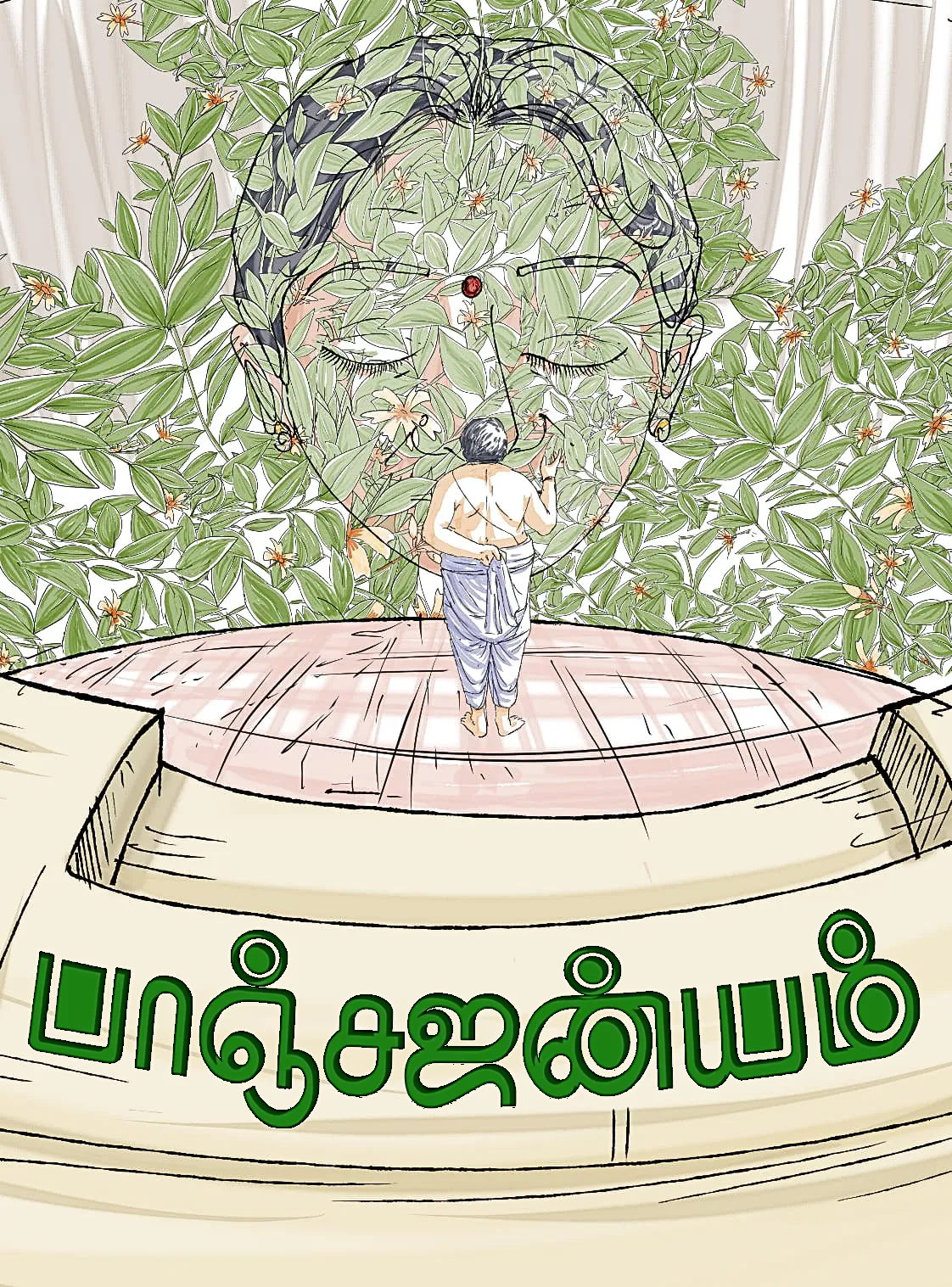
After a spell of rain, snails appear from nowhere and multiply. For his deaf father — who insists their sound is the longing voice of his late wife — a son who studied acoustics sets out to find the cause. How Vaishnava hymns, Jagadish Chandra Bose, plants and snails are all bound together in the form of sound — that is Paanjajanyam.