

Sita: Her Story in the Ramayana
Ramakrishnan S · 13 November 2026 · 17 min read
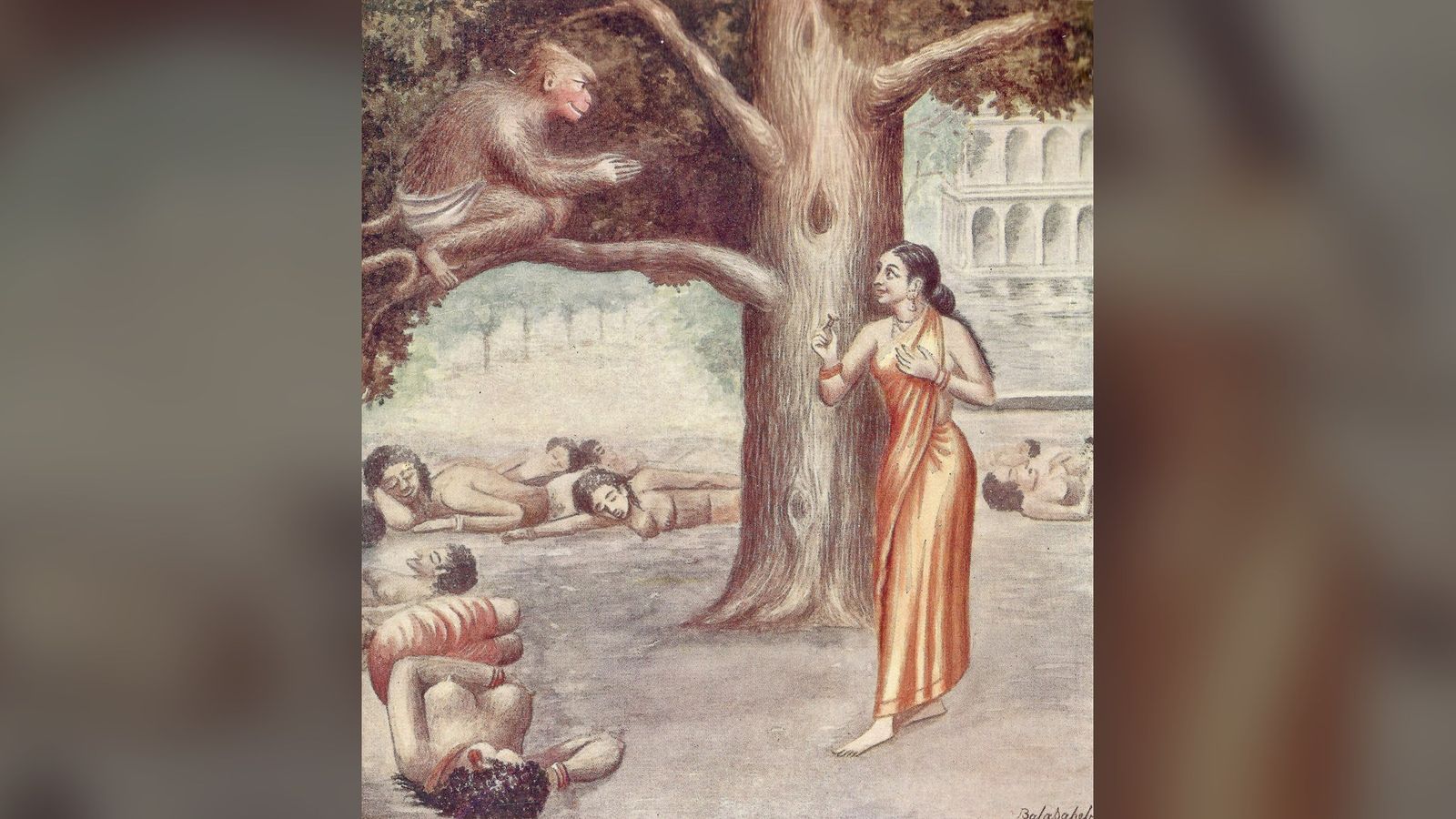
Updated: 13 November 2026
Quick answer: Sita is Rama's wife in Valmiki's Ramayana. Janaka says she came from a furrow. She marries Rama after he strings a bow, goes with him to the forest, is carried off by Ravana, and enters fire; the fire-god brings her out. In the Uttara Kanda, which some scholars call a later addition, she is sent away and enters the earth.
Contents
Key facts
| Fact | Detail | Source |
|---|---|---|
| How is Sita found? | Janaka says a girl came up from the furrow as he ploughed a ritual field. Some scholars call the Bala Kanda, where he says this, a later addition | Valmiki Ramayana, Bala Kanda 66, verses 13b to 15a; Wikipedia: Ramayana |
| What does the name Sita mean? | Wikipedia says the name is derived from the Sanskrit word sita, meaning furrow | Wikipedia: Sita |
| How does Sita marry Rama? | Janaka offers his daughter if Rama strings a bow. Rama strings it and breaks it, and at the wedding Janaka gives Sita to Rama | Valmiki Ramayana, Bala Kanda 66.26, 67.16 to 17, 73.26 to 27 |
| Why does Sita go to the forest? | Rama has to live in the Dandaka forest for fourteen years. Sita asks to go with him, and Rama agrees | Valmiki Ramayana, Ayodhya Kanda 26.23, 27.6, 30.40 |
| How does Ravana take Sita? | He lifts her onto his air-chariot after Rama and Lakshmana have both left the hermitage; on the way she drops her ornaments among five vanaras | Valmiki Ramayana, Aranya Kanda 49.20, 54.1 to 3 |
| Where is Sita kept in Lanka? | Hanuman sees her in the Ashoka garden, surrounded by rakshasa women. Ravana sets a limit of two months | Valmiki Ramayana, Sundara Kanda 15, 22.8 to 9 |
| What happens in the fire ordeal? | Sita enters a blazing fire; the fire-god brings her out and tells Rama no sin exists in her. The translation does not use the name agni pariksha | Valmiki Ramayana, Yuddha Kanda 116.29, 118.2 to 5 |
| Why is Sita sent away? | After Bhadra reports talk among the people, Rama orders Lakshmana to leave her near Valmiki's hermitage. Some scholars consider the Uttara Kanda an interpolation | Uttara Kanda ch. 43, 45 (Hari Prasad Shastri); Wikipedia: Ramayana |
| Who are Sita's sons? | Twin sons, Kusha and Lava, in the Uttara Kanda, a book some scholars call a later addition | Uttara Kanda ch. 66 (Hari Prasad Shastri) |
| How does her story end? | In the Uttara Kanda, a book some scholars call a later addition, Sita asks the Goddess Madhavi to receive her; a translator's bracket says this is the earth goddess Dharani. She descends into the earth | Uttara Kanda ch. 97 (Hari Prasad Shastri) |
| Does the Tamil Ramayana have the last book? | Wikipedia, on a page flagged for more citations, says Kambar's Ramavataram has six kandams and that the seventh was written by the poet Ottakoothar | Wikipedia: Ramavataram |
Who is Sita in the Ramayana?
Sita is the wife of Rama, the hero of Valmiki's Ramayana, the Sanskrit epic, and the daughter of King Janaka.
Wikipedia lists her other names: Janaki, as the daughter of Janaka; Maithili, as the princess of Mithila; and Vaidehi, from her father's name Videha. It says the name Sita is derived from the Sanskrit word sita, meaning furrow.
Verse numbers are from valmikiramayan.net; Uttara Kanda chapters are from Hari Prasad Shastri's translation on wisdomlib.
How was Sita found in the furrow?
In Valmiki's Ramayana, King Janaka says a girl came up from the furrow while he was ploughing a ritual field, that she was named Sita, and that he raised her as his own daughter (Bala Kanda 66.13 to 15).
Janaka tells this to the sage Vishvamitra (66.1 to 2). The translation reads: "when I was ploughing the ritual field" the girl was raised by the plough, and "she is named as Seetha" (66.13b to 14a). It adds that she "surfaced from the surface of the earth, but fostered as my own soul-born girl" (66.14b to 15a).
The translator's endnote, a devotional reading, says it is better not to think of her as "an ordinary lady of an ordinary birth", since Valmiki "himself has not chronicled the details of her birth". Two scholarly cautions follow. The Bala Kanda is the first book, and Wikipedia's Ramayana article says the first and last books "are considered to be later additions". Wikipedia's Sita article also reports Camille Bulcke's view, from other versions in which she is Janaka's own daughter, that "Later, the story of Sita miraculously appearing in a furrow was inserted in Valmiki Ramayana."
Read free: Kadarpaalam. Rama's vanaras build the bridge to Lanka, and the envy of one hard-working vanara halts the work. Read Episode 1 free →
How did Sita marry Rama? Was there a swayamvara?
Sita marries Rama after he strings and breaks the bow of Shiva, which Janaka had named as the test for giving her to Rama (Bala Kanda 66, 67 and 73).
Janaka tells Vishvamitra of the bow: "If Rama strings the bowstring of that bow, oh, sage, I will offer my daughter" (66.26). In chapter 67 Rama "stringed the bow effortlessly" (verse 16) and "broke that bow medially" (verse 17). At the wedding Janaka tells Rama, "This is Seetha, my daughter" (73.26b to 27a).
Wikipedia's Sita article calls this a svayamvara ceremony held "with the condition that she would marry only a prince who would possess the strength to string the Pinaka, the bow of the deity Shiva". The English translation of chapters 65 to 67 and 73 does not use that word. The text comes close to this: Janaka tells Vishvamitra that kings came for her after his "declaration that the bounty for Seetha is boldness alone", and that they were "incapable to joggle it, or even to catch hold of it" (the bow) (66.15b to 19a). The Sanskrit word svayamvare appears later, in Rama's words in Yuddha Kanda 114.28, rendered as "self-choosing of a husband by a princess at a public assembly of suitors".
Why did Sita go to the forest with Rama?
Sita goes to the forest because Rama has to live in the Dandaka forest for fourteen years, and she insists on going with him (Ayodhya Kanda 26 to 30).
In chapter 26 Rama tells her: "I have to dwell in Dandaka forest for fourteen years" (26.23). In chapter 27 Sita says she will go ahead of him through the thorns (27.6). In chapter 30 Rama gives way: "follow me and become my help-mate" (30.40).
How did Ravana take Sita away?
Ravana, king of the rakshasas (the demons of the epic), carries Sita off from the forest while Rama and Lakshmana are both away from the hermitage (Aranya Kanda 43 to 54).
In chapter 43 Sita sees a golden deer and calls Rama and Lakshmana. Lakshmana says, "Maareecha is an expert in many wiles" (verse 7). Sita asks Rama for the deer: "that delightful deer is stealing my heart" (verse 10). Rama tells Lakshmana to "stay here in all preparedness and guard Maithili steadfastly" (verses 46b to 47a).
In chapter 44 the dying Maareecha "made a voice that is a soundalike to Raghava's voice" (Raghava is a name of Rama) and cried "ha, Seetha" and "ha Lakshmana" (verse 19). In chapter 45 Sita, hearing a voice she takes to be her husband's, tells Lakshmana, "you go at once, and check up on Raghava" (verse 1). The chapter introduction says she rebukes Lakshmana, "slandering him as having intents to woo her", and that he leaves for Rama "broken-heartedly". The translator's endnote says "both Seetha and Lakshmana, are accusing each other" here, that this "is not reiterated elsewhere in Ramayana", and hence "some say that this episode is an interpolation"; it concludes that "this is neither an interpolation nor a repeatable episode".
In chapter 46, its introduction says, Ravana enters "like a Brahman sanyaasi, a friar", and in chapter 49 he "got Vaidehi up on the air-chariot" (verse 20). In chapter 54, while she is being carried away, Sita sees "five prominent vanara-s staying on a mountaintop" (verse 1), the vanaras being the monkeys of the epic. She drops her ornaments among them, thinking "these creatures may perhaps indicate them to Rama" (verses 2 to 3a).
Where was Sita kept in Lanka, and what happened there?
In Lanka, Sita is in the Ashoka garden, surrounded by rakshasa women, when the vanara Hanuman finds her (Sundara Kanda 15).
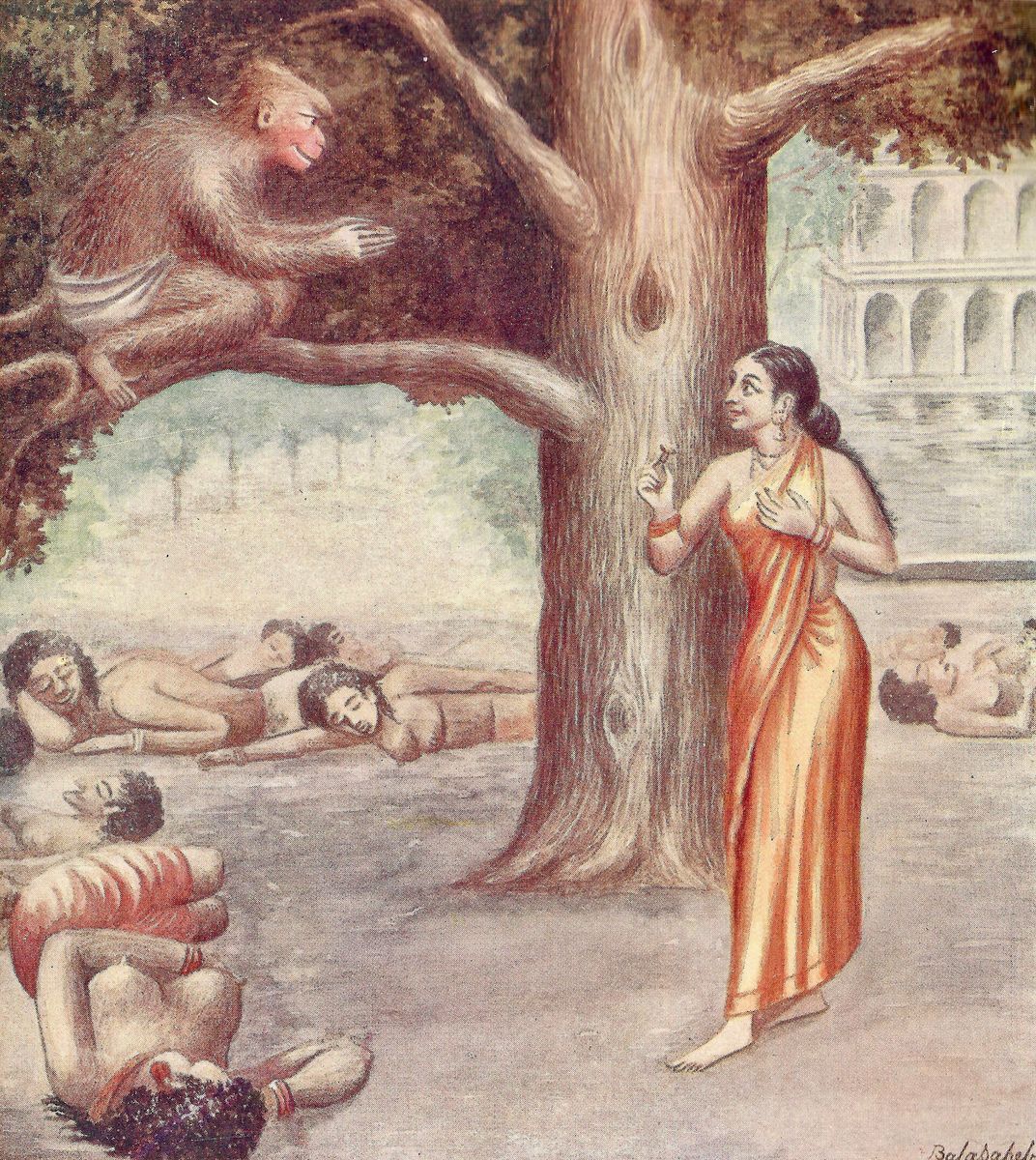
Verses 18b to 19 say Hanuma (the translation's spelling of Hanuman) saw her "wearing a soiled garment, surrounded by rakshasa women". In chapter 22 Ravana sets a limit of two months, and says that after it she will be killed if she does not accept him as her husband (verses 8 to 9).
What was Sita's fire ordeal (agni pariksha)?
In the Yuddha Kanda, Sita enters a blazing fire after Rama tells her she may go wherever she likes, and the fire-god brings her out and tells Rama, "No sin exists in her."
People search for this scene as agni pariksha. The English translation on valmikiramayan.net does not use that name; it uses the word ordeal once, in Rama's words (118.13). We found no interpolation or variant-reading note on chapters 114 to 118 there.
In chapter 115 Rama says the war was done "in order to keep up my good conduct and to wipe off the evil-speaking from all sides" (verses 15 to 16), and says "Go wherever you like" (verse 18). In chapter 116 Sita answers: "It was not my willfulness, when I came into contact with the person of Ravana" (verse 8). She asks for a fire, and "entered the blazing fire" (verse 29).
In chapter 118 the fire-god comes up "taking that Seetha, the daughter of Janaka in his arms" (verse 2) and says, "Here is your Seetha. No sin exists in her." (verse 5). Rama says, "The world would chatter against me" if he accepted her without examining her (verse 14), and that he ignored her "In order to convince the three worlds" (verse 17).
Why did Rama send Sita away in the Uttara Kanda?
In the Uttara Kanda, the seventh and last book, Rama hears of talk among the people about Sita and orders Lakshmana to leave her near the sage Valmiki's hermitage. This is a later book: Wikipedia's Ramayana article says it "is considered by some scholars to be an interpolation".
In chapter 43 a companion named Bhadra tells Rama what the people say, including: "What pleasure can his heart experience in possessing Sita". In chapter 45 Rama tells Lakshmana, "it is in a solitary spot that you should leave her", and orders him to "take Sita away from here this very day". In chapter 47 Lakshmana tells Sita: "Although you are blameless in mine eyes, the king has repudiated you."
In chapter 66 young ascetics tell Valmiki that Rama's consort "has given birth to twin sons", and Valmiki names them Kusha and Lava.
How does Sita's story end in the Valmiki Ramayana?
Sita's story ends in the Uttara Kanda (a book some scholars consider a later insertion), chapter 97, when she says "may the Goddess Madhavi" receive her and the earth goddess Dharani takes her in her arms.
In chapter 95 Rama sends word that "If she be irreproachable in her conduct and without sin", she should "prove her good faith" by an oath before the assembly. In chapter 97 Rama tells Valmiki that "though wholly convinced of her innocence, it was from fear of the people that I cast off Sita", and asks his pardon. Sita says, "If, in thought, I have never dwelt on any but Rama", may the Goddess Madhavi receive her. A translator's bracket gives Madhavi as "The Earth Goddess, also called Dharani". The text says Dharani "took Maithili in her arms", and the gods watch "Sita descend into the earth".
How does the Tamil Ramayana treat the last book?
Wikipedia says the Ramavataram, the Tamil Ramayana by the poet Kambar, has six kandams (books), and that the seventh, the Uttara Kandam, was written by another Tamil poet, Ottakoothar.
Wikipedia's page says the poem was "written by the Tamil poet Kambar" and that Ottakoothar "wrote Uttara Kandam, the seventh (last chapter) kandam of the Tamil epic". That page carries a notice asking for more citations, so we use it only for these points. We have not opened Kambar's text, so we do not say how he tells Sita's story.
Is Sita in the Siva Comics series Kadarpaalam?
The Siva Comics series Kadarpaalam names Sita once in its synopsis, as the reason for Rama's march, and the page does not say that she appears in the comic.
The synopsis begins: "Having learned that Sita was held in Lanka, Rama planned his march". It says Rama "marveled at a little squirrel toiling on the bridge and stroked its back in acknowledgement", and that "the envy this stirred in one hard-laboring vanara brought the work to a halt". The synopsis ends: "That untold episode is Kadarpaalam". The link between Sita's story and the series is ours.
Read Kadarpaalam on Siva Comics today. Episode 1 is free to read.
Common questions
Who is Sita in the Ramayana?
Sita is the wife of Rama in Valmiki's Ramayana. In Bala Kanda 66 Janaka says a girl came up from the furrow as he ploughed a ritual field and that he raised her as his own daughter. Wikipedia reports a view that the furrow story was added to the epic later.
Why is Sita called Janaki, Maithili and Vaidehi?
According to Wikipedia, she is called Janaki as the daughter of Janaka, Maithili as the princess of Mithila, and Vaidehi because her father Janaka had earned the name Videha.
How did Sita marry Rama?
In Valmiki's Ramayana, Janaka offers his daughter to Rama if Rama strings a bow (Bala Kanda 66.26). Rama strings it and breaks it (67.16 to 17), and at the wedding Janaka gives Sita to Rama (73.26 to 27).
Was Sita's marriage a swayamvara?
Wikipedia's Sita article calls it a svayamvara ceremony with a bow condition. The English translation of Bala Kanda 65 to 67 and 73 on valmikiramayan.net does not use the word. There Janaka says kings came for her after he declared boldness her only bounty, and they could not move the bow of Shiva or even grasp it; he then offers Sita to Rama if Rama strings it (66.15 to 26).
Why did Sita go to the forest with Rama?
Rama had to live in the Dandaka forest for fourteen years. Sita asked to go with him, and in Ayodhya Kanda 30.40 Rama says, "follow me and become my help-mate".
How did Ravana take Sita away?
After Rama and Lakshmana had both left the hermitage, Ravana came to Sita as a Brahman friar, told her who he was, and got her up on his air-chariot (Aranya Kanda 46, 47 and 49).
What is Sita's agni pariksha?
It is the name people give to the scene in Yuddha Kanda 116 to 118 in which Sita enters a blazing fire and the fire-god brings her out, telling Rama no sin exists in her. The English translation on valmikiramayan.net does not use that name.
Why did Rama send Sita away?
In the Uttara Kanda, a book some scholars consider a later insertion, Rama hears of talk among the people about Sita and orders Lakshmana to leave her near Valmiki's hermitage (chapters 43 and 45 in Hari Prasad Shastri's translation).
How does Sita's story end?
In the Uttara Kanda, a book some scholars consider a later insertion, Sita asks the Goddess Madhavi to receive her. A translator's bracket says this is the earth goddess Dharani, who takes her in her arms (chapter 97 in Hari Prasad Shastri's translation).
Is Sita in the Siva Comics series Kadarpaalam?
The series synopsis names Sita once, in the line "Having learned that Sita was held in Lanka, Rama planned his march", and the page does not say she appears in the comic. The synopsis ends: "That untold episode is Kadarpaalam". Episode 1 is free to read.
In the comic
Kadarpaalam's synopsis says Rama "marveled at a little squirrel toiling on the bridge and stroked its back in acknowledgement", and that "the envy this stirred in one hard-laboring vanara brought the work to a halt". Read Kadarpaalam, Episode 1 →
Sources
Valmiki Ramayana, Bala Kanda, Sarga 66, valmikiramayan.net (Sanskrit text with English translation): Janaka on how Sita was found in the furrow, the bow offer, and the translator's endnote on her birth
Valmiki Ramayana, Bala Kanda, Sarga 67, valmikiramayan.net (Sanskrit text with English translation): Rama strings and breaks the bow; Janaka proposes the marriage
Valmiki Ramayana, Bala Kanda, Sarga 73, valmikiramayan.net (Sanskrit text with English translation): the wedding; Janaka gives Sita to Rama
Valmiki Ramayana, Bala Kanda, Sarga 65, valmikiramayan.net (Sanskrit text with English translation): read to check that the word swayamvara is not used
Valmiki Ramayana, Ayodhya Kanda, Sarga 26, valmikiramayan.net (Sanskrit text with English translation): Rama tells Sita of the fourteen years in the forest
Valmiki Ramayana, Ayodhya Kanda, Sarga 27, valmikiramayan.net (Sanskrit text with English translation): Sita asks to go with Rama
Valmiki Ramayana, Ayodhya Kanda, Sarga 30, valmikiramayan.net (Sanskrit text with English translation): Rama agrees that Sita will come
Valmiki Ramayana, Aranya Kanda, Sarga 43, valmikiramayan.net (Sanskrit text with English translation): the golden deer; Rama tells Lakshmana to guard Sita
Valmiki Ramayana, Aranya Kanda, Sarga 44, valmikiramayan.net (Sanskrit text with English translation): Maareecha's cry in Rama's voice
Valmiki Ramayana, Aranya Kanda, Sarga 45, valmikiramayan.net (Sanskrit text with English translation): Lakshmana leaves; the introduction and the translator's endnote on this chapter
Valmiki Ramayana, Aranya Kanda, Sarga 46, valmikiramayan.net (Sanskrit text with English translation): Ravana arrives as a friar (chapter introduction)
Valmiki Ramayana, Aranya Kanda, Sarga 47, valmikiramayan.net (Sanskrit text with English translation): Ravana names himself; Sita speaks of Rama
Valmiki Ramayana, Aranya Kanda, Sarga 49, valmikiramayan.net (Sanskrit text with English translation): Ravana puts Sita on his air-chariot
Valmiki Ramayana, Aranya Kanda, Sarga 54, valmikiramayan.net (Sanskrit text with English translation): Sita drops her ornaments among five vanaras
Valmiki Ramayana, Sundara Kanda, Sarga 15, valmikiramayan.net (Sanskrit text with English translation): Hanuma finds Sita in the Ashoka garden
Valmiki Ramayana, Sundara Kanda, Sarga 22, valmikiramayan.net (Sanskrit text with English translation): Ravana's limit of two months
Valmiki Ramayana, Yuddha Kanda, Sarga 114, valmikiramayan.net (Sanskrit text with English translation): Sita is brought to Rama; the word-gloss of svayamvare
Valmiki Ramayana, Yuddha Kanda, Sarga 115, valmikiramayan.net (Sanskrit text with English translation): Rama's words to Sita
Valmiki Ramayana, Yuddha Kanda, Sarga 116, valmikiramayan.net (Sanskrit text with English translation): Sita's reply and the fire
Valmiki Ramayana, Yuddha Kanda, Sarga 118, valmikiramayan.net (Sanskrit text with English translation): the fire-god restores Sita; Rama's words
Uttara Kanda, chapter 43, wisdomlib.org (Hari Prasad Shastri translation): Bhadra reports what the people say
Uttara Kanda, chapter 45, wisdomlib.org (Hari Prasad Shastri translation): Rama orders Lakshmana to take Sita away
Uttara Kanda, chapter 47, wisdomlib.org (Hari Prasad Shastri translation): Lakshmana tells Sita
Uttara Kanda, chapter 66, wisdomlib.org (Hari Prasad Shastri translation): the birth of Kusha and Lava
Uttara Kanda, chapter 95, wisdomlib.org (Hari Prasad Shastri translation): Rama sends for Sita
Uttara Kanda, chapter 97, wisdomlib.org (Hari Prasad Shastri translation): Sita descends into the earth
Sita, Wikipedia: her names, the meaning of the name, the other versions of her birth, and the svayamvara wording; read as raw text, no quality notice on the page
Ramayana, Wikipedia: the view that the first and last books are later additions
Ramavataram, Wikipedia: Kambar's Tamil Ramayana and its seventh book; the page carries a notice asking for more citations
Kadarpaalam, sivacomics.com: the comic's synopsis, read 9 November 2026
Cite this page: Ramakrishnan S. "Sita: Her Story in the Ramayana." Siva Comics, 13 November 2026. https://www.sivacomics.com/insider/sita
You just read the story. Now read the comics. Episode 1 of every series is free. A free account unlocks the rest and keeps your place. Start reading free → · Browse all series
Read the comics
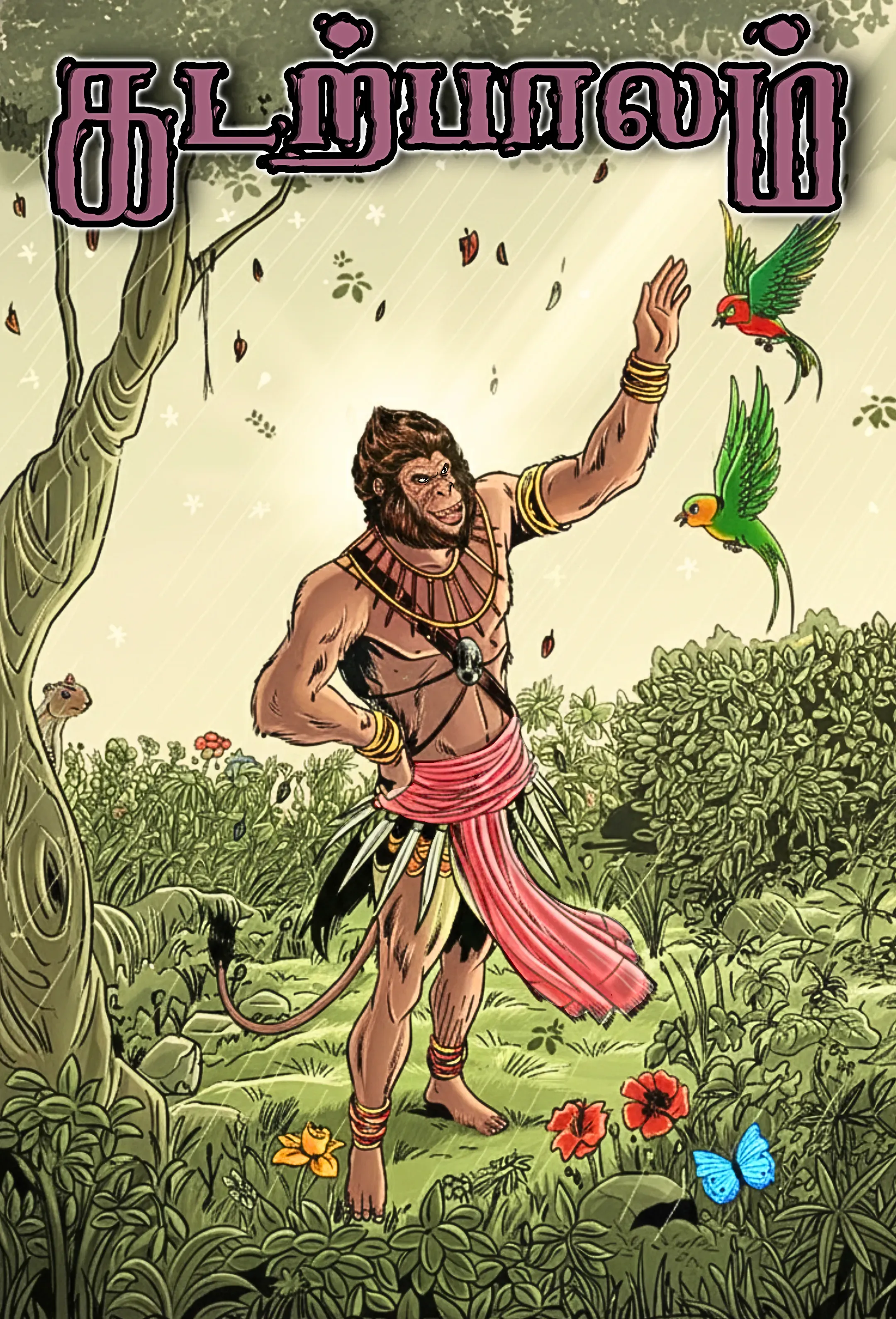
Kadarpaalam
Having learned that Sita was held in Lanka, Rama planned his march and, with the vanara army's help, ordered a bridge built across the sea. He marveled at a little squirrel toiling on the bridge and stroked its back in acknowledgement — and the envy this stirred in one hard-laboring vanara brought the work to a halt. That untold episode is Kadarpaalam.
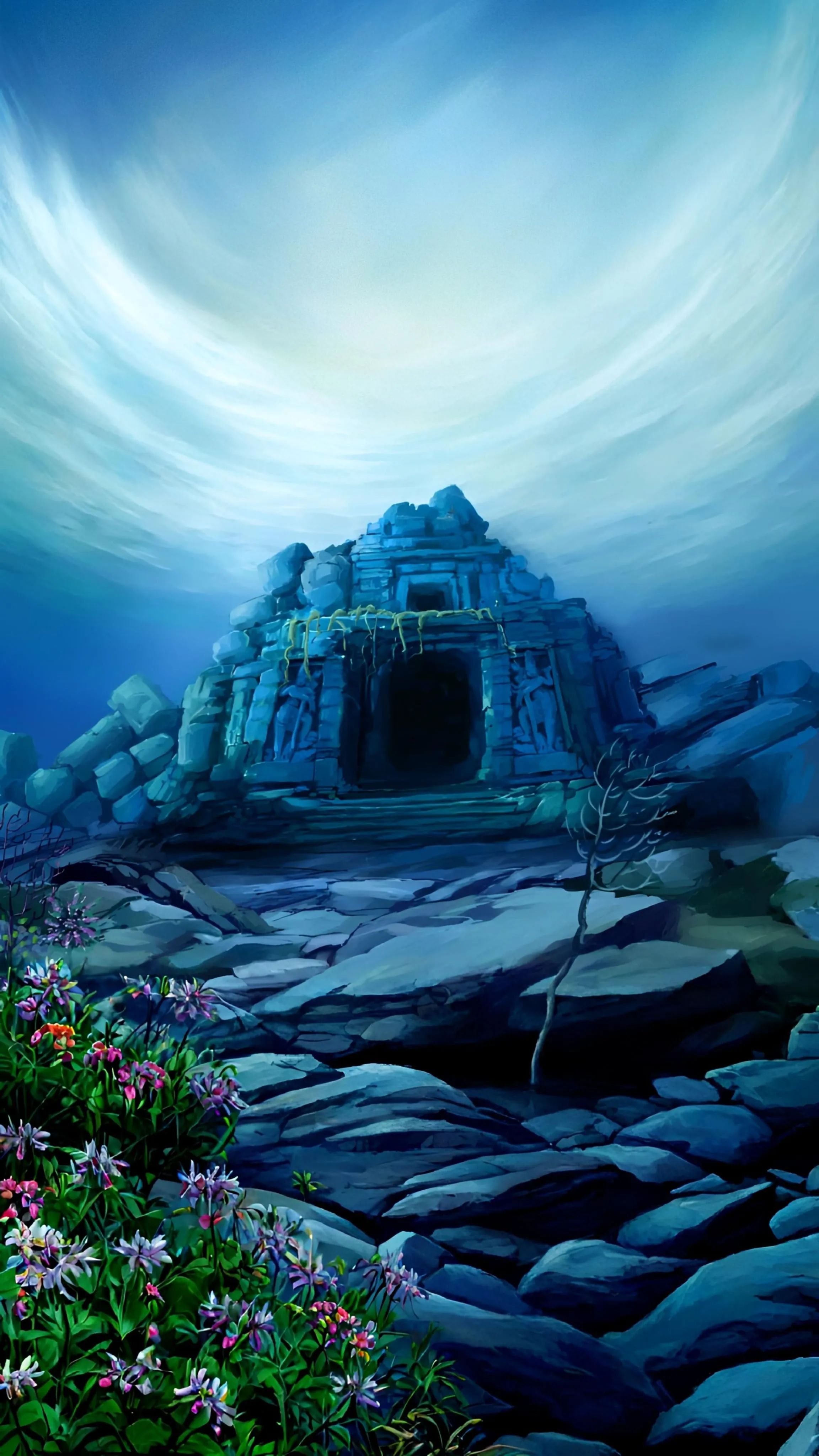
Kabadapuram
When the doors of the Kumari Amman temple are sealed shut, a man trapped inside escapes with the help of a talking severed head. Crossing the dried-up sea, he is stunned by unbelievable wonders and reaches Kabadapuram — the city the ocean once swallowed. There he witnesses the strange feats of a siddha and sees a man who looks just like himself. On the shore of Kabadapuram, crumbling under tidal waves and volcanic eruptions, that double flees with the woman he loves. Did those who escaped survive — or were they caught in the deluge?