
Why Diwali Is Celebrated: The Deepavali Story
Ramakrishnan S · 13 October 2026 · 13 min read
Updated: 13 October 2026
Quick answer: Diwali, or Deepavali, is celebrated for different reasons in different places. In Tamil Nadu and much of South India it marks Krishna's victory over the demon king Narakasura, and the day begins with an oil bath before sunrise. In North India it marks Rama's return to Ayodhya. In 2026 it falls on Sunday 8 November.
Contents
Why is Diwali celebrated in Tamil Nadu? The Narakasura story
Is Deepavali in Tamil Nadu a day before Diwali in the north?
Key facts
| Fact | Detail | Source |
|---|---|---|
| Why is Diwali celebrated? | For different reasons by region: Rama's return to Ayodhya (north), Krishna's victory over Narakasura (south), Lakshmi, Kali, and Jain and Sikh events | National Geographic Kids; Wikipedia: Diwali |
| Why is Deepavali celebrated in Tamil Nadu? | To mark the killing of the demon king Narakasura by Krishna | Wikipedia: Diwali; Wikipedia: Naraka Chaturdashi |
| Where is the Narakasura story told? | Told in the Bhagavata Purana, Book 10, chapter 59; also in the Harivamsa and the Vishnu Purana | vedabase.io; Wikipedia: Narakasura |
| Who kills Narakasura in the Bhagavata Purana? | Krishna, with his disc. Satyabhama rides with him but does not fight. | Bhagavata Purana 10.59, verses 2-3 and 21 |
| How many women had Naraka taken? | Sixteen thousand princesses (the Vishnu Purana says 16,100) | Bhagavata Purana 10.59, verse 33 |
| Which day is Deepavali in Tamil Nadu? | Naraka Chaturdashi, the 14th day of the waning moon; most of India celebrates on the next lunar day, the new moon | Wikipedia: Naraka Chaturdashi |
| When is Deepavali 2026? | Sunday 8 November 2026, in Tamil Nadu and in North India alike | officeholidays.com; drikpanchang.com (Wikipedia: Diwali lists Naraka Chaturdashi on 7 November) |
| What is Ganga snanam? | The oil bath taken before sunrise on Deepavali morning | The News Minute (2021); Wikipedia: Diwali (for "before sunrise") |
| What is Deepavali legiyam? | A herbal paste of close to 20 ingredients, eaten before breakfast | The News Minute (2021) |
| Oldest reference in P. K. Gode's 1945 study | The Yaksharatri festival in the Kamasutra, 50 to 400 CE | JSTOR Daily, on P. K. Gode (1945) |
Why is Diwali celebrated?
Diwali is celebrated for different reasons in different regions: Rama's return to Ayodhya in North India, and Krishna's victory over the demon king Narakasura in Tamil Nadu and the south. It is one festival with several stories. The name Deepavali means a row of lights. What the stories share is the idea of light winning over darkness.
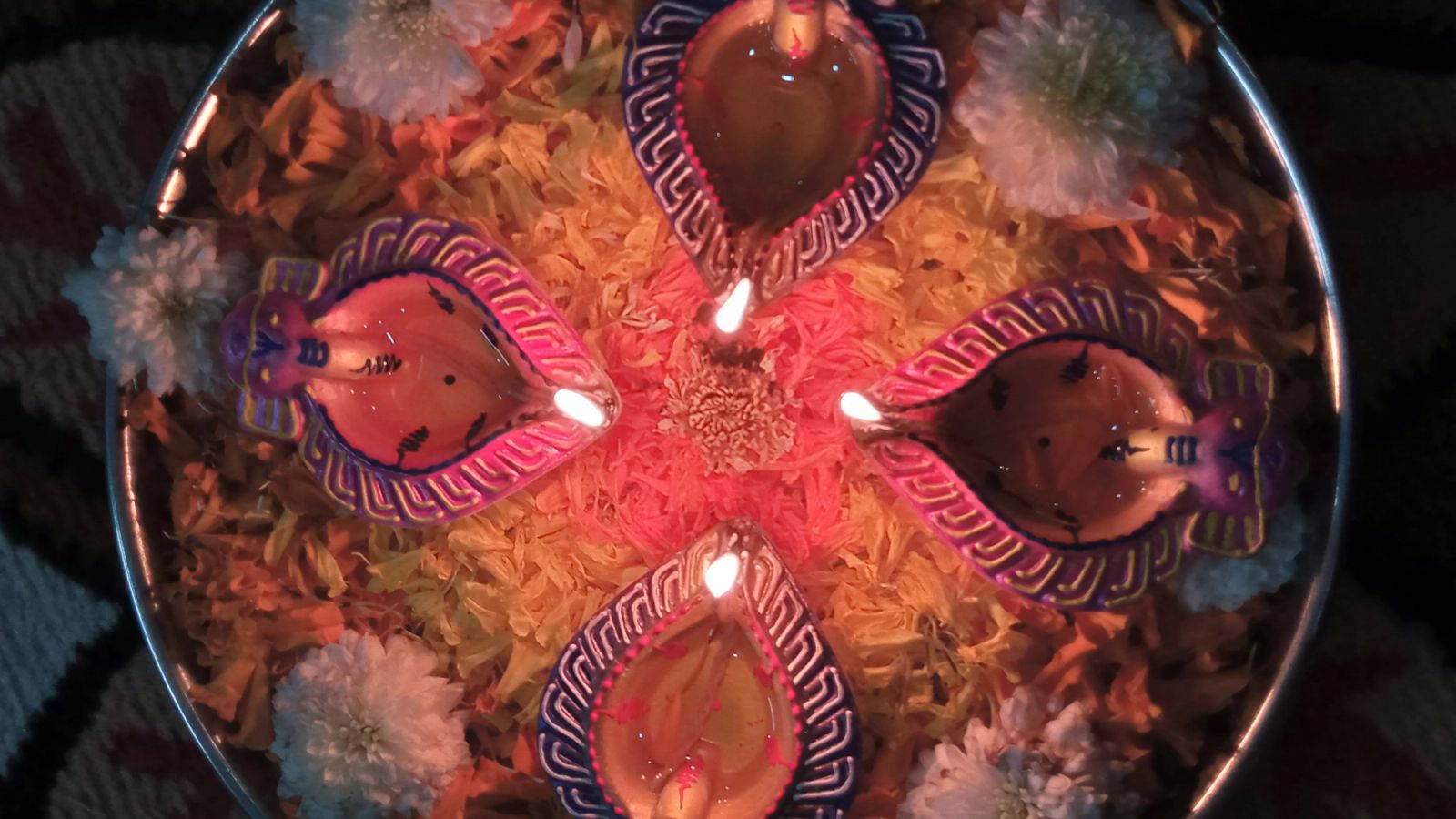
North India: the return of Rama to Ayodhya with Sita and Lakshmana after 14 years in exile and the defeat of the demon king Ravana. The day is marked by lighting rows of clay lamps.
Tamil Nadu and the Telugu states: the day Krishna destroyed Narakasura.
Many homes across India: the worship of Lakshmi, goddess of wealth and prosperity.
Bengal and eastern India: the worship of Kali.
Jains: the final liberation (nirvana) of Mahavira, traditionally dated to 527 BCE.
Sikhs: Bandi Chhor Divas, the release of Guru Hargobind from Mughal imprisonment.
National Geographic Kids gives one more story, for western India: the day Vishnu sent the demon king Bali to rule the world below.
The festival falls in the lunar months of Ashvin and Kartika, between mid-October and mid-November, around the new moon. It usually runs for five days. In 2025 UNESCO added the festival to its list of the Intangible Cultural Heritage of Humanity.
Why is Diwali celebrated in Tamil Nadu? The Narakasura story
In Tamil Nadu, Deepavali marks the death of the demon king Narakasura at the hands of Krishna. A full telling is in the Bhagavata Purana, Book 10, chapter 59. Older texts, the Harivamsa and the Vishnu Purana, also tell of him.
The texts call him Naraka. They also call him Bhauma. He is the son of Bhumi, the Earth. He ruled from the city of Pragjyotisha, which tradition links with Assam, and had grown too powerful. He stole the earrings of Aditi, the mother of the gods, and the umbrella of Varuna. Indra, king of the gods, went to Krishna for help.
Krishna flew to Naraka's fortress on the eagle Garuda, with his queen Satyabhama beside him. He blew his conch, the Panchajanya, and the sound woke Mura, a five-headed demon asleep in the moat (verse 6). Krishna killed Mura and then Mura's seven sons. Naraka came out with his war elephants. He struck Garuda with his spear and raised his trident, but before he could throw it Krishna cut off his head with his disc, the chakra, as Naraka sat on his elephant.
When Naraka fell, the Earth herself came forward. She gave Krishna the stolen earrings and Varuna's umbrella, and asked him to protect Naraka's frightened son, which he did.
Inside the palace Krishna found sixteen thousand princesses whom Naraka had taken by force. He sent them to his city, Dvaraka, and later in the chapter he marries them (verse 42). (Verse 33 says sixteen thousand; the Vishnu Purana says 16,100.)
Read free: Paanjajanyam. After rain, snails appear from nowhere, and a son who studied acoustics sets out to find the cause. Read Episode 1 free →
Who killed Narakasura: Krishna or Satyabhama?
In the Bhagavata Purana, Krishna kills Narakasura. Satyabhama rides with him but does not fight. The version many people know, in which Satyabhama joins the battle, is not in that chapter. It comes from other tellings.
In that version Naraka has a boon that only his own mother can kill him. Satyabhama is the Earth goddess reborn, so she is his mother. Krishna pretends to faint in the battle, Satyabhama attacks in anger, and Naraka is killed. As Wikipedia records it, the final blow is still Krishna's disc. Its page on the festival day says simply that Naraka was killed "by Krishna and Satyabhama".
The well-loved ending, in which the dying Naraka asks that people remember the day with lights, is not in the chapter either. Wikipedia attributes it to "some traditions". The chapter of the Bhagavata Purana does not mention lamps, a last wish or Deepavali.
Why do Tamils take an oil bath on Deepavali morning?
On Deepavali morning Tamil families take an oil bath before sunrise, called Ganga snanam, the Ganga bath. The belief is that the goddess Ganga comes down from heaven and enters the pot of bath water that morning. The chef Shri Bala told The News Minute that her grandmother kept a large brass pot for the bath, and that she was woken at 4 am for it as a child.
The sources we read explain the bath through Ganga, not through Narakasura. The link to the demon is the day itself: it is Naraka Chaturdashi, the day named after Naraka.
The bath: oil is rubbed into the hair and body before bathing.
Deepavali marundhu (legiyam): a herbal paste of close to 20 ingredients, with ginger, cumin, coriander, jaggery and ghee. It is eaten first thing, before breakfast.
Crackers: lit after the bath.
Sweets and savouries: adhirasam, laddu and Mysore pak in most homes, with savouries such as murukku and thattai. Okkarai, a crumbly sweet of horse gram and jaggery, belongs to the Thanjavur, Kumbakonam and Srivilliputhur side. Munthiri kothu, fried balls of roasted dal, sesame, coconut and jaggery, belongs to Kanyakumari and Nagercoil.
Breakfast: idli with mutton curry in meat-eating homes; idli, vada, pongal and kesari in vegetarian ones.
Is Deepavali in Tamil Nadu a day before Diwali in the north?
Deepavali in Tamil Nadu falls one lunar day before Diwali in the north, but not always one calendar date before. Tamil Nadu celebrates on Naraka Chaturdashi, the fourteenth day of the waning moon, and most of India on the next lunar day, the new moon (Amavasya), which is the day of Lakshmi Puja. Naraka Chaturdashi is the second of Diwali's five days, and it is the day tied to the Narakasura story.
On the wall calendar the two sometimes land on the same date, and 2026 is one such year. Drik Panchang, an online almanac, lists Narak Chaturdashi, Tamil Deepavali and Lakshmi Puja all on Sunday 8 November, and officeholidays.com gives the same date for the Tamil Nadu holiday.
Not every source agrees. Wikipedia's Diwali page puts Naraka Chaturdashi on 7 November, and Drik Panchang lists a separate observance, Kali Chaudas, on that day. We follow the almanac and the holiday list.
How old is Diwali?
The oldest reference to Diwali found by the scholar P. K. Gode, in a 1945 study, is in the Kamasutra (50 to 400 CE), and the name Dipavali appears in an inscription of 1119 CE. The written references, in date order:
50 to 400 CE: the Kamasutra mentions a festival called Yaksharatri, which a 12th-century Jain scholar, Hemachandra, identified with Diwali.
7th century: King Harsha's Sanskrit play Nagananda calls it Dipapratipadotsava, with lamps lit and gifts given to newly engaged couples.
9th century: the poet Rajasekhara calls it Dipamalika and describes homes whitewashed and streets lit with oil lamps.
1030 CE: the traveller al-Biruni records it among the Hindu festivals.
1119 CE: a Kannada inscription from the Chalukya period mentions Dipavali by name.
We did not find a dated early Tamil reference in the sources we read, so we make no claim about when the festival reached the Tamil country.
How is Naraka Chaturdashi marked in other states?
Naraka Chaturdashi is marked differently across India: Narakasura is burnt in effigy in Goa, and in Bengal fourteen lamps are lit for the ancestors.
Goa: paper effigies of Narakasura are burnt early on the morning of Naraka Chaturdashi, followed by a scented oil bath.
Karnataka and Maharashtra: the day begins with an early-morning oil bath, as in Tamil Nadu.
Bengal: the day is called Bhoot Chaturdashi. Fourteen lamps are lit to guide the ancestors home and to keep evil spirits away.
Assam: our sources give no custom for the day here, but Naraka belongs to Assam's own history. He is remembered as the ancestor of the kings of ancient Kamarupa. A hill south of Guwahati carries his name, and he is linked with the Kamakhya temple.
What is Paanjajanyam, the Siva Comics series?
Paanjajanyam is a Siva Comics series that shares its name with the Panchajanya, the conch Krishna blows in the Narakasura chapter. Paanjajanyam (பாஞ்சஜன்யம்) is an original Tamil comic created by B. Sivakumar.
It is not a retelling of the Narakasura story. In verse 6 the conch is a sound loud enough to wake a demon under water, and the comic is also a story about sound, one that draws on Vaishnava hymns (hymns to Vishnu). After the rains, snails appear from nowhere, and a son who studied acoustics sets out to find the cause. His deaf father insists that their sound is the voice of his late wife. Read Episode 1 of Paanjajanyam free.
Common questions
Why is Diwali celebrated?
It depends on the region. In North India Diwali marks Rama's return to Ayodhya; in Tamil Nadu and the Telugu states, Krishna's victory over Narakasura. Many also worship Lakshmi, and Jains and Sikhs mark events of their own.
Why is Deepavali celebrated in Tamil Nadu?
Deepavali in Tamil Nadu marks the death of the demon king Narakasura, killed by Krishna. The day begins with an oil bath before sunrise, followed by crackers and sweets.
Who was Narakasura?
Narakasura was a demon king, the son of Bhumi (the Earth), who ruled from Pragjyotisha. In the Bhagavata Purana he steals the earrings of Aditi and takes sixteen thousand princesses by force. Krishna kills him.
Who killed Narakasura, Krishna or Satyabhama?
In the Bhagavata Purana, Krishna kills Narakasura with his disc while Satyabhama rides beside him. In other tellings Satyabhama joins the fight, because of a boon that only his mother could kill him.
Why do Tamils take an oil bath on Deepavali?
The Deepavali oil bath, called Ganga snanam, is taken before sunrise. The belief is that the goddess Ganga enters the brass pot of bath water that morning, which gives the bath its name.
Is Deepavali the same as Diwali?
Yes, Deepavali and Diwali are the same festival. Deepavali is another spelling of the same name, and it is the name of the public holiday in Tamil Nadu. Tamil Nadu celebrates on Naraka Chaturdashi and most of India on the following new-moon day. On the calendar these are sometimes a day apart and sometimes the same date, as in 2026.
When is Deepavali in 2026?
Deepavali is on Sunday 8 November 2026 in Tamil Nadu, according to officeholidays.com and the Drik Panchang almanac. Diwali in North India falls on the same date in 2026.
What is Deepavali legiyam?
Deepavali legiyam, also called Deepavali marundhu, is a herbal paste of close to 20 ingredients including ginger, cumin, coriander, jaggery and ghee. It is eaten early in the morning, before breakfast.
How many days is Diwali?
Diwali usually lasts five days: Dhanteras, Naraka Chaturdashi, Lakshmi Puja, Govardhan Puja or Balipratipada, and Bhai Dooj.
How old is Diwali?
The oldest reference found by the scholar P. K. Gode in his 1945 study is a festival called Yaksharatri in the Kamasutra (50 to 400 CE), which the 12th-century scholar Hemachandra identified with Diwali. The 7th-century play Nagananda calls it Dipapratipadotsava, and a Kannada inscription of 1119 CE mentions Dipavali by name.
In the comic
Paanjajanyam shares its name with Panchajanya, the conch Krishna blows in the Narakasura story. Read Paanjajanyam, Episode 1 →
Sources
Srimad Bhagavatam 10.59: The Killing of the Demon Naraka, vedabase.io (Sanskrit text with English translation): the Narakasura story: the stolen earrings, the conch that wakes Mura, the spear and trident, Krishna's disc, the Earth's prayer, the sixteen thousand princesses sent to Dvaraka, and the Vishnu Purana figure of 16,100 (commentary on verse 33); and the absence of lamps or a last wish
Narakasura, Wikipedia: the older texts, Pragjyotisha, the version with Satyabhama and the boon, the last wish told in "some traditions", and Naraka in Assam
Naraka Chaturdashi, Wikipedia: the day in the lunar calendar, Tamil Nadu celebrating on this day, firecrackers, and the customs in Goa, Karnataka, Maharashtra and Bengal
Diwali, Wikipedia: the meaning of the name, the oil bath before sunrise in South India, the reasons by religion, Rama's 14 years in exile, the five days, the 7th and 9th century references and the UNESCO listing
Okkarai, Munthiri Kothu, Idly and mutton curry: the different Deepavali feasts of TN, The News Minute, 4 November 2021: Ganga snanam, the oil bath, the legiyam, and the sweets and breakfasts by region
Diwali, National Geographic Kids: the stories told in northern, southern and western India
A History of Diwali, JSTOR Daily, 2024: P. K. Gode's 1945 study, the Kamasutra, Hemachandra, al-Biruni and the 1119 inscription
Deepavali in Tamil Nadu in 2026, officeholidays.com: the 2026 date in Tamil Nadu
Diwali Puja Calendar 2026, drikpanchang.com: Naraka Chaturdashi and Lakshmi Puja both on Sunday 8 November 2026
Panchajanya, Wikipedia: Panchajanya as the conch of Krishna
Paanjajanyam, sivacomics.com: the comic's story and creator, read 10 October 2026
Cite this page: Ramakrishnan S. "Why Diwali Is Celebrated: The Deepavali Story." Siva Comics, 13 October 2026. https://www.sivacomics.com/insider/why-diwali-is-celebrated
You just read the story. Now read the comics. Episode 1 of every series is free. A free account unlocks the rest and keeps your place. Start reading free → · Browse all series
Read the comics
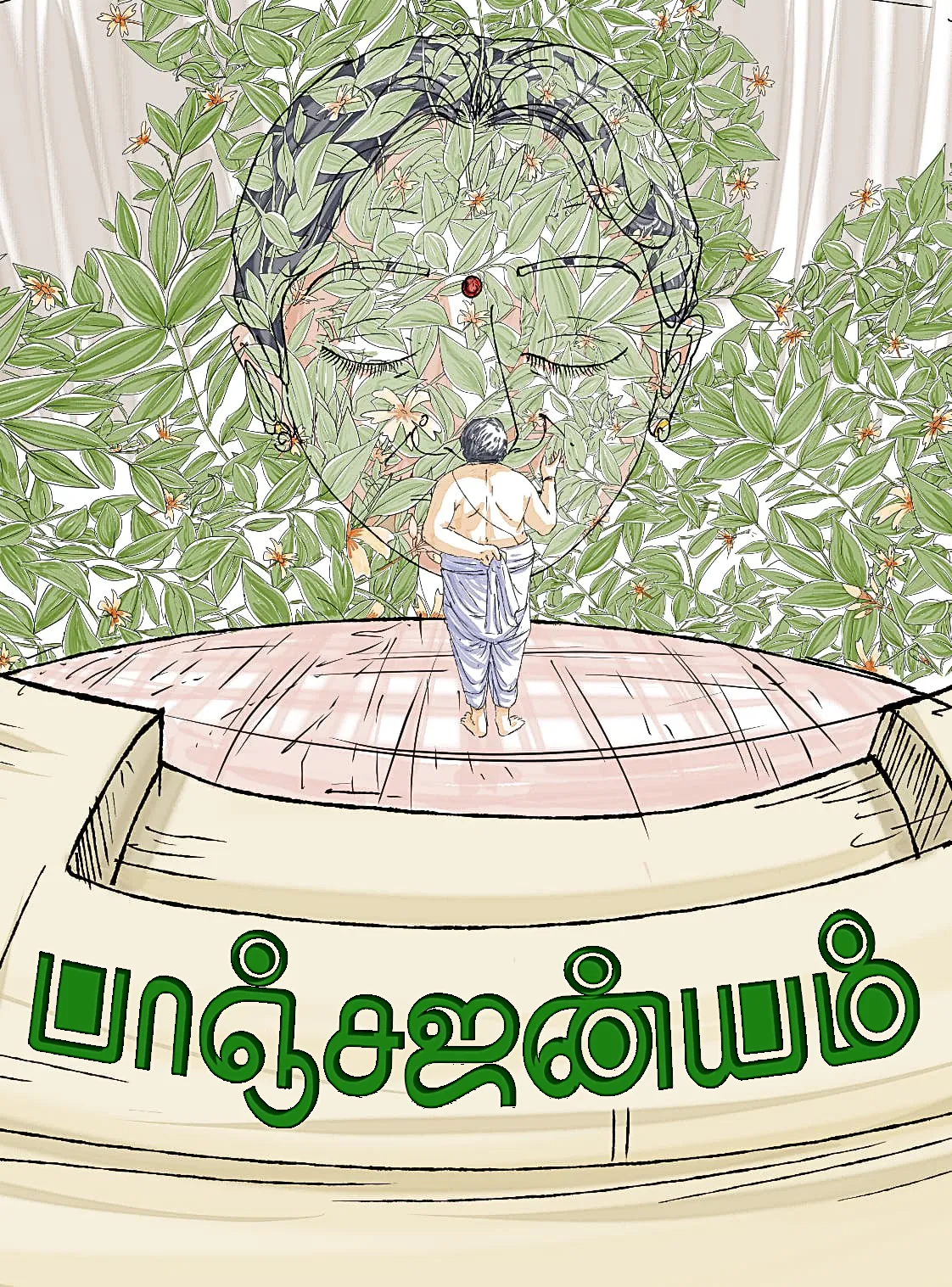
Paanjajanyam
After a spell of rain, snails appear from nowhere and multiply. For his deaf father — who insists their sound is the longing voice of his late wife — a son who studied acoustics sets out to find the cause. How Vaishnava hymns, Jagadish Chandra Bose, plants and snails are all bound together in the form of sound — that is Paanjajanyam.
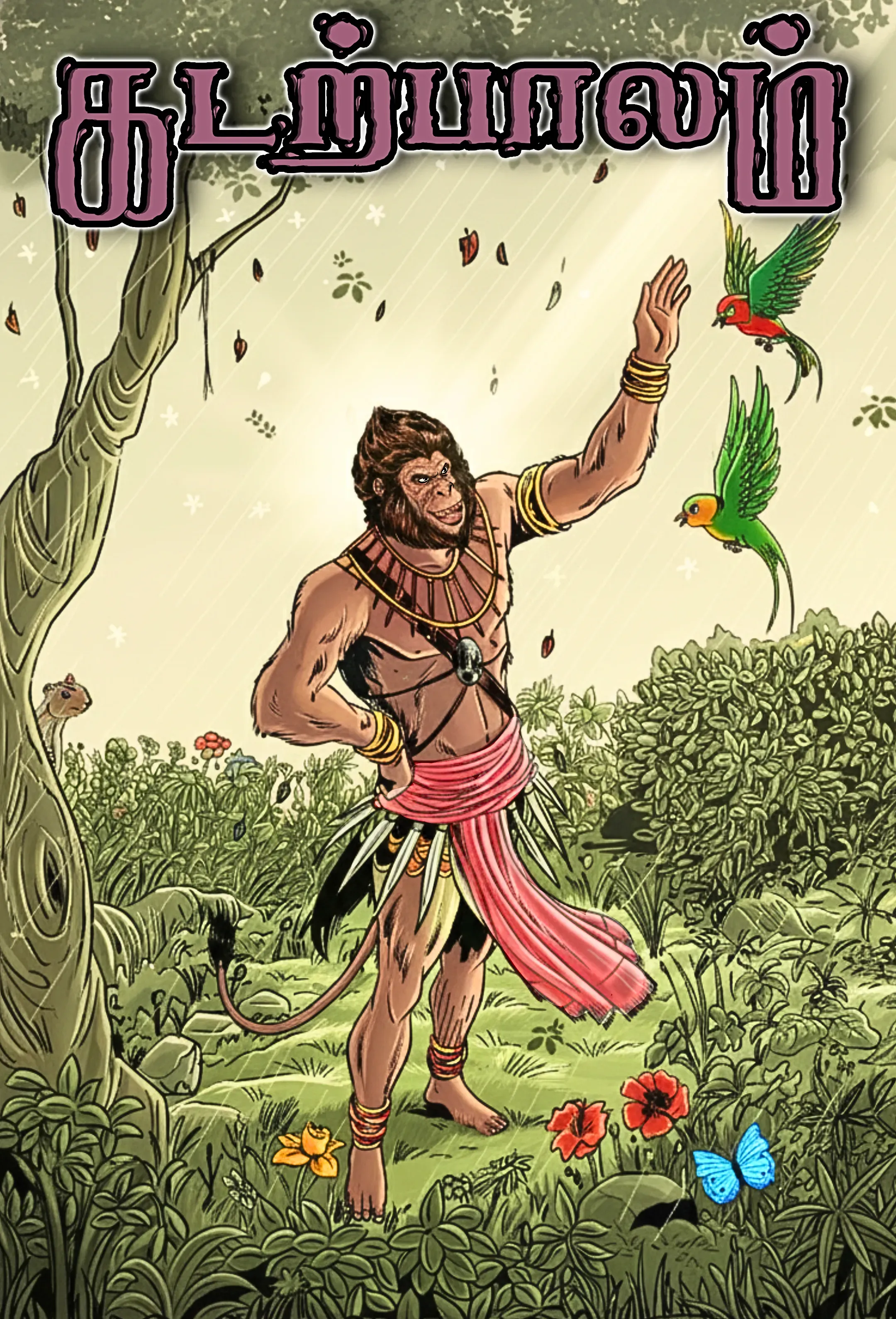
Kadarpaalam
Having learned that Sita was held in Lanka, Rama planned his march and, with the vanara army's help, ordered a bridge built across the sea. He marveled at a little squirrel toiling on the bridge and stroked its back in acknowledgement — and the envy this stirred in one hard-laboring vanara brought the work to a halt. That untold episode is Kadarpaalam.