
Ram Setu Story: Rama and the Squirrel
Ramakrishnan S · 13 October 2026 · 12 min read
Updated: 13 October 2026
Quick answer: In the Ramayana, Ram Setu is the bridge Rama's vanara army built to Lanka in five days, led by the vanara Nala. The real Ram Setu is a 48 km chain of natural limestone shoals between India and Sri Lanka. The squirrel is not in Valmiki's text; the oldest mention we found is a Tamil poem.
Contents
Key facts
| Fact | Detail | Source |
|---|---|---|
| What is Ram Setu? | A 48 km chain of limestone shoals between Pamban Island (Tamil Nadu) and Mannar Island (Sri Lanka) | Wikipedia: Adam's Bridge |
| Who built it in the Ramayana? | Nala, son of the divine architect Vishvakarma, with the vanara army | Valmiki Ramayana, Yuddha Kanda 22, verses 44-45 |
| How long did it take? | Five days: 14, 20, 21, 22 and 23 yojanas | Valmiki Ramayana, Yuddha Kanda 22, verses 66-70 |
| How big does the epic say it was? | 100 yojanas long and 10 yojanas wide | Valmiki Ramayana, Yuddha Kanda 22, verse 74 |
| Is the squirrel in Valmiki's Ramayana? | No. The chapter on the bridge does not mention a squirrel. | Valmiki Ramayana, Yuddha Kanda 22 |
| Where does the squirrel first appear? | The oldest mention we found is verse 27 of the Tamil Tirumalai by Thondaradippodi Alvar (8th century) | koyil.org: Tirumalai 27; Wikipedia: Thondaradippodi Alvar |
| Where do the stripes come from? | The Telugu Ranganatha Ramayanam (13th century): Rama draws three lines on the squirrel's back | Wikipedia: Ranganatha Ramayanamu |
| Is it man-made? | An ASI report found no evidence that it is anything but a natural formation | Wikipedia: Adam's Bridge, citing Frontline (2007) |
| What did NASA say? | Images from orbit "cannot provide direct information about the origin or age of a chain of islands" | Down To Earth, quoting NASA's Mark Hess |
| How old is it? | A land link in the last ice age (sea up to 120 m lower); under water by about 7,000 years ago | Wikipedia: Adam's Bridge, citing Dubey et al. (2023) |
| Oldest recorded name | Set Bandhai, "bridge of the sea", Ibn Khordadbeh, about 850 CE | Wikipedia: Adam's Bridge |
What is the Ram Setu story in the Ramayana?
Ram Setu is the bridge that Rama's vanara army builds across the sea to reach Lanka, where Ravana holds Sita. In Valmiki's Ramayana the story is told in the Yuddha Kanda, chapter (sarga) 22.
Rama first asks the Ocean for a way across. The Ocean answers that one of the vanaras, Nala, can build a bridge, and promises to hold it up. The vanaras then bring trees and rocks, and in five days the bridge reaches the far shore. Rama crosses on Hanuman's shoulders and Lakshmana on Angada's.
The name is used today for a real place: a 48-kilometre chain of limestone shoals between Rameswaram in Tamil Nadu and Mannar in Sri Lanka, also called Adam's Bridge.
How was Ram Setu built, day by day?
Valmiki gives the length of bridge finished on each of the five days, and the five figures add up exactly to the total he states. The figures are in verses 66 to 70 of the chapter:
Day 1: 14 yojanas
Day 2: 20 yojanas
Day 3: 21 yojanas
Day 4: 22 yojanas
Day 5: 23 yojanas, reaching the other shore
14 + 20 + 21 + 22 + 23 = 100. A few verses later the finished bridge is described as one hundred yojanas long and ten yojanas wide. (A yojana is an old Indian unit of distance, and the epic's figures are far longer than the real ridge, which is about 48 km.)
Look at how the pace changes. The first day is the slowest. The second day jumps by six yojanas, and after that the output rises by exactly one yojana a day. That reading is ours, not Valmiki's, but it is the pattern of a crew that has learned the job.
The materials are named too. The vanaras bring sala, ashvakarna, dhava, bamboo, kutaja, arjuna and palmyra trees, some pulled up with their roots, along with elephant-sized rocks, which the translation says were moved with mechanical contrivances.
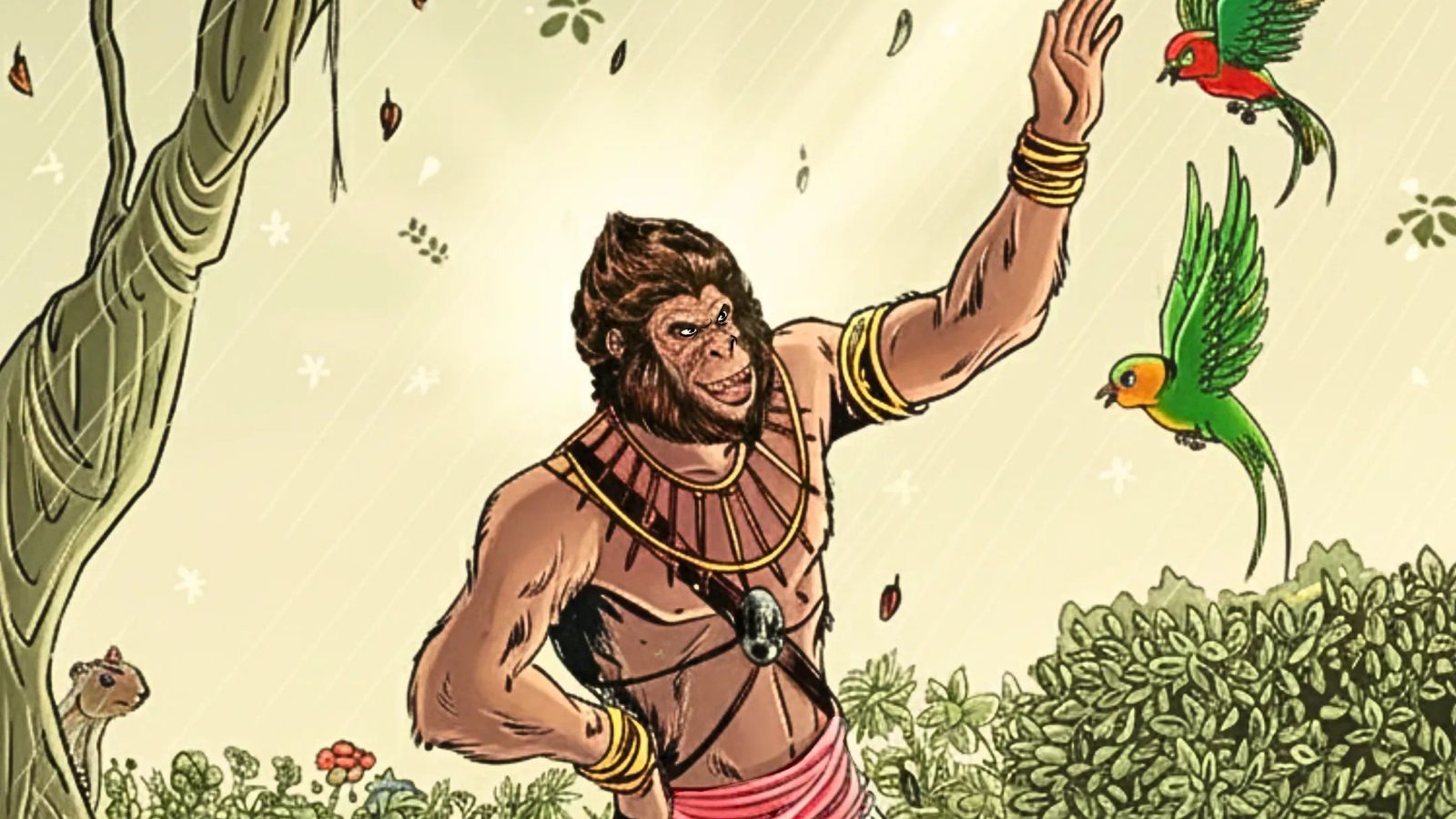
Read free: Kadarpaalam. Rama's vanaras build the bridge to Lanka, and the envy of one hard-working vanara halts the work. Read Episode 1 free →
Who built Ram Setu?
In Valmiki's Ramayana the builder is Nala, a vanara who is the son of Vishvakarma, the architect of the gods. It is the Ocean who names him to Rama: Nala has his father's skill, so let him build the bridge. The rest of the vanara army supplies the labour.
Later tellings share the credit differently. Kamban's Tamil Ramayana credits Nala alone as architect and builder. Tulsidas's Ramcharitmanas credits two brothers, Nala and Nila. The well-known detail that the stones floated, either because of a boon or curse on the brothers or because Rama's name was written on them, also comes from later versions, not from Valmiki's chapter.
Is the squirrel story in the Ramayana?
No squirrel appears in Valmiki's account of the bridge. The oldest mention we found is in Tamil: verse 27 of the Tirumalai, by the Vaishnava poet-saint Thondaradippodi Alvar.
The verse begins "kurangugal malaiyai nukka" (குரங்குகள் மலையை நூக்க), "as the monkeys pushed the mountains". It describes squirrels bathing in the sea, rolling in the sand and running back to help close the waves, serving without wanting anything in return. The poet then compares himself with them and says his own heart is harder.
Thondaradippodi Alvar is placed in the 8th century. That is several hundred years before the Telugu Ranganatha Ramayanam of the 13th century, which many articles name as the place the squirrel story began.
So the squirrel is a late arrival to the Sanskrit epic but an old resident of Tamil devotional poetry. In the Alvar's verse the squirrels are not a cute extra. They are the measure of sincere service.
How did the squirrel get its stripes?
The stripes belong to the later telling. In the Telugu Ranganatha Ramayanam, Rama blesses the squirrel and draws three lines on its back with his fingers. The poem, by Ranganatha (also known as Gona Budda Reddy), is one of the incidents the poet added to Valmiki's story.
The squirrel does the same thing in both versions: it wets itself in the sea, rolls in sand and shakes the sand out between the rocks. What the Telugu poem adds is the reward, and with it an explanation for the three pale stripes on the Indian palm squirrel.
The story has kept travelling. In January 2024 the news agency IANS reported that a steel statue of Rama's squirrel, about 15 feet tall, was being installed at Ayodhya Dham railway station.
Is Ram Setu real, and is it man-made?
The formation is real. The evidence says it is natural. It is a 48 km chain of limestone shoals and sandbanks running from Dhanushkodi, at the tip of Pamban (Rameswaram) Island, to Mannar Island in Sri Lanka. India's space agency ISRO counted 103 small patch reefs in it, and the water over it is typically only 1 to 3 metres deep.
In 2007, during the court case over the Sethusamudram shipping canal, the Government of India and the Archaeological Survey of India (ASI) told the Supreme Court that there was no historical proof of the bridge being built by Rama, and an ASI report found no evidence that it was anything but a natural formation. The affidavit also questioned whether the events of the epic were historical. After protests, the government withdrew it within days.
NASA's satellite photographs are often shared as proof of a man-made bridge. NASA has rejected that reading. Its official Mark Hess said that remote sensing images from orbit "cannot provide direct information about the origin or age of a chain of islands".
None of this settles what the place means to the people who revere it. It only answers the narrower question of how the ridge was formed.
How old is Ram Setu?
The ridge is a leftover of the last ice age. During the Last Glacial Period the sea stood up to 120 metres lower than today, and the Palk Strait was dry land joining India and Sri Lanka.
As the ice melted the sea rose, and the strait was under water by around 7,000 years ago. A 2023 study says the islands of the bridge came back above the surface as sea level fell again from about 5,000 years ago. An older study, from 1972, was not convinced and suggested that the land itself had been pushed up locally.
Records of the Ramanathaswamy Temple in Rameswaram suggest the link was still more complete until violent storms broke it in 1480.
The same rise in sea level sits behind the Tamil tradition of lands lost to the sea. We wrote about that in Kumari Kandam: what is real and what is legend.
Why is Ram Setu also called Adam's Bridge?
The oldest recorded name is neither of the two. Around 850 CE the geographer Ibn Khordadbeh called it Set Bandhai, "bridge of the sea". The name "Adam's Bridge" appears to date from around the time of Al-Biruni, about 1030 CE, from the belief that Adam crossed here after leaving Eden.
The ridge lay on a busy sea route, and each tradition that sailed past it named it from its own story.
What is the untold story in Kadarpaalam?
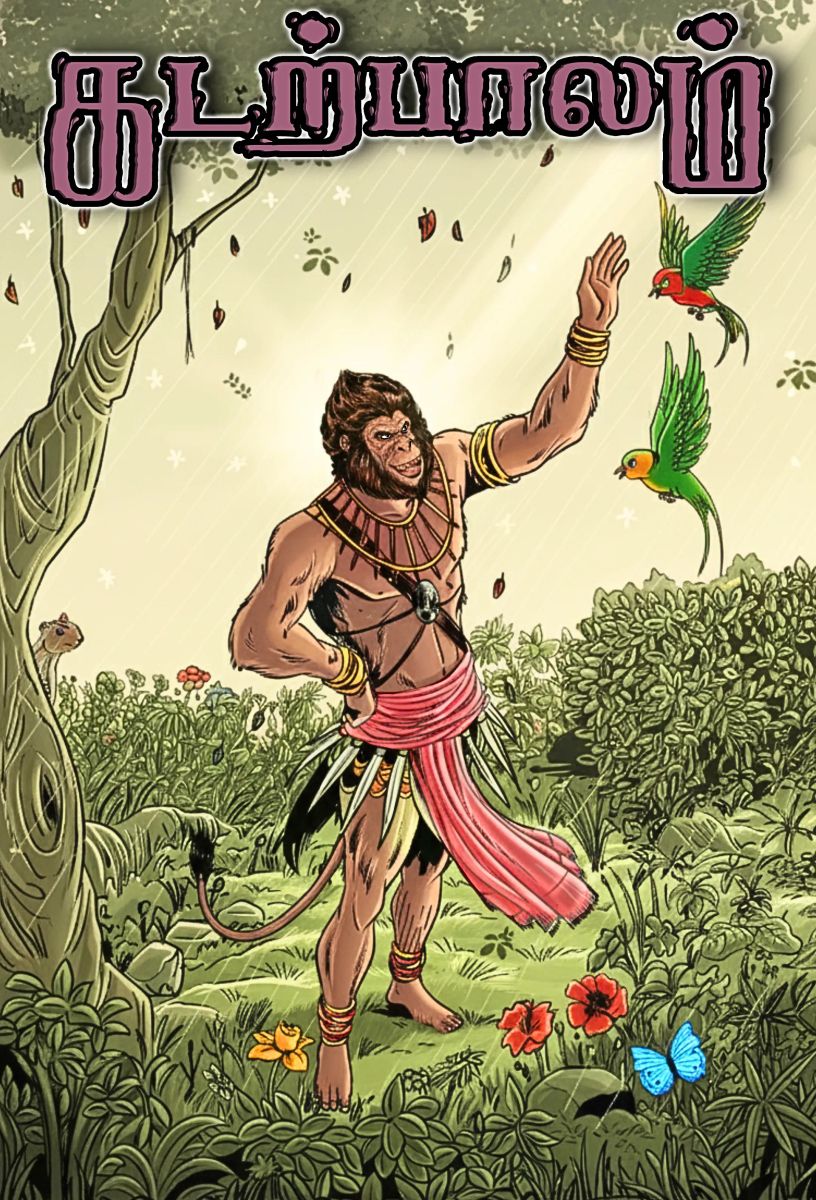
Kadarpaalam (கடற்பாலம், "sea bridge") is an original Tamil comic from Siva Comics, created by B. Sivakumar, set during the five days of building.
Every version of the squirrel story ends the same way: the small creature is thanked and the bridge goes on. Kadarpaalam asks how that looked to a vanara who had been hauling rocks all day. In the comic, Rama notices the little squirrel toiling on the bridge and strokes its back, one hard-working vanara grows envious, and the work stops.
It is a story about the gap Valmiki leaves open. He reports how much was built each day. He does not say what happened among the builders. Read Episode 1 of Kadarpaalam free.
Common questions
What is the story of Ram Setu?
In the Ramayana, Rama's vanara army builds a bridge across the sea to reach Lanka and rescue Sita. Valmiki says the vanara Nala built it in five days from trees and rocks, with the Ocean's help.
Who built Ram Setu in the Ramayana?
Nala, a vanara described as the son of the divine architect Vishvakarma. The Ocean names him to Rama, and the vanara army supplies the labour. Some later versions credit Nala and his brother Nila together.
How many days did it take to build Ram Setu?
Five days. Valmiki gives the progress as 14, 20, 21, 22 and 23 yojanas a day, which adds up to the 100 yojanas he states for the finished bridge.
Is the squirrel story in Valmiki's Ramayana?
No. Valmiki's chapter on the bridge does not mention a squirrel. The oldest mention we found is in a Tamil poem, verse 27 of the Tirumalai by Thondaradippodi Alvar, placed in the 8th century.
Why do squirrels have three stripes, according to the story?
In the Telugu Ranganatha Ramayanam of the 13th century, Rama blesses the squirrel that carried sand to the bridge and draws three lines on its back with his fingers.
Is Ram Setu real?
Yes. It is a real chain of limestone shoals about 48 km long between Rameswaram in India and Mannar in Sri Lanka, visible in satellite images. What is debated is how it was formed.
Is Ram Setu man-made or natural?
The evidence points to natural. An Archaeological Survey of India report found no evidence that it is anything but a natural formation, and NASA has said its images cannot show the origin or age of a chain of islands.
How old is Ram Setu?
The ridge was dry land during the last ice age, when the sea was up to 120 metres lower. The strait was under water by about 7,000 years ago, and a 2023 study says the islands re-emerged from about 5,000 years ago.
Why is Ram Setu called Adam's Bridge?
From the belief that Adam crossed here after leaving Eden. The name seems to date from around 1030 CE. An older record, from about 850 CE, calls it Set Bandhai, "bridge of the sea".
What is Kadarpaalam?
Kadarpaalam is an original Tamil comic from Siva Comics about the building of the bridge: Rama strokes the back of a small squirrel, one hard-working vanara grows envious, and the work stops. Episode 1 is free to read.
In the comic
Kadarpaalam tells the part of the bridge story that was never written down: the envy of one hard-working vanara after Rama shows the squirrel his affection. Read Kadarpaalam, Episode 1 →
Sources
Valmiki Ramayana, Yuddha Kanda, Sarga 22, valmikiramayan.net (Sanskrit text with English translation): the Ocean naming Nala, the trees and rocks, the five daily figures, the size of the bridge, and the absence of a squirrel
Tirumalai 27: kurangugal malaiyai nukka, koyil.org, Divya Prabandham (verse with word-by-word meaning): the Tamil verse in which squirrels help close the sea
Thondaradippodi Alvar, Wikipedia: the poet and the 8th-century date given for him
Ranganatha Ramayanamu, Wikipedia: the Telugu poem, its author, and the squirrel receiving three lines from Rama (it gives 1220 to 1240 CE; other sources say about 1300)
Nala (Ramayana), Wikipedia: Nala's parentage and how Kamban, Tulsidas and later versions tell the building of the bridge
Adam's Bridge, Wikipedia: the length, the 103 patch reefs, the depth, the old names, the 2007 affidavit, the sea-level history and the 1480 storms, each with its own citation
A bridge too far-fetched, Down To Earth: the statement by NASA's Mark Hess on what satellite images can and cannot show
Taking affidavits seriously: was the furore over the Ramar Sethu affidavit justified?, Law and Other Things: the September 2007 affidavit and its withdrawal
Lord Ram's squirrel to adorn Ayodhya Dham junction, IANS, 17 January 2024: the squirrel statue at Ayodhya Dham station
Kadarpaalam, sivacomics.com: the comic's story and creator, read 10 October 2026
Cite this page: Ramakrishnan S. "Ram Setu Story: Rama and the Squirrel." Siva Comics, 13 October 2026. https://www.sivacomics.com/insider/ram-setu-story
You just read the story. Now read the comics. Episode 1 of every series is free. A free account unlocks the rest and keeps your place. Start reading free → · Browse all series
Read the comics
Kadarpaalam
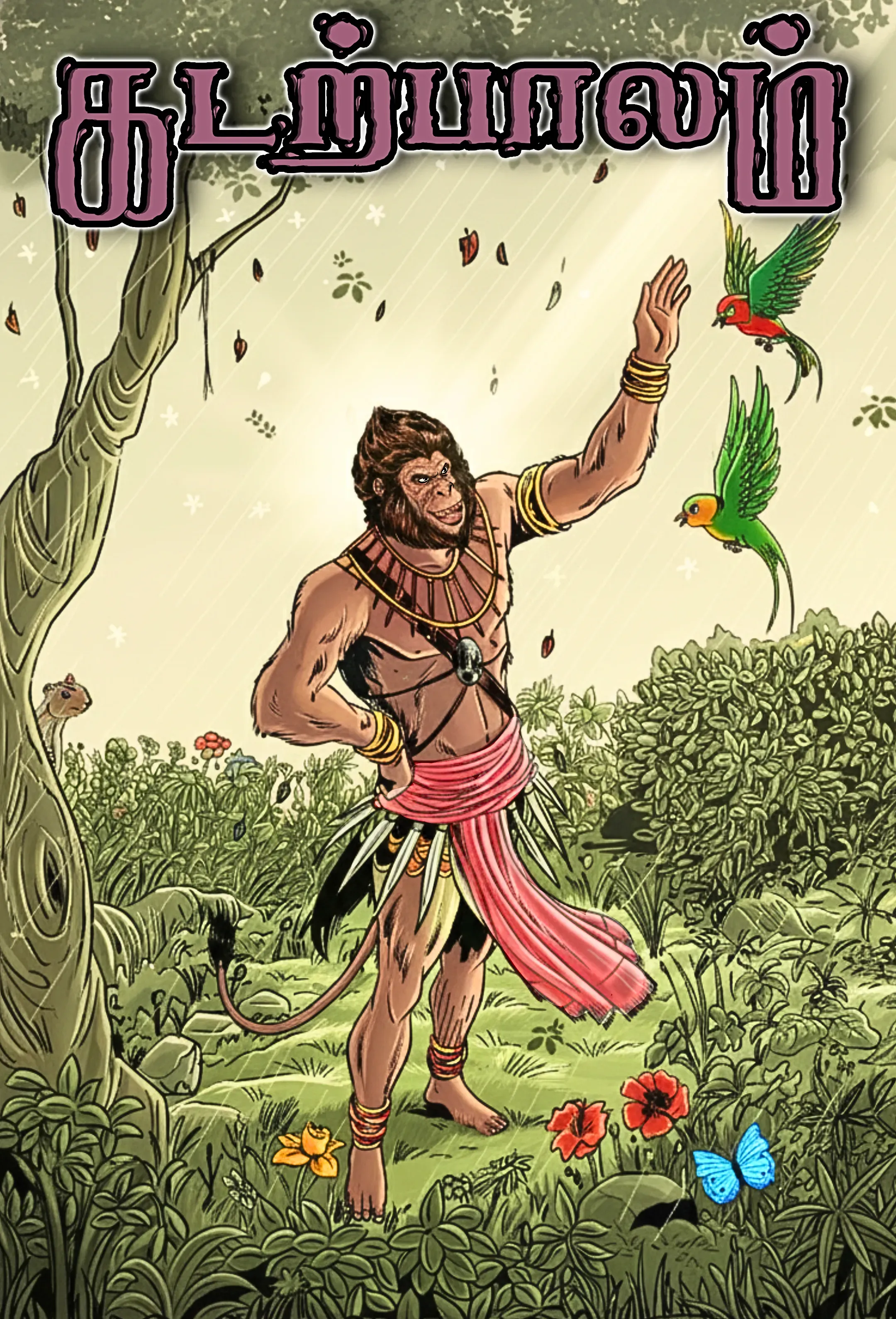
Having learned that Sita was held in Lanka, Rama planned his march and, with the vanara army's help, ordered a bridge built across the sea. He marveled at a little squirrel toiling on the bridge and stroked its back in acknowledgement — and the envy this stirred in one hard-laboring vanara brought the work to a halt. That untold episode is Kadarpaalam.
Kabadapuram
When the doors of the Kumari Amman temple are sealed shut, a man trapped inside escapes with the help of a talking severed head. Crossing the dried-up sea, he is stunned by unbelievable wonders and reaches Kabadapuram — the city the ocean once swallowed. There he witnesses the strange feats of a siddha and sees a man who looks just like himself. On the shore of Kabadapuram, crumbling under tidal waves and volcanic eruptions, that double flees with the woman he loves. Did those who escaped survive — or were they caught in the deluge?