
Lion Comics and Muthu Comics: How Tamil Comics Started
Ramakrishnan S · 10 October 2026 · 11 min read
Updated: 10 October 2026
Quick answer: Tamil comics took off with Muthu Comics, launched in Sivakasi by M. Soundrapandian, with a first issue dated January 1972 (some sources say 1971). His son S. Vijayan started Lion Comics in 1984, aged 17. For decades almost every story was a translation; original Tamil comics are only now returning.
Contents
Key facts
| Fact | Detail | Source |
|---|---|---|
| When did Muthu Comics start? | First issue January 1972; the venture was set up in 1971. English Wikipedia dates the first issue to 1971. | Tamil Wiki; The News Minute; Atlas Obscura; Comicology |
| Who started it? | M. Soundrapandian, from a family of printers, in Sivakasi | The News Minute (2019) |
| What was the first big hit? | The Steel Claw, a British series, published in Tamil as இரும்புக்கை மாயாவி (Irumbukkai Mayavi) | The News Minute; Atlas Obscura; Tamil Wiki |
| What was the first issue like? | 128 pages, priced at 90 paise | Wikipedia: Lion Comics; Tamil Wiki |
| When did Lion Comics start? | 1984, started by Soundrapandian's son S. Vijayan, who became chief editor at 17 | Wikipedia: Lion Comics; The News Minute; The New Indian Express (2012) |
| When did Rani Comics run? | 1984 to April 2005 (issue 500), from the Dina Thanthi newspaper group | Comicology (2009); Wikipedia: Lion Comics |
| Were the stories original? | No. Almost all were translations of European and a few American series. | Wikipedia: Lion Comics; The News Minute; Atlas Obscura |
| Why did the golden age fade? | Wikipedia points to private TV and cable from the mid-1980s. For Rani Comics, Comicology cites a change of editor and weak story and translation choices. | Wikipedia: Lion Comics; Comicology |
| Is Lion-Muthu Comics still publishing? | As of 2020: about 55 translated titles a year, around 1,500 copies each | Atlas Obscura (2020) |
| Where can I read original Tamil comics? | Siva Comics publishes four original Tamil series; Episode 1 of each is free to read. | sivacomics.com |
When did Tamil comics start, and who started them?
Tamil comics became a mass-market form when M. Soundrapandian, from a family of printers in Sivakasi, launched Muthu Comics, whose first issue appeared in January 1972. He bought the Tamil rights to The Steel Claw, a British adventure series, and published it as இரும்புக்கை மாயாவி (Irumbukkai Mayavi). The first issue ran to 128 pages and cost 90 paise.
The date needs a note. English Wikipedia says the first issue came out in 1971. Tamil Wiki says Soundrapandian began setting up the venture in 1971 and that Irumbukkai Mayavi was published in January 1972, and The News Minute, Atlas Obscura and Comicology all give 1972. We use 1972 for the first issue. No publisher archive was available to us to settle it.
There were a few Tamil comics publishers before Muthu Comics, going back to the early 1960s, but Wikipedia describes Muthu Comics as the start of the golden age of Tamil comics. The Steel Claw was a strong first choice: The News Minute calls it the most successful series in the UK at the time.
Who started Lion Comics and Rani Comics?
Lion Comics was started in 1984 by S. Vijayan, Soundrapandian's son, who became its chief editor at 17. The same year, the Dina Thanthi newspaper group launched Rani Comics.
Vijayan told The News Minute that he had watched his father work from the age of 12 or 13, and that he began on his own at 17, trusting his instincts as a reader. Lion Comics grew with sister titles, Mini Lion, Junior Lion and Thigil, and with bigger digest issues for Diwali, Pongal and the summer holidays.
Rani Comics ran from 1984 until its 500th issue in April 2005. Comicology's history says that in its early years it outsold both Muthu and Lion by a long distance, helped by the newspaper group's distribution network, and that Lion stayed in second place until Rani's popularity faded.
Read free: Kabadapuram. A man sealed inside a temple escapes with the help of a talking severed head and crosses the dried-up sea. Read Episode 1 free →
Were Tamil comics original Tamil stories?
No. The golden age of Tamil comics was, in the main, a golden age of translation. The publishers were importing finished European series and supplying Tamil dialogue, which is a very different operation from commissioning Tamil writers and artists. Wikipedia's account of Lion Comics puts it without any hedging at all, and it is worth reading the sentence slowly, because it describes the whole industry rather than one publisher's habit.
"Almost all of the stories published are Tamil translations of primarily European and rarely some American comic series." — Lion Comics, Wikipedia
This is not a criticism of the people who did it. The translations were skilful, the localisation was often inspired, and an entire generation of Tamil readers got their love of the form from them. இரும்புக்கை மாயாவி is a genuinely Tamil cultural object now, whatever its origin.
But it has a consequence worth naming. A reader who grew up on Tamil comics grew up on Tamil dialogue attached to European stories: European cities, European faces, European weather, European assumptions about what a hero is. The words were Tamil. Almost nothing else was.
The most popular cowboy heroes were Tex Willer, Lucky Luke and Mike Blueberry, and the best-known superheroes were The Steel Claw and The Spider. The translation still works the same way: according to Atlas Obscura, Vijayan's team translates Italian and French comics into English first and then into Tamil, and he says almost 70 percent of what they publish is not available in English.
What did Tamil comics leave out?
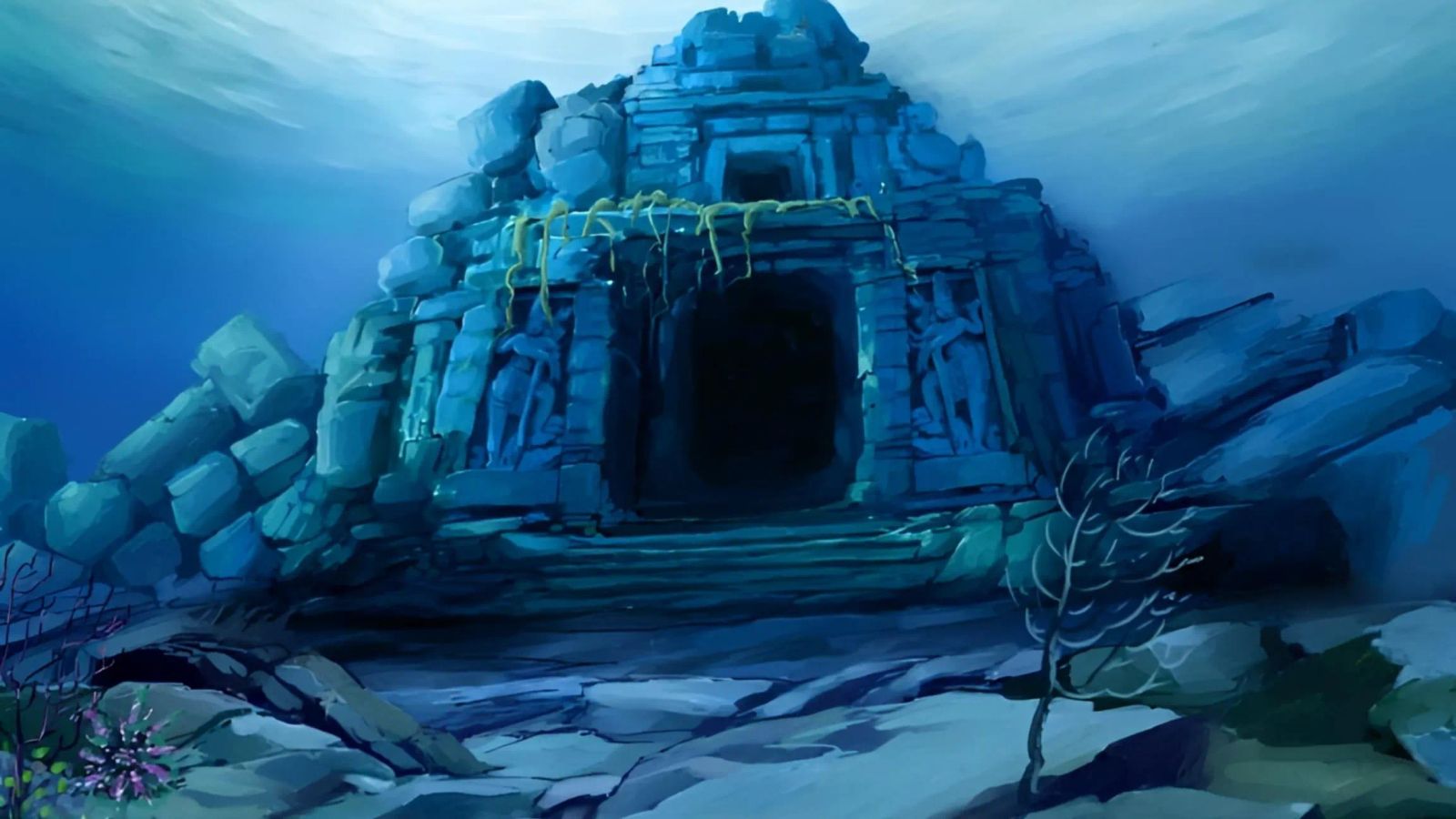
A form that imports its stories cannot draw the things only its own readers would recognise. Fifty years of Tamil comics contain very few temple corridors, very little Sangam-era material, almost no siddhar traditions, and next to nothing from the enormous body of Tamil legend about land the sea has taken. The gap is not a matter of taste or talent. If the art arrives from Europe already drawn, then whatever is on the page was decided by someone who had never seen a Tamil street, and no amount of skill in the translation can put it back.
Those subjects are not obscure. Kumari Kandam, the drowned Sangam cities, the Ramayana as Tamil Nadu tells it rather than as Sanskrit records it — these are things people in Tamil Nadu discuss without needing a footnote. They simply had no comics.
Part of the reason is practical. A translated series arrives finished: the art exists, the plot exists, and the publisher's cost is the translation. An original series has to be researched, written and drawn from nothing. It is a completely different business.
Why did the golden age of Tamil comics fade, and did it come back?
The golden age faded from the mid-1980s. Wikipedia links this to the arrival of private television and cable, and most of the other publishers closed, leaving Lion and Muthu as the two "last men standing".
Rani Comics ended in April 2005. Comicology blames a change of editor, weak story choices and poor translation, and says colour editions were tried to stop falling sales. Mini Lion, Junior Lion and Thigil also stopped, and their characters moved under the Lion and Muthu names.
Regular monthly issues returned from 2012, according to Wikipedia. As of 2020, Atlas Obscura reports that Lion-Muthu Comics published about 55 translated titles a year, around 1,500 copies of each, sold through subscriptions and book fairs.
What has changed since is distribution. A comic no longer needs a print run, a distributor, or shelf space in a shop that may not exist any more. It needs a phone. That removes the cost that made original Tamil work uneconomic in the 1970s, which is why original Tamil comics are appearing now rather than then.
Where can I read original Tamil comics?
Siva Comics publishes four original Tamil series. Episode 1 of each is free to read in a browser, on any phone, with no app. A free account unlocks the remaining episodes and keeps your place across devices.
Kabadapuram (கபடபுரம்): A man sealed inside the Kumari Amman temple escapes with the help of a talking severed head and crosses the dried-up sea. Read Episode 1 free
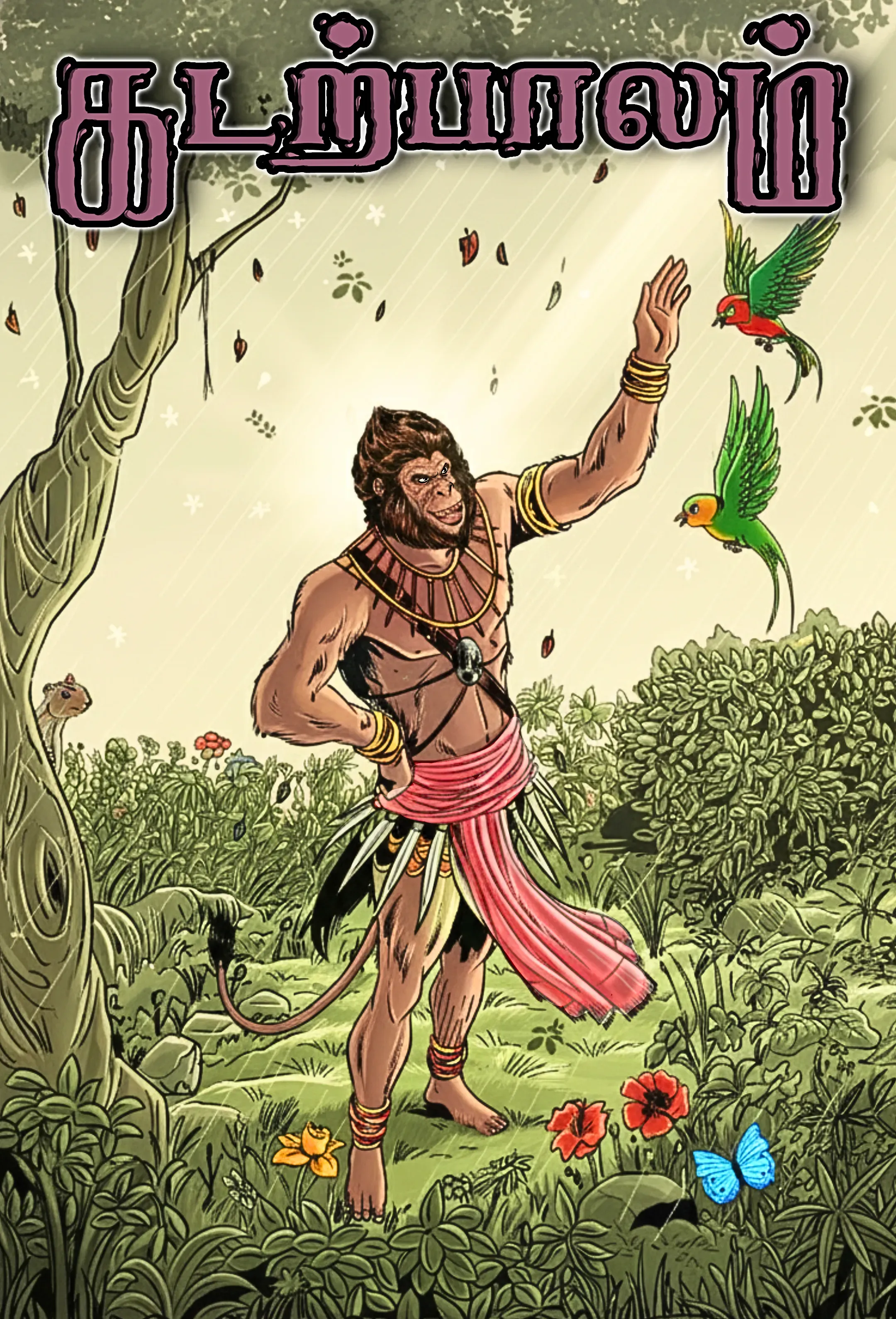
Kadarpaalam (கடற்பாலம்): Rama's vanaras build the bridge to Lanka, and the envy of one hard-working vanara halts the work. Read Episode 1 free
Paanjajanyam (பாஞ்சஜன்யம்): After rain, snails appear from nowhere, and a son who studied acoustics sets out to find the cause. Read Episode 1 free
ISAI: An old letter throws a happy marriage into chaos, and the music of Ilaiyaraaja is banned at home. Read Episode 1 free
For the drowned Sangam cities behind Kabadapuram, read Kumari Kandam: the lost continent of Tamil legend. Readers looking for the classic Muthu, Lion and Rani material can still find the older Tamil comics: they are a separate world with their own devoted following.
Common questions
When did Tamil comics start?
As a mass-market form, with the first issue of Muthu Comics in January 1972; English Wikipedia says 1971. A few Tamil comics publishers existed from the early 1960s, but Muthu Comics marks the start of the golden age.
Who started Muthu Comics?
M. Soundrapandian, from a family of printers in Sivakasi. He bought the Tamil rights to The Steel Claw and published it as Irumbukkai Mayavi.
Who started Lion Comics?
S. Vijayan, the son of Muthu Comics' founder, started Lion Comics in 1984 and became its chief editor at 17.
What was Irumbukkai Mayavi?
The Tamil version of The Steel Claw, a British comic series. It was the title that launched Muthu Comics and remains the best-known character of the era among Tamil readers.
Which were the major Tamil comics publishers?
Muthu Comics (first issue January 1972), Lion Comics (1984) and Rani Comics (1984 to April 2005). Muthu and Lion were both published by Prakash Publishers in Sivakasi; Rani came from the Dina Thanthi newspaper group.
Were Tamil comics original stories?
Mostly not. Almost all of the stories were Tamil translations of European, and a few American, series. Original Tamil comics, written and drawn as Tamil stories, have been the exception.
Why did the golden age of Tamil comics fade?
Wikipedia points to the arrival of private television and cable in the mid-1980s. For Rani Comics, Comicology also cites a change of editor, weak story choices and poor translation.
Is Lion Comics still published?
Yes, as Lion-Muthu Comics. As of 2020 it published about 55 translated titles a year, around 1,500 copies of each, according to Atlas Obscura.
Where can I read original Tamil comics online for free?
Siva Comics publishes four original Tamil series: Kabadapuram, Kadarpaalam, Paanjajanyam and ISAI. Episode 1 of each is free to read in a browser, with no app, and a free account unlocks the rest.
What is the difference between Tamil comics and Tamil manga?
Manga is a Japanese form with its own conventions of layout and reading direction. Searches for "tamil manga" usually mean either Japanese manga translated into Tamil or Tamil comics drawn in a manga-influenced style. The series on this site are Tamil comics, not manga.
In the comic
Siva Comics publishes four original Tamil series, drawn as Tamil stories. Episode 1 of each is free to read in a browser. Read Kabadapuram, Episode 1 →
Sources
Lion Comics, Wikipedia: the 128-page, 90-paise first issue, Lion and Rani in 1984, Rani's 500th issue, the decline, the 2012 revival and the translation basis (it also gives 1971, which the other sources contradict)
This TN publisher has been bringing international comics in Tamil for nearly 50 years, The News Minute, 7 July 2019: Soundrapandian's family of printers, a 1972 start, The Steel Claw as the first hit, and Vijayan starting Lion Comics at 17
How a Tiny Indian Publisher Brings a World of Comics to Tamil Readers, Atlas Obscura, 7 October 2020: the 1972 first translation, the translation team, about 55 titles a year with print runs of 1,500, and subscriptions and book fairs
Rani Comics: Rise and Fall, 1984-2005, Comicology, 2009: Muthu Comics in 1972, Rani Comics from the Dina Thanthi group, its run to issue 500 in April 2005, and why it ended
முத்து காமிக்ஸ், Tamil Wiki: the venture set up in 1971, the first issue in January 1972, and the Tamil rights to The Steel Claw
Now is the best time for comic relief, The New Indian Express, 10 April 2012: 17-year-old S. Vijayan entering the Tamil comics industry as a publisher in 1984 (read from a search excerpt; the page itself was not available to us)
Tamil comics: new media, revival, and the recovery of history, South Asian Popular Culture 14 (1-2), 2016, Swarnavel Eswaran Pillai: further reading on the revival of Tamil comics (the full text was not available to us, so no fact above relies on it)
Siva Comics, sivacomics.com: the four series, their descriptions and the free first episodes, read 9 October 2026
Cite this page: Ramakrishnan S. "Lion Comics and Muthu Comics: How Tamil Comics Started." Siva Comics, 10 October 2026. https://www.sivacomics.com/insider/tamil-comics-history
You just read the story. Now read the comics. Episode 1 of every series is free. A free account unlocks the rest and keeps your place. Start reading free → · Browse all series
Read the comics
Kabadapuram
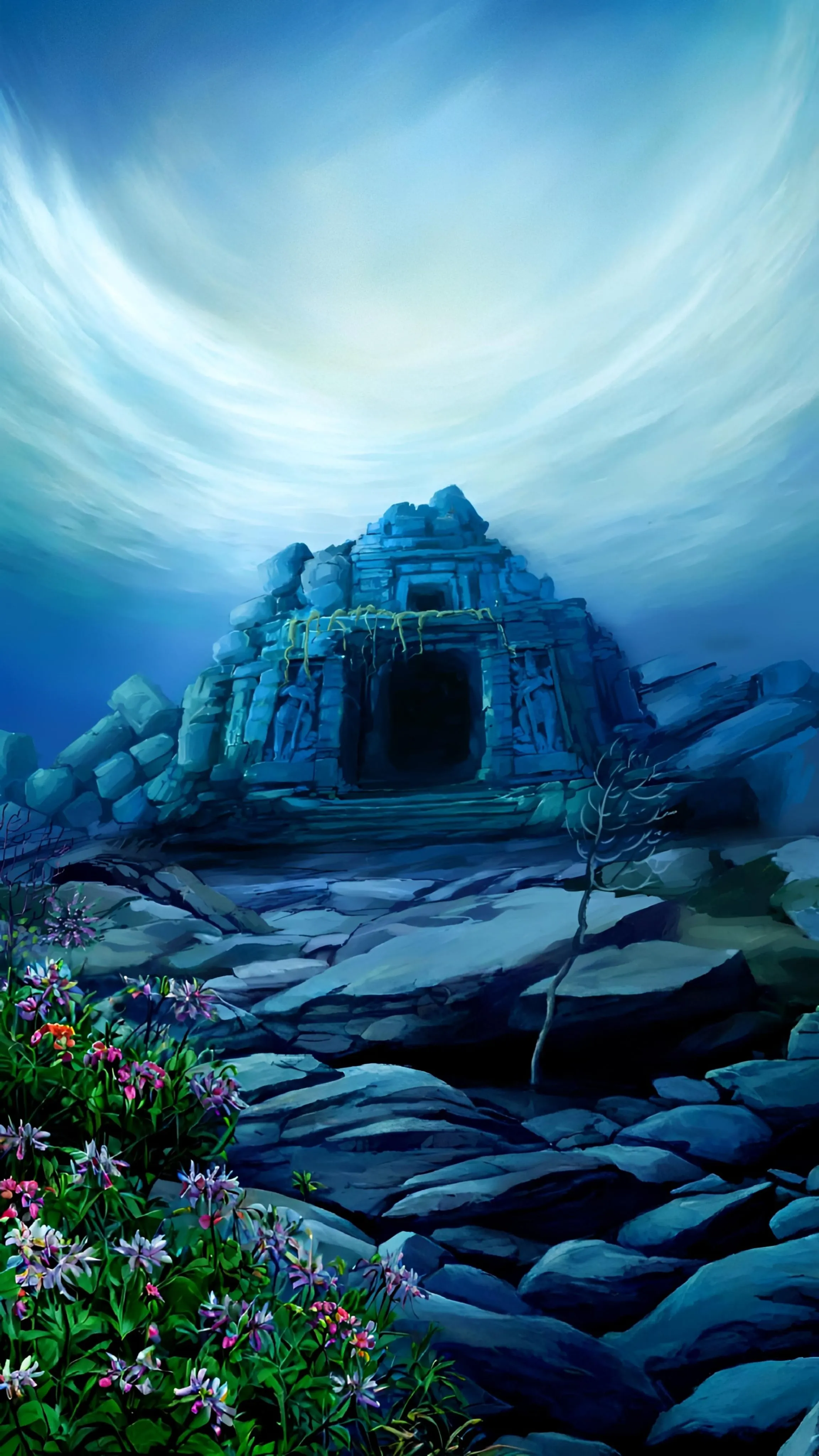
When the doors of the Kumari Amman temple are sealed shut, a man trapped inside escapes with the help of a talking severed head. Crossing the dried-up sea, he is stunned by unbelievable wonders and reaches Kabadapuram — the city the ocean once swallowed. There he witnesses the strange feats of a siddha and sees a man who looks just like himself. On the shore of Kabadapuram, crumbling under tidal waves and volcanic eruptions, that double flees with the woman he loves. Did those who escaped survive — or were they caught in the deluge?
Paanjajanyam
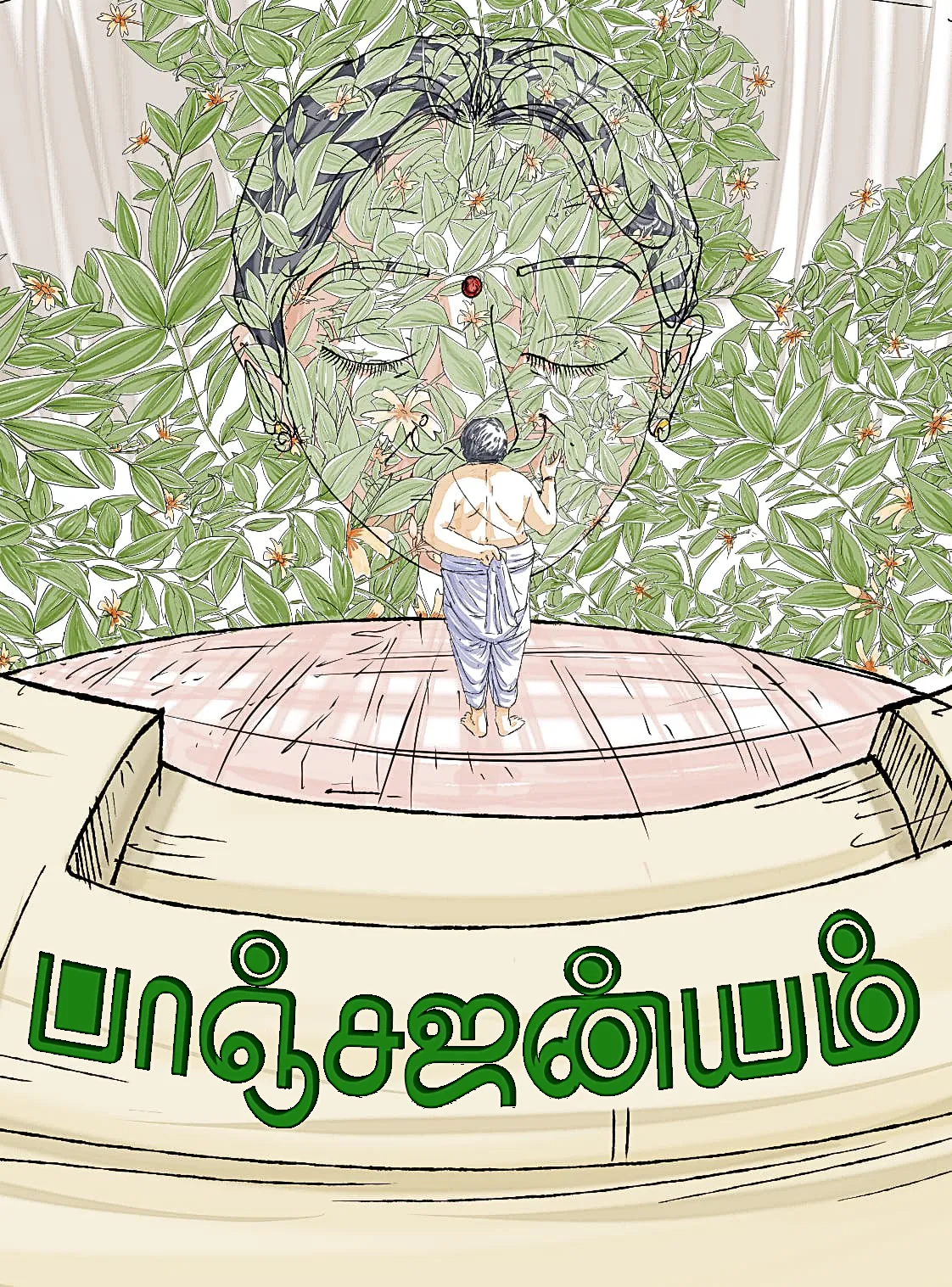
After a spell of rain, snails appear from nowhere and multiply. For his deaf father — who insists their sound is the longing voice of his late wife — a son who studied acoustics sets out to find the cause. How Vaishnava hymns, Jagadish Chandra Bose, plants and snails are all bound together in the form of sound — that is Paanjajanyam.
Kadarpaalam
Having learned that Sita was held in Lanka, Rama planned his march and, with the vanara army's help, ordered a bridge built across the sea. He marveled at a little squirrel toiling on the bridge and stroked its back in acknowledgement — and the envy this stirred in one hard-laboring vanara brought the work to a halt. That untold episode is Kadarpaalam.

ISAI
When Nandhini finds an old letter from Vinoth's forgotten first love, their happy marriage is thrown into chaos. Nandhini bans the one thing that reminds him of his past ? the music of Ilaiyaraaja. Torn between his love for her and his love for the songs woven into his soul, he is caught again and again in secret, pushing them to the edge of breaking apart. As old wounds resurface and trust wavers, will a melody that once threatened to tear them apart become the very thing that brings Nandhini and Vinoth back together?